


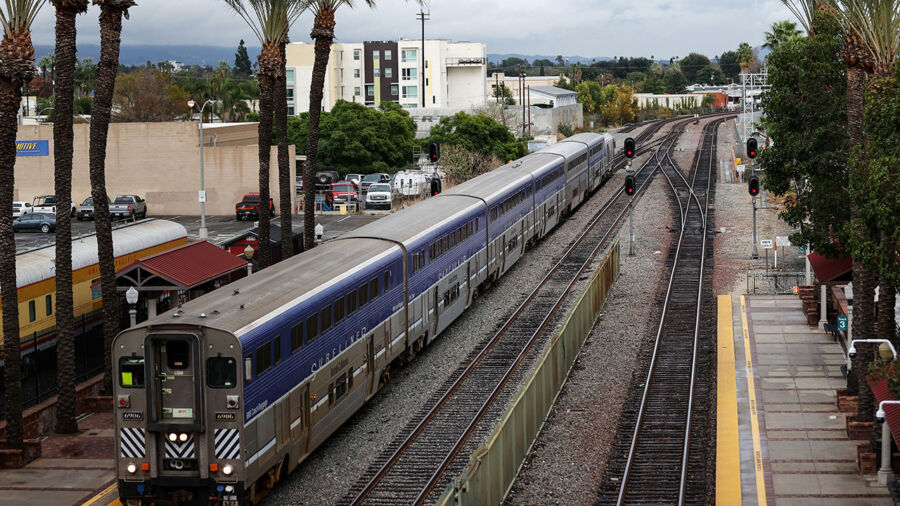
California adopted new rules on April 27 to reduce emissions created by locomotives, becoming the first state to do so in the United States.
Under the new rules passed by the board, train operators will now be required to fund a spending account to offset emissions. Companies will then be able to use the funds to operate cleaner train technologies in the state.
Trains will also only be allowed to idle for 30 minutes starting in 2024. All locomotive operators will also be required to submit annual emissions reports to the state starting next year.
Beginning Jan. 1, 2047, all locomotives operating in California and rail equipment will be required to be zero-emission. Historic railroad operators that meet specific requirements may receive state permission to be exempt from the rules.
“Union Pacific is deeply disappointed in the California Air Resources Board’s decision to impose burdensome regulations on the railroad industry which fail to take into consideration that the technology and infrastructure needed for success do not exist,” spokesman Mike Jaixen told The Epoch Times in an email. “We are committed to achieving net zero carbon emissions by 2050 and are making significant strides in addressing criteria pollutants.”
The company has spent more than $1.4 billion on transportation infrastructure projects in the state since 2018. It is also investing $1 billion to modernize locomotives. They are also testing biofuel blends to lower carbon and criteria pollutant emissions, according to Jaixen.
“We are dedicated to ongoing collaboration to find balanced solutions,” he said.
According to CARB’s estimates, emissions from one train are worse than 400 heavy-duty trucks.
New Truck Rules
The board also approved the country’s most aggressive policy on April 27 to phase out the sales of medium and heavy-duty combustion trucks by 2036.Several industry organizations, truck drivers, and residents are concerned about the speedy transition, including groups that use the busy Los Angeles and Long Beach ports to pick up overseas goods and deliver them across the country.
American Trucking Associations argued that zero-emission models are more costly and can move fewer goods.
These new rules add to Gov. Gavin Newsom’s aggressive plan to transition the state away from fossil fuels and into renewable energy.