


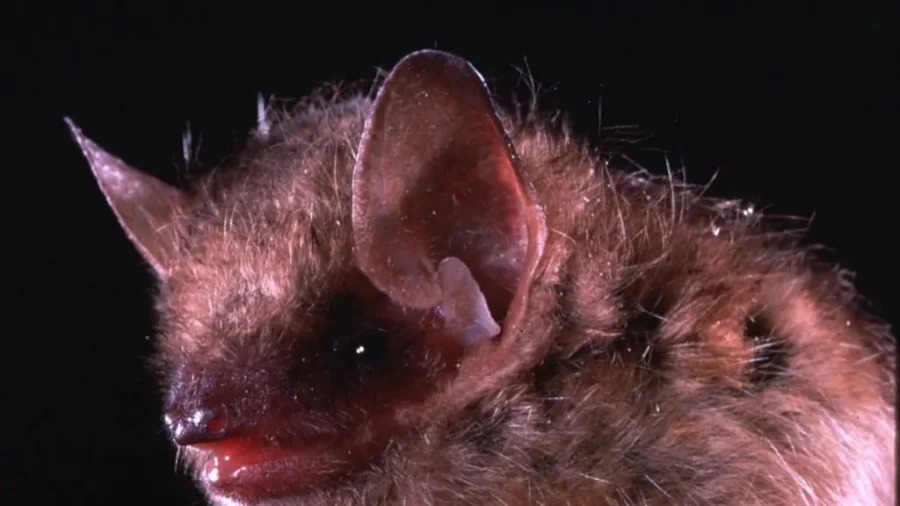
The report, published June 29 in the Canadian Medical Association Journal, says any direct human contact with a bat is an indication for rabies post-exposure prophylaxis, or PEP, even without a visible bite or scratch. The authors of the report note that rabies is almost always fatal once symptoms develop and urge immediate treatment.
The boy was visiting a cottage in northern Ontario when he awoke with a bat on his nose and mouth, according to the report.
He swatted the bat away, and his father caught it in a cooking pot before releasing it outside. Because the child had no visible wounds on his face and his parents did not believe the bat had behaved erratically, they did not seek medical assessment.
Nineteen days later, the boy developed tingling and numbness on the right side of his face, followed by swelling and loss of appetite. Doctors first suspected Bell’s palsy caused by herpes simplex virus, then herpes gingivostomatitis, before his condition quickly worsened.
He returned to the hospital with facial weakness, slurred speech, and reduced sensation. Within hours, he developed a fever, trouble swallowing, confusion, and hallucinations before being transferred to a pediatric intensive care unit.
Doctors then suspected rabies after learning about the bat exposure. A saliva PCR test confirmed rabies on the fourth day of his hospitalization. Further testing identified a bat rabies virus variant.
The boy’s condition continued to deteriorate despite intensive care. Life support was withdrawn after brainstem function was lost, and he died on the 17th day of his hospital stay, the report said.
The case was the first locally acquired human rabies case reported in Ontario since 1967, and only the 28th reported in Canada since 1924, according to the authors.
Rabies is a viral disease that attacks the central nervous system and is nearly always fatal once symptoms appear. Early treatment after exposure remains the only proven way to prevent infection.
The report states that any direct contact with a bat—even without an obvious bite or scratch—should prompt consultation with public health officials regarding post-exposure rabies prophylaxis. Bat bites can be extremely small and easily go unnoticed.
After a potential exposure to rabies, prophylaxis is highly effective when given before symptoms develop, but there is no proven treatment once rabies becomes symptomatic.
In the United States, rabies is most commonly found in wild animals such as bats, raccoons, skunks, and foxes, while in many other countries, dogs remain the primary source of transmission. People and pets can be exposed through bites or scratches from infected animals.