


The head of the U.S. military command unit that oversees Middle East operations said on Thursday the United States is using the time during the Iran ceasefire to rearm and reorganize.
"We're rearming, retooling, and adapting our tactics, techniques, and procedures," U.S. Central Command (CENTCOM) commander Adm. Brad Cooper said at a Pentagon news conference. "There's no military in the world that adapts the way we do."
Cooper said that after visiting with American service members deployed to the Middle East, he believes the troops are "highly motivated."
The ceasefire, which is set to end early next week, was announced by President Donald Trump last week, and a subsequent naval blockade went into effect on Monday.
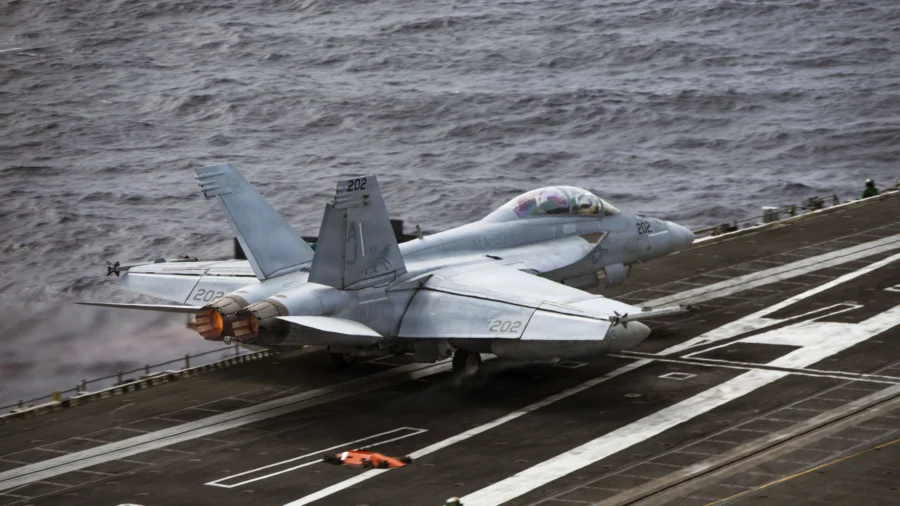
Dozens of U.S. warships and aircraft, including about 10,000 military personnel, are enforcing the blockade, officials said at the news conference.
The blockade, according to CENTCOM, impacts ships heading to and from Iran's ports in the region. The command said in a post on X a day earlier that 10 vessels have been forced to turn around by U.S. naval ships.
In the news conference, Secretary of War Pete Hegseth urged Iranian officials to negotiate with the United States and come to an agreement to potentially end the conflict for good.
"We are reloading with more power than ever before, and better intelligence," Hegseth said. "We are locked and loaded on your critical dual-use infrastructure, on your remaining power generation, and on your energy industry. We'd rather not have to do it."
During the same briefing, Gen. Dan Caine, chairman of the Joint Chiefs of Staff, said American forces are "ready to resume major combat operations at literally a moment's notice."
He said U.S. Navy ships would pursue any Iranian-flagged vessel or any vessel attempting to provide material support to Iran, and that could take place not just in the region but also in the Indo-Pacific.
Ships trying to break the blockade would be intercepted and warned, "if you do not comply with this blockade, we will use force," and enforcement would occur inside Iran's territorial seas and in international waters, Caine said.
The Trump administration is hoping the effort will motivate Iran to accept U.S. terms for ending the war, which was launched by the United States and Israel on Feb. 28. The terms include opening up the Strait of Hormuz, through which roughly one fifth of global oil and gas exports ordinarily transits. Trump has said that was also a condition of the ceasefire.
An Iranian general said Wednesday in comments carried by state-run media that the blockade would force the country to attack ports in the region, including areas along the Red Sea, another key shipping route.
"The powerful Armed Forces of Iran will not allow any exports or imports in the Persian Gulf region, the Sea of Oman, and the Red Sea to continue,” Maj. Gen. Ali Abdollahi, commander of Iran’s Khatam al-Anbia Central Headquarters, said in a statement, according to the Iranian semi-official Tasnim News Agency.