


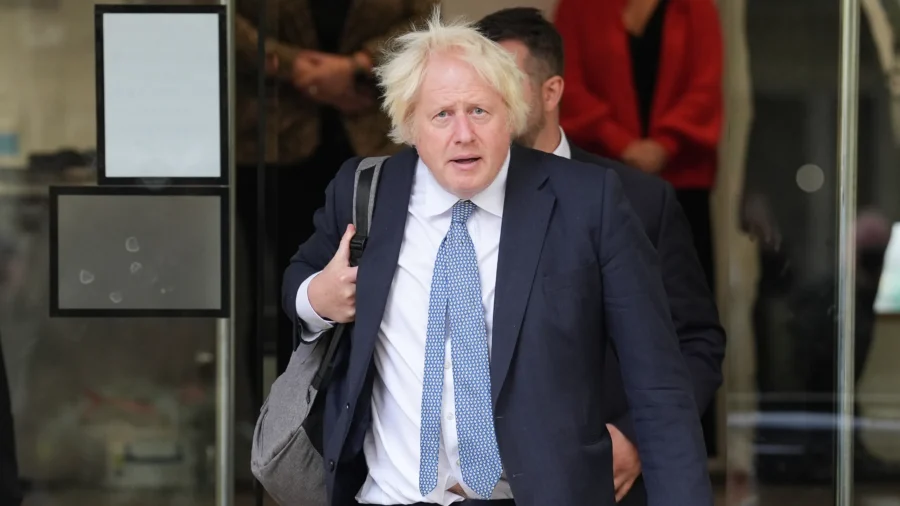
Former British Prime Minister Boris Johnson told the UK Covid-19 Inquiry that children paid a “huge price” to “protect others” during the era of lockdowns and social restrictions his government imposed on the public.
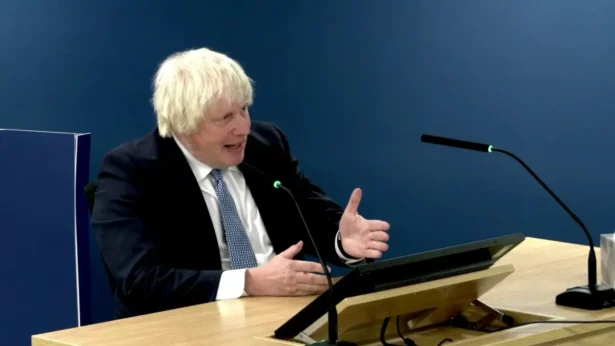
Johnson was giving evidence on Tuesday to the module of the long-running inquiry that is specifically examining the impact of the government’s response to COVID-19 on children and young people.
Under questioning from counsel to the inquiry, Clair Dobbin KC, Johnson, who resigned as prime minister in July 2022, said that closing schools was “an awful, awful thing to do.”
“I wish it had been otherwise, I wish we could have found another solution,” he said.
‘Damage to Life Chances’
For him, it was a “personal horror” and a “nightmare idea” to shut schools, he said, because he “thought it would do a lot of damage to the life chances of people who find it most difficult to bounce back.”Johnson said that with the benefit of hindsight, “you’ve got to ask yourself whether we could have found other ways of reducing the budget of risk.”
But Johnson disputed the suggestion made by former Education Secretary Gavin Williamson that there had been no plan to shut schools when the situation with COVID-19 began to unfold.
‘Far Too Elaborate’
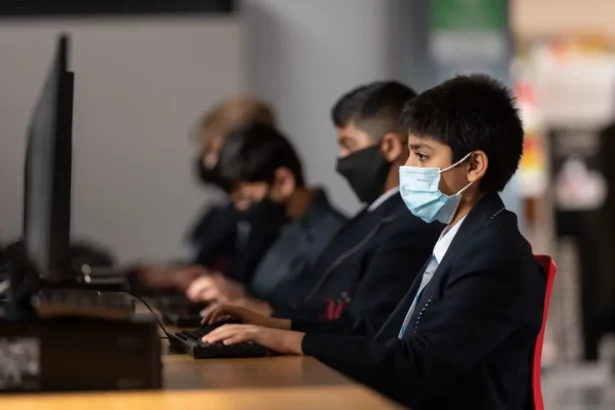
Johnson added that while ministers were focused on trying to protect the public, he thought that the overall response was “far too elaborate.”“I think that looking back on it all, the whole lockdowns, the intricacy of the rules, the rule of six, the complexity, particularly for children, I think we probably did go too far,” Johnson said, referring to the mandatory barring of social gatherings of more than six people in September 2020.
“Maybe we could have found a way of exempting children.”
Inquiry Is ‘Bedding Down’ a View
Molly Kingsley, a lawyer who co-founded children’s rights campaign group UsForThem, told The Epoch Times that she noted during Johnson’s evidence that there was a lack of meaningful discussion about whether schools ought to have closed at all.“The inquiry is really problematic because they are coming at it from the starting point that while lockdowns and school closures were very harmful, they were necessary,” said Kingsley.
“So instead of asking whether the benefits were greater than the harms, they are asking whether they should have planned better for school closures, and I think that’s quite shocking. … Although we have seen them take a similar line [earlier in the inquiry], we were vaguely hopeful they might take a different line with school closures.”
Kingsley said that, in her view, the inquiry treated Williamson “almost as a hostile witness” because it was clear that both he and Johnson wanted to avoid school closures.
“Williamson effectively said the Department for Education wanted to avoid talking about school closures because if they did, then the [teachers’] unions would take over,” she said.
She added that throughout the inquiry, “they’ve effectively pedestalled the scientists and assumed the infallibility of the scientific advice … the inquiry hasn’t wanted to get into any potential conflicts if interests held by SAGE [the government’s Scientific Advisory Group for Emergencies] and the integrity of the science has just been completely assumed … such as with the testing regime, that led to around a million kids being isolated. It was never even raised that these tests weren’t accurate half the time.”
Kingsley added that the children’s module of the inquiry is failing to address the lack of help for children to catch up, after their education and normal socialization were so abruptly interrupted.
‘A Disaster’
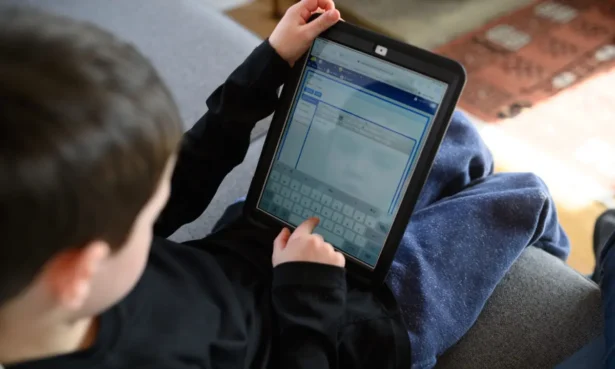
When asked by the inquiry counsel whether he recognized that happened with the complete abandonment of exams in the summers of 2020 and 2021 was “really damaging” to children doing their GCSEs and A-levels—which are used to determine university entrance—Johnson said he regretted that they did not get the model right initially.The former prime minister added: “Was COVID a disaster? Yes. Was the loss of education a disaster? Yes. Was the loss of exams a disaster? Yes.
“Was the disappointment, anger, the additional frustration of a large number of kids a disaster? Yes, it was, but it has to be seen in the context of us trying to deal with a much, much bigger disaster, and that was the loss of learning and the loss of the exams themselves.”
England was put on lockdown on three separate occasions between March 2020 and January 2021, with Wales, Scotland, and Northern Ireland having their own separate lockdowns and restrictions.
Whitty, who was in office throughout the period of restrictions and regularly appeared alongside Johnson in public announcements on lockdown rules, said that restrictions on the amount of time people spent outside during the COVID-19 era were too strict.
“If we were running things again, this is one of the areas where I think I would have preferred a policy that was more liberal about children’s play,” Whitty said.