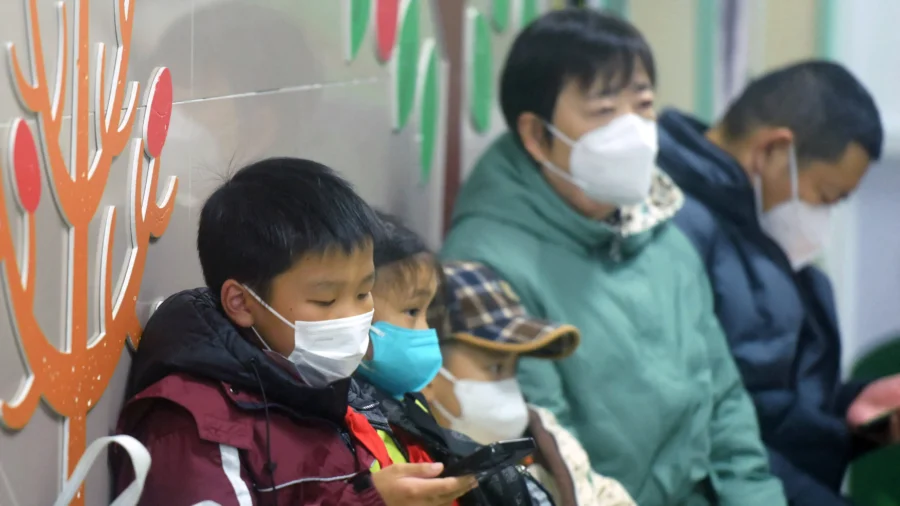
Flu cases are surging across China. At least 17 provinces have reported outbreaks, hospitals are overwhelmed with patients, and schools have suspended classes.
According to the latest monitoring
data released by the Chinese Center for Disease Control and Prevention on Dec. 4, the positivity rate among influenza-like illness cases in outpatient and emergency departments nationwide has reached nearly 51.5 percent. Given China’s track record of underreporting epidemic information, the real figure might be even higher.
According to Chinese official media outlet CCTV on Wednesday, Wang Dayan, a researcher at the National Institute for Viral Disease Control and Prevention under the China CDC,
said that 17 provinces in China are seeing high influenza rates, while transmission in other provinces is at a moderate level. Overall, the flu wave is showing an upward trend and may peak from early to mid-December.
Wang also said that viruses spread rapidly and cases among children aged 5–14 are significantly higher than in other age groups. Cluster outbreaks are likely to happen in crowded places such as schools, kindergartens, and nursing homes.
Beijing has already entered a high-rate period, with the dominant strain being influenza A (H3N2). A parent in Beijing
told the Chinese edition of The Epoch Times that they have been notified students must wear masks when entering school premises.
A Beijing resident said that community hospitals near his home have long stopped treating influenza A patients, saying they lack the facilities to handle this wave of the flu virus.
Xiao Chen, from Shandong Province, said there has been an outbreak of influenza A in local schools. “In many primary school classes, nearly half of the students are absent. Symptoms include coughing, runny nose, sore throat, and persistent high fever.”
Chen said teachers asked students with flu symptoms to stay home to prevent cross-infection, and parents need to detail the symptoms, temperature, whether hospitalization was needed, and the child’s condition at home.
Chen also said that people who received the flu vaccine this year can still get infected, and the specific antiviral drug for influenza A is completely sold out in local pharmacies.
More severe cases have emerged in provinces such as Henan and Shandong.
According to a Chinese media
report, a 6-year-old girl in Zhengzhou city, Henan Province, contracted influenza A last month with symptoms like high fever, nausea, and vomiting. Her condition rapidly worsened in two days, triggering acute necrotizing encephalopathy (ANE), and she was admitted to the ICU.
Doctors said in the interview that the flu could trigger ANE. If not treated promptly, it can result in a persistent vegetative state or even become life-threatening.
A
3-year-old boy in Puyang city, Henan Province, contracted influenza A last month and passed away the next day. The news has sparked widespread concern and anxiety among parents online.