

Congressman Calls for Criminal Investigation of Chinese-Owned Retailer on US Military Bases

GNC operates on U.S. military bases through contracts exempt from standard federal procurement rules and foreign ownership disclosure requirements.
Published: 7/14/2025, 1:50:31 PM EDT
Congressman Calls for Criminal Investigation of Chinese-Owned Retailer on US Military Bases
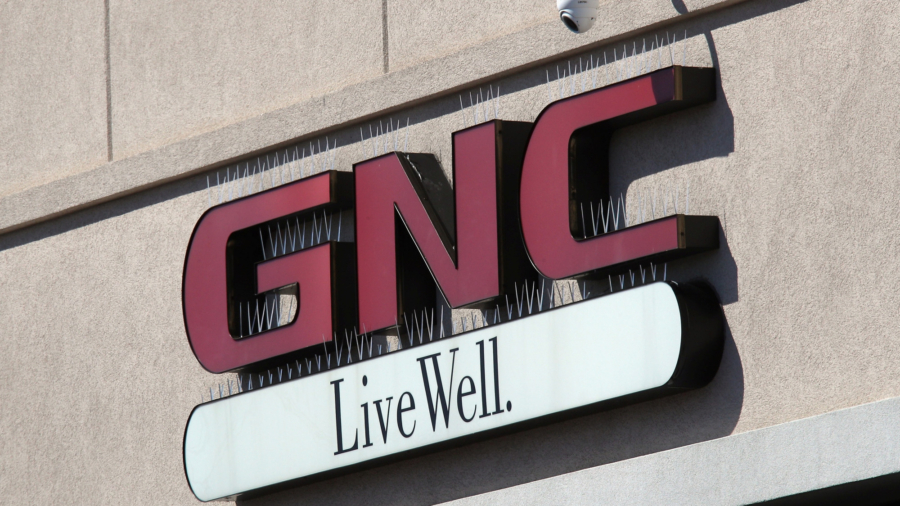
A general view of a GNC store in Deer Park, N.Y., on March 26, 2020. (Bruce Bennett/Getty Images)

Rep. Pat Harrigan (R-N.C.) has called for a criminal investigation into GNC, the national supplement retailer owned by China’s state-run Harbin Pharmaceutical Group. GNC operates more than 85 stores on U.S. military bases, including four stores at Fort Liberty in North Carolina.

Harrigan pointed to a report from national security firm Exiger revealing that GNC imported over 100 million pounds of ingredients from China while continuing to advertise that 96 percent of its products are made in the United States. The report also detailed GNC’s use of a manufacturer that falsified customs declarations to evade tariffs, a 2023 ransomware attack that compromised sensitive data, and ongoing cybersecurity vulnerabilities.

“A company controlled by the Chinese Communist Party, with a track record of fraud, a compromised network, and access to our troops’ personal data, is operating inside American military bases. These aren’t just red flags, this is a five-alarm fire—and I will not stand by while it burns," said Harrigan.
National security risks posed by Chinese-controlled companies have long been highlighted by senior U.S. officials. In 2020, former FBI Director Christopher Wray warned that the national security threat from China involves an expanding blend of lawful and unlawful tactics—including foreign investments, acquisitions, corporate takeovers, cyber intrusions, and insider espionage—to steal American data and technology. In a speech titled "Responding Effectively to the Chinese Economic Espionage Threat," Wray mentioned that Chinese intelligence agencies increasingly rely on contracted hackers to obscure the government’s direct involvement in cyber theft.
The Office of the Director of National Intelligence’s 2023 Annual Threat Assessment also echoed this, noting Beijing’s use of acquisitions to gain sensitive U.S. data. “Beijing also has collected U.S. health and genomic data through its acquisitions and investments in U.S. companies, as well as cyber breaches,” according to the report.

US Military Retail 

GNC operates on U.S. military bases through contracts with the Army & Air Force Exchange Service, Navy Exchange Service Command, and Marine Corps Exchange. These retail systems serve active-duty personnel, veterans, retirees, and family of servicemembers.

However, these retail contracts are exempt from standard federal procurement rules and foreign ownership disclosure requirements, creating a regulatory gap that allows companies like GNC to operate without routine federal oversight.

As a standard point-of-sale, retail outlets gain access to personally identifiable information—names, payment methods, purchase histories—of U.S. servicemembers and their families, raising significant surveillance and data privacy concerns.

GNC began as a small family-owned health food store in Pittsburgh, Pennsylvania, in 1935. Eventually, it grew into a well-known nationwide health focused retailer. After filing for bankruptcy in 2020, it was purchased by Harbin Pharmaceutical Group, a Chinese state-owned enterprise through a court-approved sale. Despite its new Chinese ownership, GNC retained its contracts on U.S. military bases.

The Military Installation Retail Security Act that Harrigan introduced would prohibit companies owned or controlled by China, Russia, Iran, or North Korea from operating retail stores on U.S. military bases. The bill also calls for terminating contracts with companies that misrepresent foreign ownership, requires national security reviews of existing retailers with foreign ties, and mandates transparency and oversight for future military retail agreements.

A companion bill was introduced in the Senate in April 2025 by Senator Tom Cotton (R-Ark.), along with Sens. Ted Budd (R-N.C.) and Rick Scott (R-Fla.). The Senate version also seeks to block retail agreements with companies owned or controlled by adversarial nations and mandates a review of all retail stores on military bases to identify foreign ownership ties.
Budd stressed that national security and military readiness depend on preventing adversarial access to base infrastructure and the personal data of service members. “We shouldn’t be allowing Chinese-affiliated companies in the United States, let alone on our military bases,” said Cotton. Scott added that the bill would close critical loopholes, ensuring “foreign enemies aren’t profiting off our service members and their families.”

GNC has not yet responded to a request for comment.