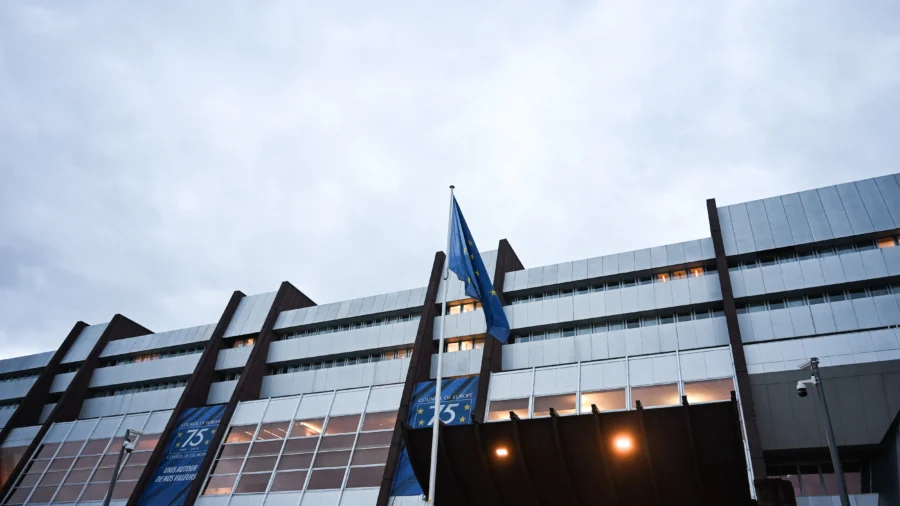
The Council of Europe, a pan-European human-rights body, has called on its member states to ban gender and sexual orientation “conversion practices.”
Its parliamentary arm, the Parliamentary Assembly of the Council of Europe (PACE),
voted on Jan. 29 to call on European states to adopt legislation prohibiting conversion practices and to integrate such bans into wider anti-discrimination frameworks.
The approved resolution states that these practices, also referred to as conversion therapies or “reparative therapies,” aim to “change, repress or suppress or eliminate a person’s sexual orientation, gender identity or gender expression” based on the belief that such personal characteristics are “pathological or undesirable.”
“The Parliamentary Assembly calls for a ban on conversion practices, which aim to change or suppress individuals’ sexual orientation or gender identity, and pose serious harm without scientific backing,” the
resolution said.
“Recognising these practices’ damaging impact, especially on vulnerable groups like children, the resolution advocates for member States to enact legislation prohibiting such practices, integrate bans within broader anti-discrimination strategies, and ensure effective enforcement.”
PACE’s resolutions are nonbinding but politically influential.
The report on which the resolution was based was prepared by British Labour politician Kate Osborne, who has been campaigning in the UK for a trans-inclusive
ban on conversion practices, according to the BBC.
“These practices are grounded in a lie, the lie that diversity is a defect. They are sustained by stigma, and they persist only because institutions and States have allowed them to persist,” Helena Dalli, former European commissioner for Equality and former minister for European Affairs and Equality of Malta, said in
her statement during the debate.
Dalli said that Malta became the first country in Europe to outlaw conversion practices in 2016.
“Our legislation was clear, proportionate and principled. It did not criminalise belief. It did not interfere with legitimate therapeutic support. What it did was establish a non-negotiable boundary: no one has the right to deny another person’s identity,” Dalli said.
“Either Europe affirms, unequivocally, that diversity in sexual orientation and gender identity is part of the human condition, or it tolerates practices that treat it as a pathology. … No state should claim fidelity to human rights while allowing these practices to continue.”
In Malta, Matthew Grech, a Christian, was
charged in 2022 with violating the ban on conversion practices, not for receiving such therapy, but rather for sharing his personal testimony about leaving homosexuality during an interview.
Grech
talked to PM News Malta, a small free-speech media platform, to share the story of how he had become a born-again Christian, which he said “led to him leaving behind a homosexual lifestyle and unwanted same-sex attraction.”
Following the interview, Grech received a prosecution order from Maltese police.
In November 2025,
Grech told the Christian Legal Centre that his verdict had been delayed for the second time.
Gender ideology is a concept in which “gender identity” refers to the belief that a person may have been born in “the wrong body,” as opposed to the view that humans are either male or female and that biological sex is immutable.
Numerous LGB and women’s groups
say gender self-identification is encroaching on the privacy and rights of women and same-sex attracted people.
The European initiative for sex-based rights Athena Forum
said before the vote that the approved resolution could put “criminal sanctions on mental-health professionals, educators, parents and social workers who do not affirm a child’s self-declared trans identity.”
“It proposes mandatory training and public awareness campaigns, and mandatory sex-education on gender identity. It is pure ideological overreach,” it said.
Athena Forum
posted on X on Jan. 30: “After years of preparation, transactivist organisations got what they wanted: a Council of Europe resolution that frames gender identity as a protected ground and pathologises anyone who questions it.
“Transactivist organisations will now use this resolution to increase pressure at national level across Europe and to advance the same agenda within the European Union.”