


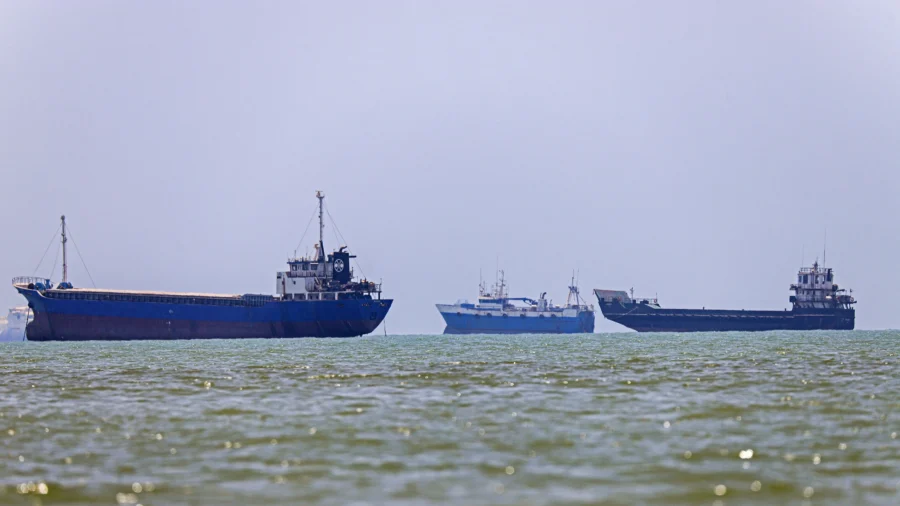
Crude oil shipments through the Strait of Hormuz have returned to levels seen before the outbreak of the Iran war, U.S. Energy Secretary Chris Wright said on Wednesday, pointing to a rapid recovery in one of the world’s most important maritime oil corridors as a U.S.–Iran ceasefire continues to hold.
“In the last 24 hours, 72 ships and 20 million barrels of oil have transited through the Strait of Hormuz—fully restoring pre-conflict flows,” Wright wrote in a June 24 post on social media.
The recovery follows a U.S.–Iran memorandum of understanding signed last week that reopened the strategic waterway after months of disruption caused by the war. The agreement established a 60-day negotiating period during which the two sides aim to reach a broader settlement covering more complex issues such as sanctions relief and Iran’s nuclear program.
The Strait of Hormuz carries roughly one-fifth of the world’s seaborne oil and is considered one of the most important chokepoints for global energy markets.
Wright thanked President Donald Trump and the U.S. military for helping restore shipping through the strait but cautioned that complete normalization will take more time.
Speaking at an energy forum on Wednesday, Wright said parts of the waterway still require mine-clearing operations before maritime traffic fully returns to normal.
Wright added that oil would continue to flow through the strait even if the U.S.–Iran deal ended up unwinding, and that Tehran would not be able to close it again.
Iran Asserts Navigation Rules
The Islamic Revolutionary Guard Corps (IRGC) Navy was cited by Iran state-run media IRNA as saying that reports of newly established shipping corridors that had not been coordinated with Tehran were “unacceptable” and “extremely dangerous.”The IRGC Navy said ships transiting the Strait of Hormuz must coordinate with it and warned that ships operating outside Iran-designated routes could face enforcement action.
U.S. officials have said that any future arrangements must preserve freedom of navigation.
Tanker Traffic Rebounds
Shipping data show commercial traffic through the Strait of Hormuz has accelerated significantly over the past week.According to maritime intelligence firm Windward, confirmed vessel transits rose 48 percent in a single day to 31 ships on Wednesday, while overall daily traffic has recovered to between 35 and 40 vessels, roughly triple recent lows.
The company said more than half of inbound vessels are now using the temporary southern shipping lane established by Oman and the IMO, while outbound traffic has resumed through the central corridor.
Commercial operators are increasingly navigating independently without naval escorts, allowing a backlog of delayed vessels to begin clearing, Windward said.
Although traffic has increased sharply, vessel crossings remain well below the more than 130 ships that typically transited the strait each day before the conflict.
Even so, some analysts have cautioned that a correction in crude prices could come.
“We continue to believe that the oil sell-off is overdone, with the market still tightening,” ING analysts wrote in a June 24 note, in which they said price action clearly shows markets expect a “fairly rapid” recovery in Gulf oil supplies.
Better security conditions in the Strait of Hormuz have also reduced insurance costs for vessels entering the Gulf.
According to marine insurance brokers cited by the Financial Times, hull war-risk insurance premiums for ships passing through the strait have fallen by more than half since last week’s signing of the U.S.–Iran interim peace deal.
“The energy market has transitioned from vicious cycle dynamics to virtuous ones,” economist Mohamed El-Erian said in a post on X commenting on the insurance premium drop.
“The fall in insurance premiums … comes on top of normalizing production/shipment levels and high OPEC+ ceilings, exerting downward pressure on energy costs,” he wrote.
Futures contracts for August delivery of Brent crude, the global benchmark, were down $1.08, or 1.46 percent, to $72.66 a barrel by 5:52 a.m. ET on Thursday, while U.S. West Texas Intermediate lost 84 cents, or 1.19 percent, to $69.50 a barrel.
Both contracts hit their lowest since Feb. 27, the day before joint U.S.–Israeli attacks against Iran, which prompted Tehran to shut the Strait of Hormuz and choke off global shipments of crude.