

Cruz: New World Screwworm Is 'Serious' Threat in Texas

Cruz made the remarks in response to the confirmed detection of the deadly parasite in Zavala County, adding that he’s closely tracking the situation.
Published: 6/4/2026, 3:23:00 PM EDT
Cruz: New World Screwworm Is 'Serious' Threat in Texas
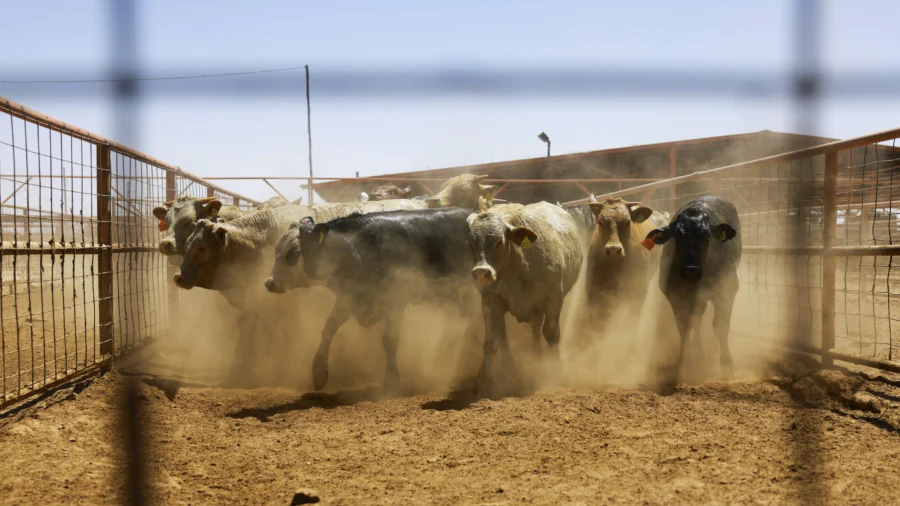
Cattle are held in a corral before being exported to the United States through the Jeronimo-Santa Teresa border crossing after Agriculture Secretary Brooke Rollins announced an agreement with Mexico on the management of the New World screwworm at the Chihuahua Regional Livestock Union facility, outside Ciudad Juarez, Mexico, on April 29, 2025. (Jose Luis Gonzalez/Reuters)

Sen. Ted Cruz (R-Texas) sounded the alarm Thursday over New World screwworm (NWS) in Texas, calling it a “serious” threat in his home state.

Cruz made the remarks following the confirmed detection of the deadly parasite in Zavala County, adding that he’s closely tracking the situation.
‘Texas has beaten this threat before and remains the backbone of America’s cattle industry,” Cruz wrote on X. “USDA and State of Texas are taking immediate action to ensure our food supply remains safe, support our livestock producers, and eradicate the pest.”

The case marks the first time in decades that the parasite with flesh-eating larvae has threatened the nation’s cattle industry and only the third time it’s appeared in the United States in that time.

NWS is a pest that affects livestock, pets, wildlife, and less commonly, humans and birds, according to the U.S. Department of Agriculture. Adult screwworm flies are about the size of a common housefly or slightly larger, USDA says. Their larvae feed on the living tissue of warm-blooded animals.

USDA has reassured that it’s leading an aggressive national response to NWS. It has activated personnel on the ground and is working with local partners after the case was confirmed in Texas on June 3.

“New World screwworm (NWS) is a devastating pest,” the agency said in an update online, adding it can cause serious and often deadly damage to animals and humans in areas of spread.

“While NWS is present in parts of South America—where infections in animals and people continue to occur—it was eradicated from the United States decades ago,” USDA said, but it has moved northward through Central America and Mexico in recent years.

Agriculture Secretary Brooke Rollins confirmed the case was in a 3-week-old calf in La Pryor, Texas, about 50 miles from the Mexico border.

Texas State Veterinarian Bud Dinges said he has established a 12-mile quarantine zone, prohibiting the movement of any warm-blooded animal—including pets—outside that zone without an inspection.

To date, there have been no further detections of NWS, according to the latest update by USDA.

The Associated Press contributed to this report.