


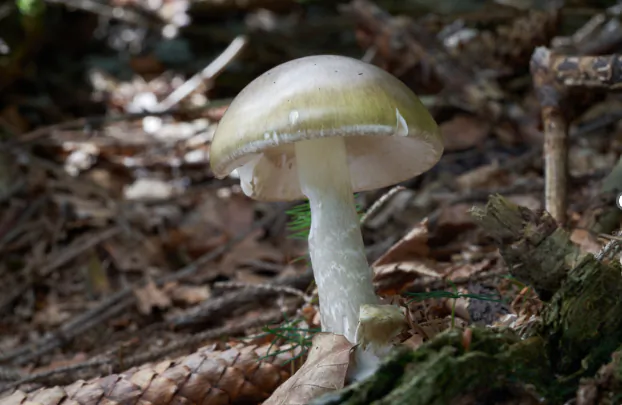
A deadly outbreak of mushroom poisoning has gripped California this winter, with health officials reporting three fatalities and an alarming surge in hospitalizations linked to toxic Death Cap mushrooms. The mushrooms have flourished following recent rainfall.
The hospitalized patients range in age from 19 months to 67 years, spanning multiple counties including Sonoma, Monterey, San Francisco, Santa Cruz, San Mateo, Santa Clara, Contra Costa, Alameda, and San Luis Obispo. Most cases documented were in the Monterey and San Francisco Bay Area, though officials warn that Death Cap mushrooms can be found statewide, particularly near oak trees and other hardwoods.
The danger stems from amatoxins, potent toxins contained within the mushrooms that cause severe cellular damage and are virtually impossible for the human body to eliminate. "These toxins also cannot be eliminated by cooking the mushroom and will cause kidney and liver damage 10-24 hours after they are ingested," the district, a 1972 initiative created by voters to protect and preserve natural landscapes, says in information available on their website.
Those poisoned collected Death Cap mushrooms from various locations across Northern California and the Central Coast, including county, city, and national park lands. The mushrooms are often confused with edible varieties, making them dangerous for both experienced and novice foragers.
Initial symptoms—watery diarrhea, nausea, vomiting, abdominal pain, and dehydration—typically appear within six to 24 hours of consumption and may briefly improve within a day. However, such apparent recovery masks a far more serious threat: severe liver damage can develop between 48 and 96 hours after ingestion, often progressing to fatal liver failure.
"We recognize that mushroom hunting is a valued activity," Dr. Baldwin-Santana said. "However, the safest choice right now is to avoid eating any wild mushrooms. Even experienced foragers should exercise extreme caution and should not rely on AI-assisted field identification to distinguish between safe and poisonous mushrooms."
The California Department of Public Health strongly advises residents to purchase mushrooms exclusively from reputable grocery stores and trusted retailers, and to avoid street vendors.
As described by the health department, Death Cap mushrooms are a medium to large variety typically featuring a greenish-gray cap, white gills, a white ring around the stem and a large white sac at the base. The Western Destroying Angel, a native California species, gives off similar characteristics but with a creamy white cap.
Officials urge anyone who has consumed wild mushrooms or is experiencing symptoms of poisoning to seek immediate medical care and contact the California Poison Control System at 1-800-222-1222. The poison control center operates 24 hours daily to provide expert guidance and is available before symptoms develop.