

The Trump administration revealed on July 16 that it eliminated the “duration of status” loophole that allowed foreign media representatives, students, and exchange visitors to stay in the United States “indefinitely without routine government oversight.”
Reforms will impact nonimmigrant visa holders in F, J, and I classifications, according to a press release by the Department of Homeland Security (DHS).
The crackdown comes after the Trump administration alleged that visas were being abused by foreign “forever students” who stayed in the United States because they kept enrolling in courses, DHS said.
Under the new rule, nonimmigrant students (F visas) and exchange visitors (J visas) will be allowed in the United States only during the time period that their specific program runs. They will not be allowed to exceed four years.
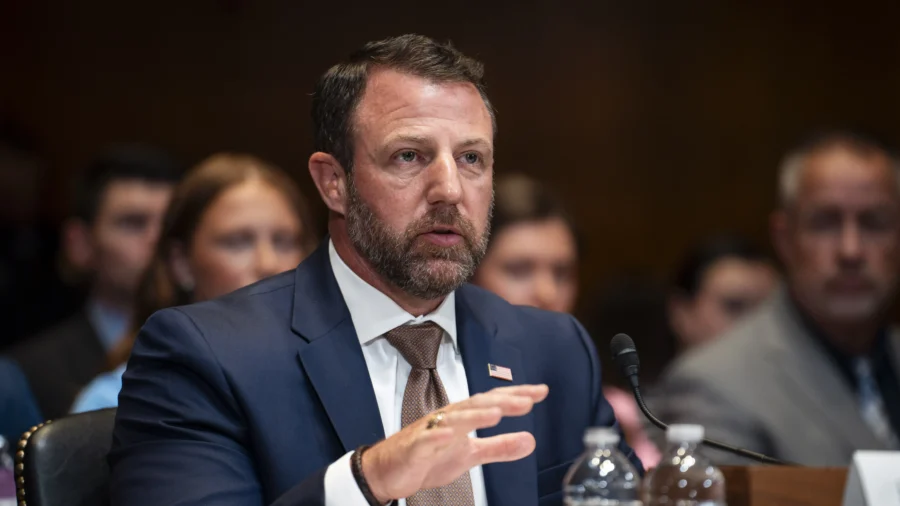
“For decades, foreign students have been admitted into the U.S. indefinitely, allowing thousands to abuse our immigration system by perpetually enrolling in courses to avoid having to leave the U.S,” DHS Secretary Markwayne Mullin said the statement.
Mullin said the “duration of status” system was outdated, compromised national security, and opened the U.S. to immigration fraud.
The secretary added that limiting visas will help the United States reclaim its ability to screen, vet, and monitor individuals within our borders.
Foreign journalists will be allowed to remain in the country for only 240 days, which is down from several years, according to the new rule, which is set to be published in the Federal Register on Friday.
“DHS believes that the 240-day period is not only sufficient to cover the vast majority of assignments but is also an appropriate interval for the U.S. Government to ensure that the alien remains eligible as an I nonimmigrant,” the DHS document read.
Journalists from China will be allowed to have a visa for only 90 days.
The rule will go into effect 60 days after being published in the Federal Register.
The DHS said there may be some flexibility for “neurodiverse individuals, students who may need to change academic paths, and journalists with unpredictable work cycles.”
F, J, and I visa holders will be able to apply for an extension only “in cases of compelling academic reasons, documented illness or medical conditions, and circumstances beyond the applicant’s control, which may include conflict, disaster, or other significant hardships.”
The DHS stated that the new rule is focused on immigration compliance and is not intended to impose restrictions on academic programs or research.