

DOJ Scraps 'Disparate Impact' Liability, Which Claims Racial Discrimination Without Intent

In April, President Donald Trump issued an Executive Order to remove disparate impact regulations from federal agencies.
Published: 12/9/2025, 3:07:26 PM EST
DOJ Scraps 'Disparate Impact' Liability, Which Claims Racial Discrimination Without Intent
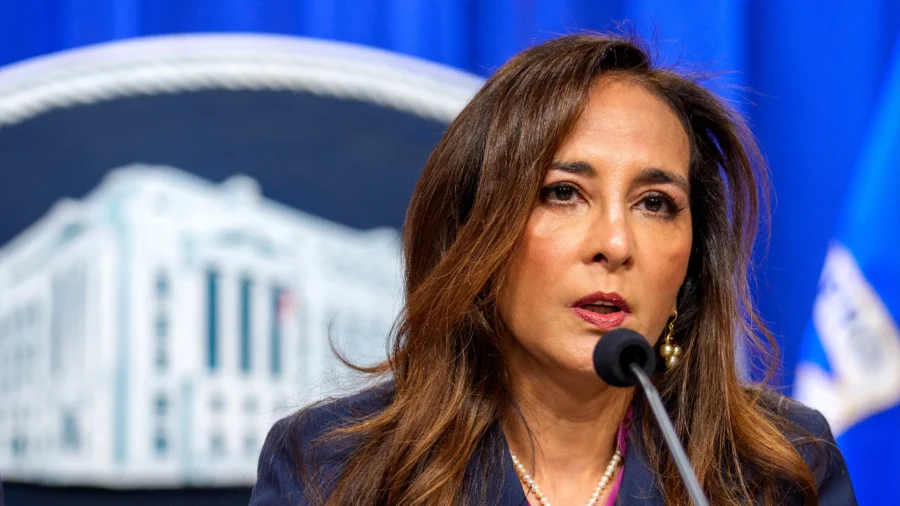
Assistant Attorney General for Civil Rights Harmeet Dhillon speaks during a news conference at the Justice Department in Washington on Sept. 29, 2025. (Andrew Harnik/Getty Images)

The Department of Justice is scrapping "disparate impact" liability.

The DOJ issued a final rule Tuesday eliminating disparate impact from its Civil Rights regulations. Disparate impact allowed the DOJ to bring lawsuits alleging discrimination based on unequal outcomes without proving any intentional discrimination. The decision falls in line with a broader Trump administration initiative aimed at restoring meritocracy and equal treatment under the law.

“The prior ‘disparate impact’ regulations encouraged people to file lawsuits challenging racially neutral policies, without evidence of intentional discrimination,” said Assistant Attorney General for the DOJ's Civil Rights Division Harmeet Dhillon said in a press release on the Department website. “Our rejection of this theory will restore true equality under the law by requiring proof of actual discrimination, rather than enforcing race- or sex-based quotas or assumptions.”

Disparate impact is the legal theory that certain policies or business practices that are not discriminatory at face value are still liable for discrimination because they create statistical or circumstantial inequalities that favor one racial group over another.

The landmark decision that formed the basis of disparate impact theory was the 1971 Supreme Court case Griggs v. Duke Power Co. In Griggs, the Supreme Court outlawed a company's policy requiring aptitude tests for promotions under Title VII of the Civil Rights Act of 1964, on the basis that those tests discriminated against black employees because they had lesser education and therefore insufficient intelligence to pass the tests.

"The [Civil Rights] Act proscribes not only overt discrimination, but also practices that are fair in form, but discriminatory in operation," Chief Justice Warren Burger wrote in the Court's opinion. "Congress directed the thrust of the Act to the consequences of employment practices, not simply the motivation."
SCOTUS cited and further advanced Griggs in Albemarle Paper Co. v. Moody in 1975, then again in Texas Department of Housing and Community Affairs v. Inclusive Communities Project, Inc. in 2015. Disparate impact was defined and outlined in federal law by the Civil Rights Act of 1991.
In 1973, the DOJ published rules building on the basis of Title VI, which prohibits discrimination on the basis of race, color, or national origin by organizations and programs receiving federal funding. Those rules outlawed policies that had "the purpose or effect" of discrimination in all programs receiving federal funds.
In August 2024, the Western District of Louisiana permanently enjoined the DOJ from enforcing its Title VI disparate impact regulations in Louisiana.
In April, President Donald Trump issued an Executive Order to remove disparate impact regulations from federal agencies. The order claimed that disparate impact essentially forced companies into racial quotas in hiring, which has hindered their ability to hire based on merit or need.

The order revoked presidential approval of the aforementioned Title VI regulations and ordered the attorney general to take action to repeal them. It also ordered all federal agencies to deprioritize enforcement of disparate impact regulations and laws. Furthermore, it ordered the DOJ to examine whether federal authority pre-empts state laws or policies with regard to disparate impact, and if they "have constitutional infirmities that warrant Federal action."

The DOJ says that it will still otherwise fully enforce Title VI; the new rule ensures that organizations receiving federal funding will have discrimination claims litigated on the basis of intent, not simply negative outcomes for one racial group or another. It also cuts down on regulatory burdens and compliance costs, promotes consistent enforcement across agencies, and "restores public confidence in civil rights law by aligning the Department’s regulations with the Constitution."