

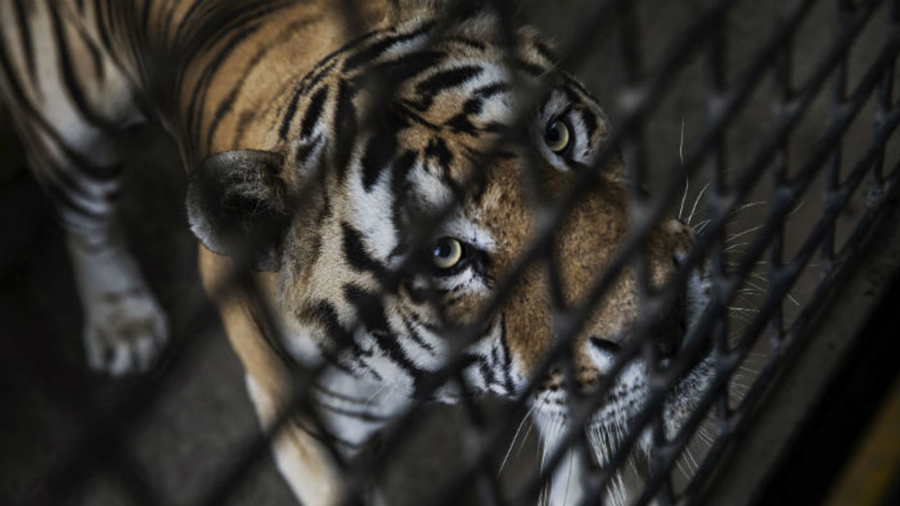
More than half of the tigers that were taken from a well-known tourist attraction have died from a viral disease and inbreeding led to the destruction of their immune systems, according to reports.
In 2016, Thai authorities removed almost 150 tigers from a Buddhist temple west of Bangkok in response to global pressure over wildlife trafficking. The tourist destination allowed visitors to take selfies with tigers, and and bottle-feed tiger cubs.
For years, the temple operated under the guise of a wildlife sanctuary, but after alleged links between it and wildlife trafficking, and reported claims of animal abuse, it was finally investigated.
Monks inside the temple were accused by wildlife activists of using illegal breeding practices to sustain the temple’s tiger population. Some visiting tourists also suspected malpractice, reporting that the big cats appeared to have been drugged.
Illness Emerges
After the tigers were rescued, they were rehoused in two state-run sanctuaries. Unfortunately, it didn’t take long for their caregivers to realize the felines were susceptible to canine distemper virus, a senior official from the Department of National Parks, Wildlife, and Plant Conservation revealed."When we took the tigers in, we noted that they had no immune system due to inbreeding," Prakit Vongsrivattanakul, the department’s deputy director-general, told state-owned broadcaster MCOT.
"We treated them as symptoms came up," Prakit added.
Public service broadcaster Thai PBS reported that 86 out of the 147 tigers had perished, although Prakit did not reveal the official death toll.
Rare Tiger Dies in Safari Park in February
A rare tiger, part of an endangered subspecies, died at a safari park in England after a fight with two other tigers.By the time the brawl ended, Shouri was dead.
“It is with deep sadness that we announce the death of one of our female Amur tigers, Shouri, who has passed away following a fight with two of our other tigers here at the park,” park officials stated. “A full investigation is ongoing to determine the exact circumstances surrounding this terribly sad event.”
Shouri was 13 and arrived at the park in 2006.
The park was not open at the time of the incident. The other two tigers were not injured.
The park said that tigers here play a role in the conservation of the species, helping preserve it for the future.
“Although Shouri was not part of a breeding programme, she was still an incredibly important ambassador for her species and part of the global mission to raise awareness for this amazing animal. Her loss is very hard to take and she will be missed by all the staff here as well as our visitors,” it added.
In a description of Amur tigers on the Longleat website, the park says its female Amur tigers are “fearsome predators” with “sharp canines and claws.” Visitors might see them stalking each other, but you are most likely to see them relaxing by their pools.