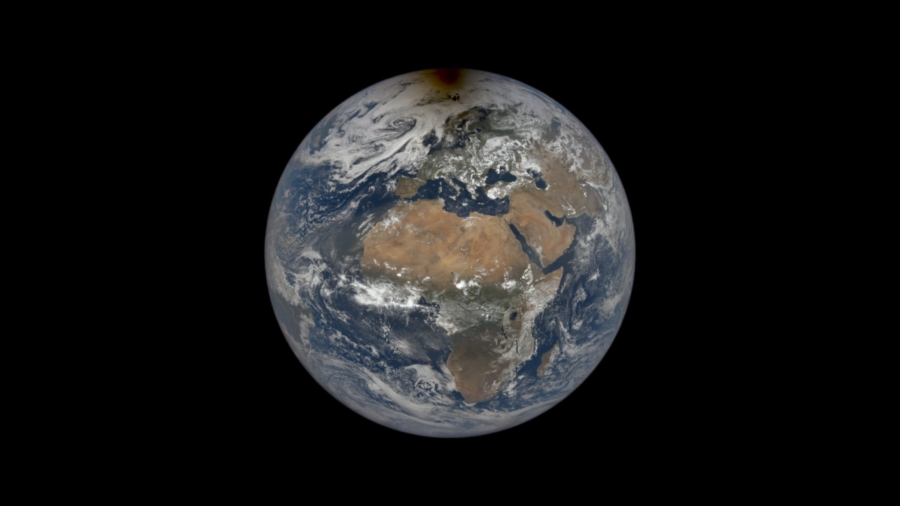
Earth has already logged two of the shortest days in modern history this summer, July 10 and July 22. Each day ended more than a millisecond earlier than the standard 24-hour day. A third record-breaker is predicted for Aug. 5,
according to the International Earth Rotation and Reference Systems Service (IERS) and Timeanddate.com.
While a millisecond may sound so small, precise timekeeping is critical to systems like GPS, satellite communications, and financial markets. Even a millisecond discrepancy can result in positioning errors of several meters.
Earth’s Rotation and Time Varies
Earth’s rotation fluctuates by a wide range of geophysical and astronomical factors. And while the Earth’s spin has gradually slowed over millions of years, it has unexpectedly sped up since 2020, leaving scientists puzzled.“Nobody expected this … Ocean and atmospheric models don’t explain this huge acceleration,”
said Dr. Leonid Zotov of Moscow State University according to Timeanddate.com and in an interview with EarthSky.
According to the U.S. Naval Observatory (USNO), the most recent observations show that Earth's days are now shorter by about 1.5 milliseconds, which is the briefest since the late 19th century. Past variations have ranged from 6 milliseconds shorter in 1660 to 4 milliseconds longer in 1910.
Leap Seconds and Atomic Time
Now, for the first time, scientists may subtract a second from global time as Earth’s rotation speeds up. This is called a negative leap second. Previously, all leap seconds have been added to slow atomic time and keep it aligned with Earth’s spin. Removing one has never been done before.
In 2022, the USNO
called the possibility of a negative leap second a “small, yet concerning” possibility for the next few years, noting that recent days have been the shortest since the late 1800s.
"The most recent observations show that the length of the day is shorter by about 1.5 milliseconds, which would indicate that these are shortest days since the late 19th century,"
stated the USNO.
Leap seconds adjust Coordinated Universal Time to match astronomical time, which reflects Earth’s actual rotation. Leap seconds were first introduced in 1972, when a 10-second correction brought UTC in line with UT1. Since then, about two dozen leap seconds have been added roughly every 18 months,
according to NIST.
Coordinated Universal Time is based on atomic time, which is an ultra-precise system that defines a second as 9,192,631,770 oscillations of a cesium-133 atom.
This standard was adopted in 1967 by the 13th General Conference on Weights and Measures (CGPM). The CGPM
plans to update the official definition of the second by 2030.
Since 2020, Earth has recorded increasingly shorter days during the summer months. The shortest days on record so far include July 19, 2020 and July 9, 2021, each day was 1.47 milliseconds shorter. In 2022, June 30 saw an even shorter day at 1.59 milliseconds. On July 16, 2023, the length of day measured 1.31 milliseconds shorter. And July 5, 2024 was 1.66 milliseconds shorter.
For 2025, July 9 was 1.30 milliseconds shorter and July 22 was 1.38 milliseconds shorter. It’s predicted that Aug. 5 will be 1.51 milliseconds shorter, according to the International Earth Rotation and Reference Systems Service, the U.S. Naval Observatory, and Timeanddate.com.