


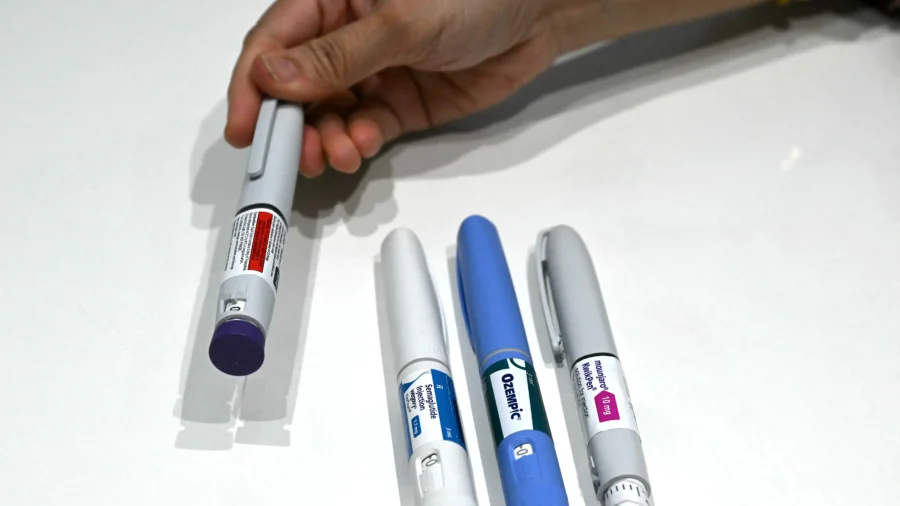
A new Medicare benefit, launched this week, that offers GLP-1 weight-loss medications for just $50 a month is expected to spark interest among older Americans.
“Literally every single client of mine has asked me about the new GLP-1 benefit,” RestingSycamore.com licensed medicare agent Peter Abilla told NTD. “Some of my clients who are already taking GLP-1 medications are happy because now they get to save. Others who want to start are excited about the new lifestyle they will have once they start to lose weight.”
Under the program, Medicare will cover glucagon-like peptide-1 receptor (GLP-1) agonists when used strictly for weight loss.
The drug is already available to Medicare recipients who struggle with diseases like diabetes and sleep apnea.
“For many older adults, cost has been one of the biggest barriers to accessing GLP-1 medications,” registered and licensed dietitian Kimberly Gomer told NTD. “Making these medications more affordable could allow millions of Americans who have struggled with obesity and related conditions for decades to finally receive treatment.”
GLP-1 drugs decrease appetite by slowing gastric emptying, which causes a feeling of fullness in the stomach.
However, registered dietitian Juliana Vocca fears side effects could exacerbate other problems.
“A side effect to this is reflux and constipation, which many older adults already experience,” Vocca told NTD.
The GLP-1 medications that Medicare will subsidize are Foundayo® tablets, Wegovy® injections or tablets, and the Zepbound® KwikPen®.
“While many patients will hear that Medicare now covers GLP-1 medications for $50 per month, it is essential that they understand that this is unlikely to be an option for them unless they meet very specific criteria,” board-certified family physician Jumana Al-Deek told NTD.
Requirements include having a certain body mass index (BMI) as well as pre-conditions such as prediabetes, myocardial infarction, stroke, and symptomatic peripheral artery disease.
Without a prescription, Wegovy injections are priced at $1,350 to $1,600 per month while Zepbound ranges from $500 to $1,086 per month, depending on the pharmacy markup and dosage.
The lower price expands choice, but it should not create an expectation that every eligible person ought to pursue weight loss, according to Rutgers University clinical health psychology professor Charlotte Markey.
“Greater access may further normalize medical weight loss and intensify pressure on older adults to make their bodies smaller, so we should avoid treating weight loss as the only measure of health or successful aging,” Markey told NTD.