


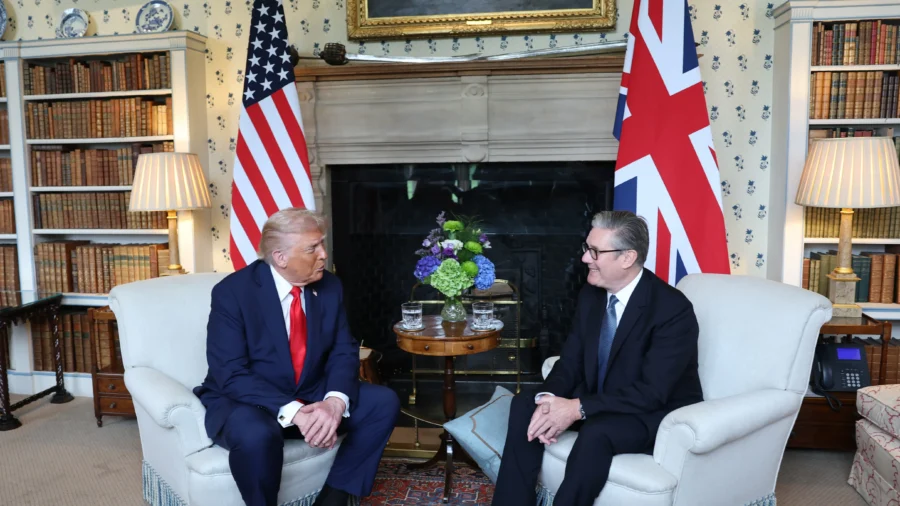
European nations have continued to push back against U.S.-Israeli military operations against Iran amid criticisms from President Donald Trump that NATO allies have been “unhelpful” in the monthlong war.
On March 31, Trump again lambasted countries that haven't assisted in the strikes, writing on his platform Truth Social that France had been "VERY UNHELPFUL” over a decision to refuse Israel use of French airspace to transport American weapons to be used in the war.
The French presidency said that its decision was consistent with France’s policy since the conflict began on Feb. 28.
Israel's defense ministry said the French ban was imposed despite prior coordination and assurances that the munitions were intended solely for use against Iran.
The ministry said Israel would cut all defense procurement from France and would have no new engagement with the French military.
Italy refused permission this past week for U.S. military aircraft to land at the Sigonella air base in Sicily before continuing to the Middle East, according to local media outlet Corriere della Sera.
Italy's Defense Minister, Guido Crosetto, later denied any rift between Prime Minister Giorgia Meloni’s right-leaning government and Washington or any shift in policy. In an X post, he said that U.S. air bases remained active, but that Washington requires special permission for any use outside of existing agreements.
“I want to reiterate that there is no cooling or tension with the U.S., because they know the rules that have governed their presence in Italy since 1954 just as well as we do,” Crosetto wrote.
War Debate
Another NATO ally, Germany, is home to Ramstein, the largest U.S. base in Europe.Berlin said when the war began that there were no restrictions on U.S. forces using the base, though the issue has been debated after Germany’s center-left President Frank-Walter Steinmeier said he believes the war is illegal.
Trump wrote on Truth Social: "All of those countries that can’t get jet fuel because of the Strait of Hormuz, like the United Kingdom, which refused to get involved in the decapitation of Iran, I have a suggestion for you: Number 1, buy from the U.S., we have plenty, and Number 2, build up some delayed courage, go to the Strait, and just TAKE IT."
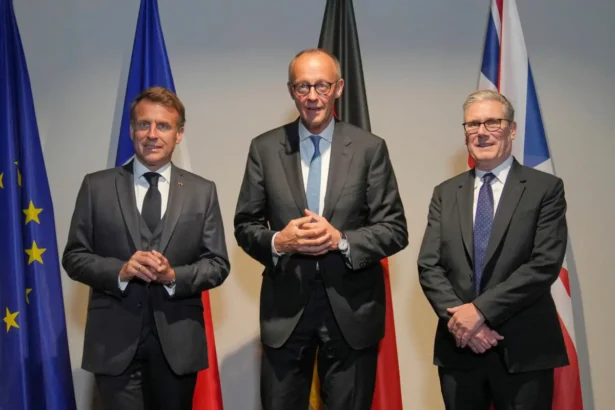
UK Prime Minister Keir Starmer, who has been repeatedly criticized by Trump for declining to send British troops or allow the use of British bases to attack Iran, reiterated his position on April 1.
Starmer, who leads a center-left Labour Party government, said the economic crisis caused by the war means the UK will seek “closer ties to Europe.”
“This is not our war. We will not be drawn into the conflict. That is not in our national interest,” he told a televised press conference in London, adding that he will continue to maintain this position.
Although he said he didn't believe he would have to choose between the United States and Europe, Starmer said the “volatile” situation caused by the conflict meant that Britain’s “long-term national interest requires closer partnership with our allies in Europe and with the European Union.”
The UK electorate voted Britain out of the EU with the Brexit vote in 2016, eventually leaving the bloc in 2020.
In an April 1 interview with the Daily Telegraph, Trump said that he is considering pulling the United States out of NATO.
Asked about the president’s remarks, Starmer described NATO as the “single most effective military alliance the world has ever seen.”
Pressed on the possible deterioration of the "special relationship" with the United States, Starmer said he would continue to act in the British national interest “whatever the pressure on me and others, whatever the noise.”
British Foreign Secretary Yvette Cooper will host a meeting of international leaders this week to assess all possible diplomatic options to reopen the Strait of Hormuz, Starmer said. Tehran’s blockage of the key shipping route has caused oil and gas prices to soar worldwide, causing economic shockwaves.
In another April 1 Truth Social post, Trump said the Iranian leadership had asked for a cease-fire, and he suggested he might end the military campaign against Iran, whether or not a deal is reached for securing the Strait of Hormuz.
"We will consider when Hormuz Strait is open, free, and clear. Until then, we are blasting Iran into oblivion or, as they say, back to the Stone Ages!!!" the president wrote.