


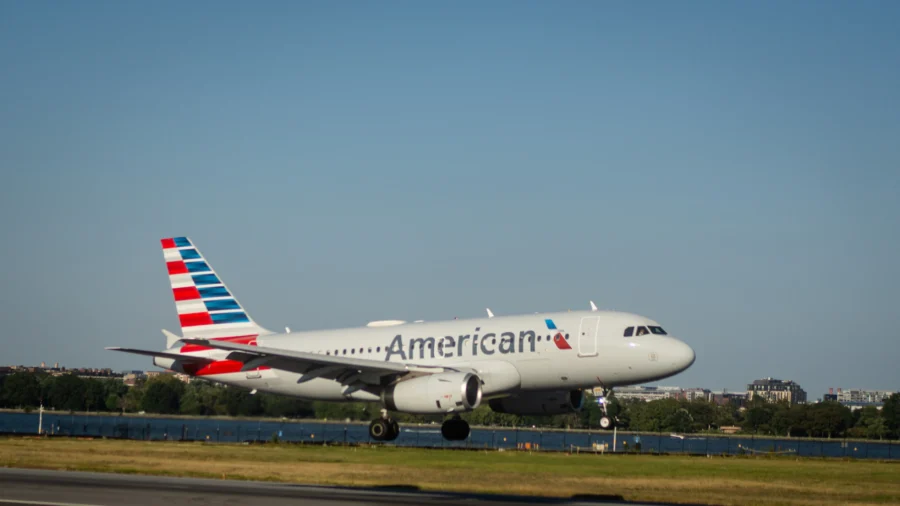
The Federal Aviation Administration on Wednesday suggested a $255,000 civil penalty against American Airlines, accusing the Fort Worth-based airline of permitting 12 flight attendants to resume safety-sensitive work after testing positive for drugs or alcohol without completing required follow-up testing. The announcement comes days after the agency suggested a civil penalty for Southwest Airlines over similar allegations.
The penalty, made public April 8, is the most recent in a series of federal enforcement actions targeting the airline.
The FAA alleges the violations took place from May 2019 through December 2023, with the employees allegedly returning to in-flight duties that federal regulators consider safety-sensitive.
According to the agency, the substances include alcohol, amphetamines, cocaine, marijuana, and methamphetamine, which regulators said posed a risk to passenger safety aboard American Airlines flights.
American Airlines did not immediately return a request for comment.
American Airlines has 30 days after receiving the FAA’s enforcement letter to respond. The airline may contest the proposed penalty, negotiate a reduced settlement, or accept the fine as issued. No criminal charges have been filed, and the allegations are subject to the airline’s right of response.
Under 14 CFR Part 120, the FAA’s governing regulation for drug and alcohol testing in aviation, any employee who tests positive for a prohibited substance must be removed from safety-sensitive positions without delay.
Those positions include pilots, flight engineers, flight attendants responsible for cabin safety, and aircraft maintenance personnel who perform repairs or preventive maintenance. The classification also includes aircraft dispatchers, flight instructors, and air traffic controllers at contract towers, as well as ground security coordinators.
The employee must undergo a full evaluation by a qualified substance abuse professional, adhere to any recommended treatment or education, pass a return-to-duty test, and then complete a regimen of follow-up testing entailing a minimum of six unannounced tests within the first 12 months. Testing can continue for up to 60 months.
On April 3, the FAA proposed a $304,272 civil penalty against Southwest Airlines due to similar drug and alcohol testing failures involving 11 employees, including pilots, flight attendants, and mechanics. Those violations took place between 2021 and 2024.
“During various periods between August 2021 and July 2024, the employees performed safety-sensitive functions when Southwest Airlines did not subject them to the required follow-up testing,” the FAA said.
Southwest Airlines did not immediately return a request for comment.
The National Institutes of Health revealed that flight attendants who commit drug violations face increased odds of having some sort of accident versus those not using drugs at a level potentially 13 times higher.
The FAA’s drug and alcohol testing program for aviation was codified under the Omnibus Transportation Employee Testing Act of 1991. It was recently updated with amendments published in December 2024. The program requires pre-employment, random, post-accident, reasonable cause, return-to-duty, and follow-up testing for employees in safety-sensitive roles.
Correction: A previous version of this article misstated when the FAA proposed a civil penalty against Southwest Airlines. The Epoch Times regrets the error.
From The Epoch Times