


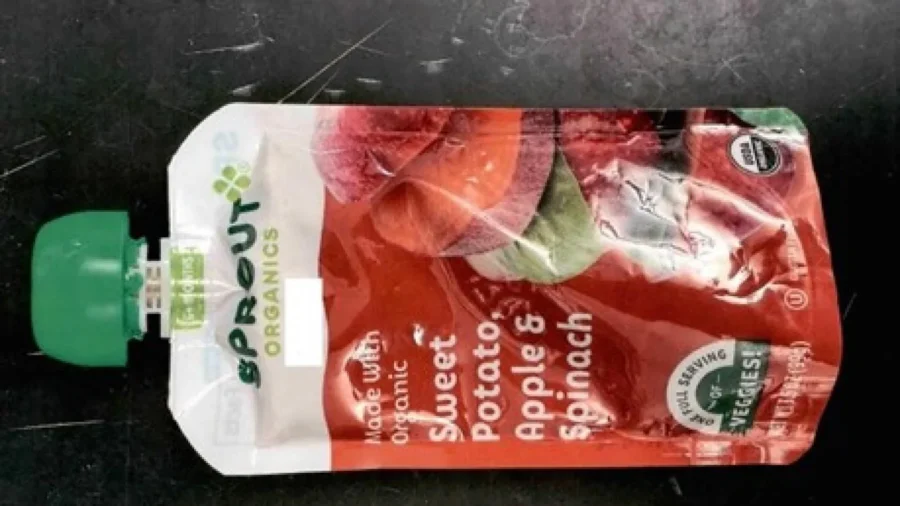
The U.S. Food and Drug Administration (FDA) announced the recall of a popular brand of baby food sold at Walgreens stores.
Sprout Organics voluntarily withdrew one lot of Sprout Organics® Sweet Potato Apple and Spinach pouches because it may contain elevated levels of lead, according to a Sept. 16 FDA advisory.
“The voluntary recall is being initiated after routine sampling,” the FDA said. “If a child is exposed to enough lead for a protracted period of time, this can affect learning and development or cause other long-term health problems.”
The recall is applicable to 3.5-ounce pouches sold in Walgreens and some independent stores in the Southern region of the United States.
Most sales of the pouches occurred between September and December 2024, according to the FDA, and were not sold in any other large grocery chain besides Walgreens.
Sprout Organics company leaders did not respond to requests for comment. The pouches, once sold on Amazon.com, are marketed on the Sprout Organics website as "simply convenient organic pouches packed with wholesome ingredients."
The FDA further stated that there have been no confirmed reports of injury and urged consumers who have the food item in their possession to return it to their local store for a full refund.
The effects of lead depend upon the amount and duration of exposure and age/body weight, according to the FDA but exposure to lead, even at low levels, may increase blood lead levels.
“Additional signs and symptoms of lead exposure are more likely with acute exposure to higher levels of lead or chronic exposure to lead,” federal officials said.
Food recalls in the United States have been on the rise in recent years. A Trace One study found they increased 15 percent in the past five years.
Foreign object contamination accounted for 11.6 percent of all recalls, undeclared allergens accounted for nearly 40 percent, bacterial contamination accounted for 21.1 percent, and lead contamination accounted for 1.7 percent, according to the study.
The potential contamination by a foreign object, specifically metal, has alarmed some professionals in the food industry, including food industry consultant Bryan Quoc Le.
"Lead and foreign objects are easier to detect using fairly basic chemical, bulk material filtration, and X-ray diagnostics,” Quoc Le told NTD. “These systems are also less expensive to implement. Lead contamination is also a very serious issue that is often detected further up the ingredient supply chain, where contamination occurs at the point of harvesting or processing of ingredients."