

The U.S. Food and Drug Administration (FDA) assigned its second-highest risk warning to 38,043 gallons of recalled water sold in six states.
The liquid, packaged in a plastic jug and sealed with a red plastic lid, was distributed to Illinois, Indiana, Kentucky, Ohio, Michigan, and Wisconsin.
Neither Meijer nor the FDA has disclosed how the foreign substance was discovered or what ingredients the foreign substance may contain.
The recall began on Nov. 13, 2025, and since then, the FDA assigned its second-highest risk alert to the product.
“As a Class II recall, this means the risk is temporary or medically reversible adverse health consequences,” registered dietitian nutritionist Tiffany Bruno told NTD.
A Class 1 recall is defined as having a reasonable probability that the use of or exposure to will cause serious adverse health consequences or death, while a Class 3 event involves products that violate regulations but are unlikely to cause health problems, such as minor labeling errors.
The recalled containers, packed four per case, have a sell-by date of October 4, 2026, lot code 39-222 #3, and UPC 041250841197.
The FDA urged consumers to inspect their jugs and stop using the water immediately, regardless of whether any contamination is visible.
Meijer company leaders did not respond to requests for comment by the time of publication.
Distilled water undergoes boiling and condensation to remove impurities and minerals, creating a product ideal for small appliances requiring high purity water, such as medical devices, continuous positive airway pressure (CPAP) machines, humidifiers, and sinus rinses. It is also commonly used in infant formula preparation. Foreign material in distilled water can pose serious safety risks, particularly for sensitive uses that demand water completely free of particles or contaminants.
Unless a bottle specifically states it is spring water, it is likely purified water.
Purified water is usually sourced from municipal supplies and undergoes rigorous treatment before packaging. Common purification methods include reverse osmosis, charcoal filtration, distillation, and other technologies to ensure the final product meets purity standards.
To be labeled “purified,” the water must be processed by distillation, deionization, reverse osmosis, or comparable methods in accordance with U.S. standards.
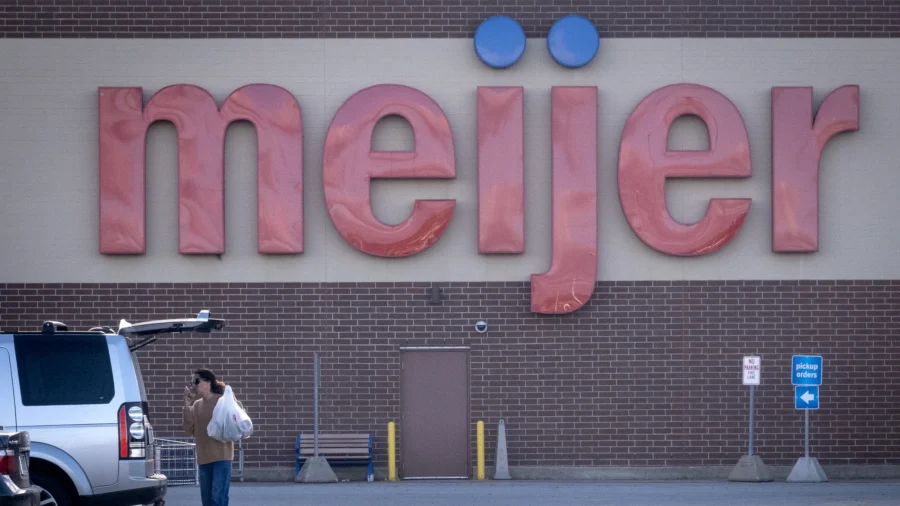
Meijer is a family-owned, Michigan-based grocery retailer that also sells general merchandise, provides pharmacy services, and has gas stations.