


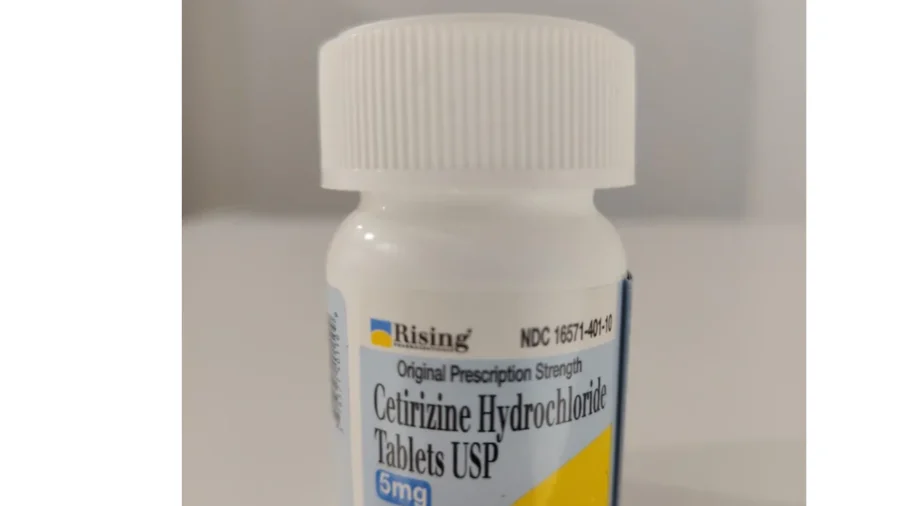
The U.S. Food and Drug Administration (FDA) announced the recall of a popular allergy and hives medicine due to cross-contamination involving red marks on the pills and ranitidine.
Ranitidine chemically disintegrates into N-Nitrosodimethylamine (NDMA), a chemical classified by the FDA as likely to cause cancer in humans.
“Product complaint received that a pharmacy technician identifies the discrepancy while counting the tablets at the time of dispensing,” the FDA alert said. “A product complaint reported about appearance of red dot on tablets of Cetirizine Hydrochloride Tablets USP 5 mg and some tablets are discolored (Appeared as discolored due to multiple red colored dots on tablets).”
Unique Pharmaceutical Laboratories management did not respond to requests for comment by the time of publication.
Cetirizine, also known under the brand name of Zyrtec, is an antihistamine commonly used to treat seasonal allergies, dust sensitivity, and hives.
The recalled product is packaged in standard opaque plastic pill bottles of 100 and was distributed nationwide by Rising Pharma Holdings to several wholesalers/retailers.
The following four lot numbers are named in the recall: GY825029, GY825030, GY825031 and GY825032.
"We didn’t observe unacceptable levels of NDMA in many of the samples that we tested,” FDA Center for Drug Evaluation and Research director Dr. Janet Woodcock said on April 1, 2020. "However, since we don’t know how or for how long the product might have been stored, we decided that it should not be available to consumers and patients unless its quality can be assured."
Adverse events include severe hypersensitivity reactions and anaphylaxis that manifests as hypotension, dyspnea, difficulty swallowing, throat and facial edema, generalized pruritus, urticaria, and loss of consciousness.