


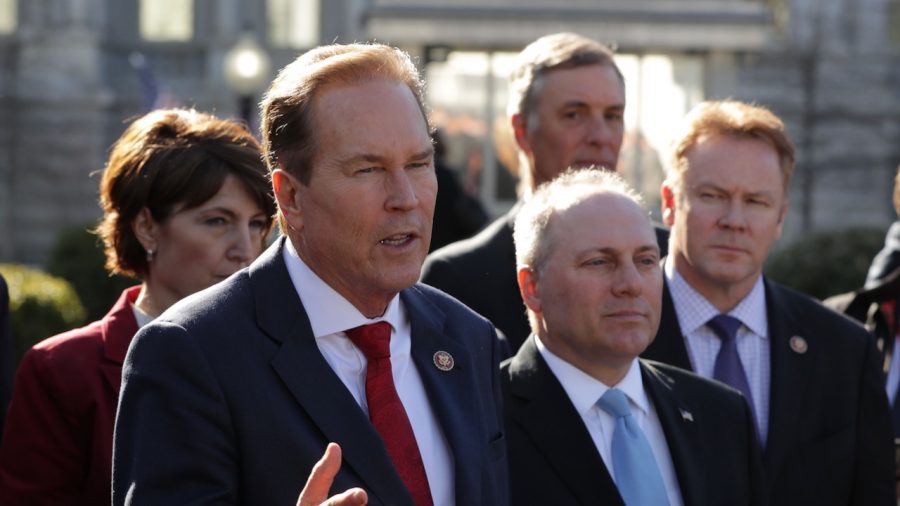
Rep. Vern Buchanan (R-Fla.) announced Tuesday that he will not be seeking reelection after serving two decades in Congress.
Buchanan, who was first elected in 2006, will leave office as the longest-serving Republican to represent southwest Florida in the U.S. House of Representatives.
“Serving the people of Southwest Florida has been the honor of my lifetime,” Buchanan wrote. “Every achievement worth doing began with listening to my constituents and fighting for their priorities. I came to Congress to solve problems, to fight for working families and to help ensure this country remains a place where opportunity is available to everyone willing to work for it.”
Buchanan was known in Congress for his leadership in tax, trade, and health care policy.
His legacy, according to the congressman’s office, includes 51 bills and initiatives signed into law by four presidents—George W. Bush, Barack Obama, Joe Biden, and Donald Trump. The rare achievement represents his ability to advance meaningful legislation in divided governments, his office said.
Buchanan has served as a longtime member of the House Ways and Means Committee and played a key role in the development and implementation of the Tax Cuts and Jobs Act.
The congressman currently serves as Chairman of the Health Subcommittee, where he has advanced bipartisan efforts to protect Medicare and lower prescription drug costs.
The announcement also listed his accomplishments for Florida, which include protecting the state’s natural resources and working to combat red tide.
He also pushed for tax relief for Florida’s citrus growers and supported small businesses.
“Taken together, his record has consistently placed him among the most effective members of Congress,” according to independent analyses by the nonpartisan Lugar Center, his office said.
Buchanan represents Florida's 16th congressional district, which includes Sarasota and surrounding areas.
The primary will be held on Aug. 18. The general election is scheduled for Nov. 3.
Currently, Republicans hold a narrow majority in the lower chamber, with 218 seats compared to Democrats’ 213.