Foreign Visitor Numbers to Japan Up 10 Percent in November, Despite China Travel Boycott
Officials acknowledged Beijing’s travel advisory but noted that 562,600 visitors had still come from China last month, a 3 percent increase from last year.
Despite Beijing’s travel boycott, foreign visitor numbers to Japan increased by 10.4 percent in November from a year earlier to 3.52 million, the country’s tourism board said on Dec. 17.
The Japan National Tourism Organization (JNTO) said the year-to-date number of foreign visitors through November totaled 39,065,600, surpassing the full-year record of 36,870,148 set in 2024.
The tourism board said there was a high demand for travel to Japan, particularly from South Korea, Taiwan, Malaysia, Indonesia, the United States, Canada, Australia, and Europe.
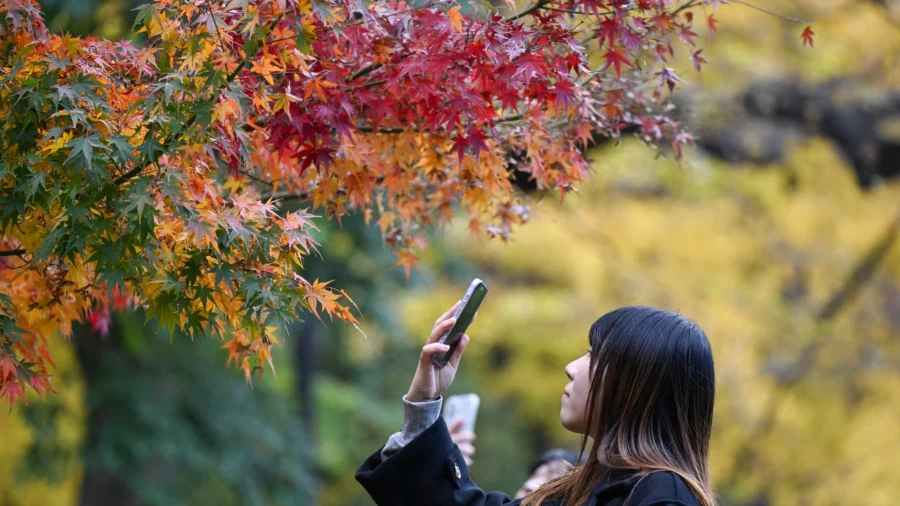
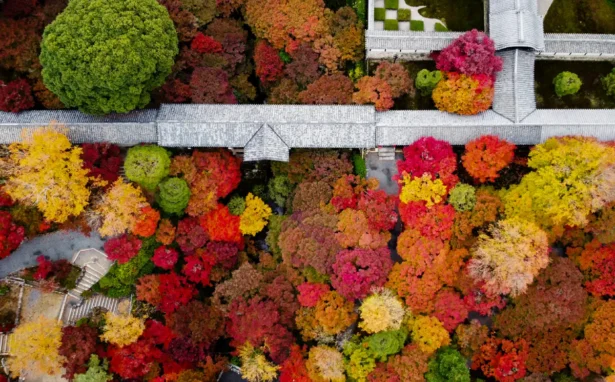
JNTO also noted that November is the second half of the foliage season. According to the tourism board, mountains, lakeside areas, gardens, and temples become particularly popular tourist destinations for people who want to view the vibrant autumn leaves.
Nineteen markets recorded their highest-ever numbers of foreign travelers for November, JNTO said, including South Korea, Taiwan, and the United States. The United States surpassed the 3 million visitor mark on a cumulative basis last month, “becoming the fourth market after China, South Korea, and Taiwan,” it said.
The increase in the overall number of tourists comes despite the ongoing diplomatic tensions between Japan and China following Japanese Prime Minister Sanae Takaichi’s remarks last month about Taiwan, which prompted Beijing to urge its citizens not to travel to Japan.
JNTO acknowledged Beijing’s travel advisory in its report but noted that 562,600 visitors had still come from China last month, a 3 percent increase from November 2024.
There was also a 11.1 percent increase in travelers from Taiwan in November compared with last year, as 542,400 of the island’s citizens visited Japan.
“Owing to the continued popularity of travel to Japan and the expansion of airline seat capacity, including the increase in flights between Taipei Taoyuan and Kobe, the number of visitors [from Taiwan] reached a record high for November,” JNTO said.
This aerial image shows autumn leaves at their peak as they surround Tsutenkyo Bridge among the grounds of Tofukuji Temple, in the city of Kyoto, Japan, on November 27, 2024. JIJI Press/AFP via Getty Images
Heightened Tensions
Tensions are heightened between Tokyo and Beijing.
In November, Takaichi told Parliament that a hypothetical Chinese attack on Taiwan could constitute an existential threat to Japan that would prompt a military response.
Beijing considers the self-governing democratic island of Taiwan its own territory, and the Chinese communist regime has not ruled out taking control of the island by force.
In response to Takaichi’s comments, China imposed a travel boycott on Japan. Beijing followed up with other actions, including a ban on Japanese seafood.
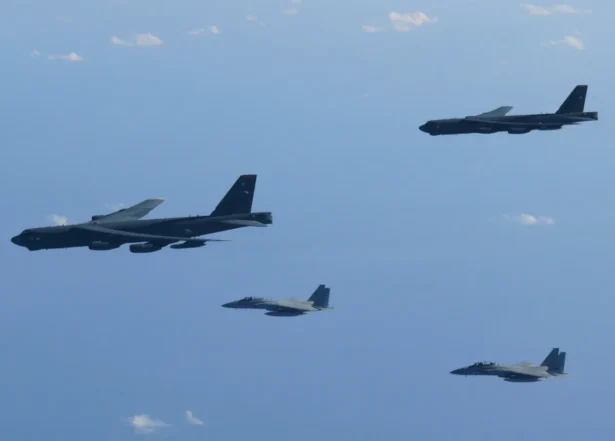
The 6th Air Wing of Japan Air Self-Defense Force’s F-15 fighters hold a joint military drill with the U.S. B-52 bombers over the Sea of Japan on Dec. 10, 2025. Joint Staff Office of the Defense Ministry of Japan/Handout via Reuters
Tensions escalated on Dec. 6 when two Chinese J-15 fighter jets allegedly locked radar on Japanese F-15s in international airspace near Okinawa, which is about 400 miles south of mainland Japan.
The incident prompted Tokyo to lodge complaints against Beijing.
Japanese Defense Minister Shinjiro Koizumi said on Dec. 7 during a press conference that the radar illumination was a “dangerous act that exceeded the scope necessary for the safe flight of the aircraft.”
Australian Deputy Prime Minister Richard Marles, who was at the press conference, said after meeting with Koizumi that the communist regime’s conduct in the region was routinely inconsistent with a rules-based order and that Australia and Japan would be working “to uphold a free and open Indo‑Pacific.”
In response, Beijing’s foreign ministry spokesperson denied the allegations of radar illumination and rejected Japan’s protest, saying China lodged a counter-protest with Beijing and Tokyo.
Taiwanese President Lai Ching-te criticized Beijing’s “military provocations” and accused the Chinese regime of heightening tensions.
“Recent Chinese military provocations near Japan & across the region have escalated tensions & highlight the urgency of increased investments in defense,” he said in a Dec. 10 post on X. “We stand together with democratic partners in opposing these actions & remain resolute in our determination to safeguard peace.”
Joint US–Japanese Air Drill
The United States also criticized Beijing over the incident; a U.S. State Department spokesperson said on Dec. 9 that “China’s actions are not conducive to regional peace and stability.”
“The U.S.–Japan Alliance is stronger and more united than ever. Our commitment to our ally Japan is unwavering, and we are in close contact on this and other issues,” the spokesperson said.
On Dec. 10, the United States and Japan conducted a joint aerial military exercise over the Sea of Japan.
War Secretary Pete Hegseth speaks during the Reagan National Defense Forum at the Ronald Reagan Presidential Library in Simi Valley, Calif., on Dec. 6, 2025. Jonathan Alcorn/Reuters
The Japanese Ministry of Defense said on Dec. 11 that the exercise reaffirmed “the strong will between Japan and U.S. not to tolerate unilateral changes to the status quo by force.”
Koizumi and U.S. Secretary of War Pete Hegseth held a telephone call on Dec. 12 to discuss regional security.
During the call, Hegseth and Koizumi exchanged views on the “increasingly severe security situation in the Indo-Pacific region”—including the Dec. 6 radar incident—according to a summary released by Japan’s Ministry of Defense.