


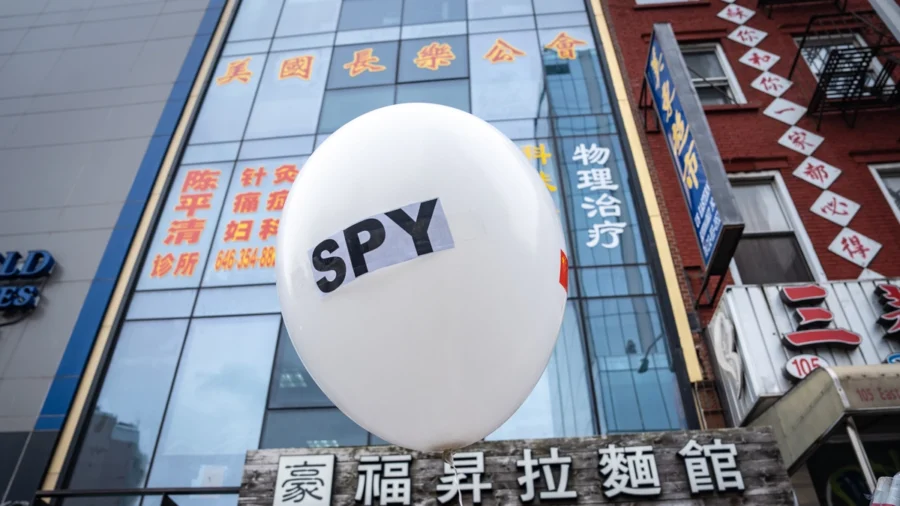
France’s domestic intelligence agency, the Directorate-General for Internal Security, has dismantled nine clandestine networks linked to China’s Ministry of Public Security since the start of 2026.
Operating covertly within diaspora organisations—including the Fujian Business Association—these networks allegedly engaged in activities ranging from facilitating passport services to recruiting informants and conducting surveillance on political dissidents.
The operations are believed to have targeted members of France’s Chinese community, which numbers approximately 600,000.
The French Interior Ministry confirmed that two of the three Chinese nationals accused of running these covert stations have already been deported. The fate of a third alleged “station chief” remains uncertain: on June 9, a public rapporteur recommended that the Council of State, France’s highest administrative court, uphold the deportation order.
Among those implicated is Ni Chaowen, a prominent businessman and president of the French Federation of Fujian Business Associations. Authorities allege that his fast-fashion business network served as a cover for the operations.
Ling Huazhan, a 26-year-old Chinese dissident, was forcibly taken into Terminal 1 at Paris Charles de Gaulle Airport by a group of seven individuals, reportedly including two Chinese Embassy staff members. The group allegedly attempted to compel his return to China before French border police intervened and halted the operation.
The episode unfolded on the eve of Chinese leader Xi Jinping’s state visit to France. On May 2, French public broadcaster France 2 aired an investigative report alleging that Chinese authorities have used embassy personnel, overseas “police service centers,” and diaspora networks in France to intimidate, monitor, and, in some cases, attempt to forcibly repatriate dissidents.
Lu, who has lived in the United States for 45 years and was active in Fujian-based community associations, faces up to 30 years in prison. The case marks the first successful criminal conviction linked to the alleged global network of overseas police stations.
According to Safeguard Defenders, these operations often follow a consistent model: legally registered hometown or cultural associations are used as a façade, providing administrative services while functioning as hubs for intelligence gathering, monitoring dissidents, and exerting pressure on diaspora communities.
In one such case in 2018, Lu allegedly took part in an extrajudicial operation—linked to China’s “Operation Fox Hunt”—aimed at forcing a target to return to China from U.S. soil.
Beijing has repeatedly denied the existence of such overseas police stations, dismissing related allegations and legal actions as “political manipulation rooted in a Cold War mentality.”
The report highlighted a sharp escalation in covert operations, emphasizing their capacity to directly undermine U.S. sovereignty and jeopardize critical national security interests.
In response to these escalating risks, key U.S. allies have similarly intensified their diplomatic, legislative, and law enforcement frameworks to counter Beijing's illicit operations.
Comparable concerns have also emerged in the United Kingdom. In June 2023, authorities launched investigations into four suspected Chinese “police service stations” operating in London, Glasgow and Belfast.
The UK has since folded its response to alleged Chinese espionage and transnational repression into a wider legislative framework, centred on the strengthened provisions of the National Security Act.
In March, British police arrested three men under the Act as part of an investigation into suspected China-linked foreign interference targeting the UK’s democratic institutions.
Peter Wai, 41, was sentenced to 10 years’ imprisonment on the same charge, alongside an additional conviction for misconduct in public office while serving as a UK Border Force officer.