


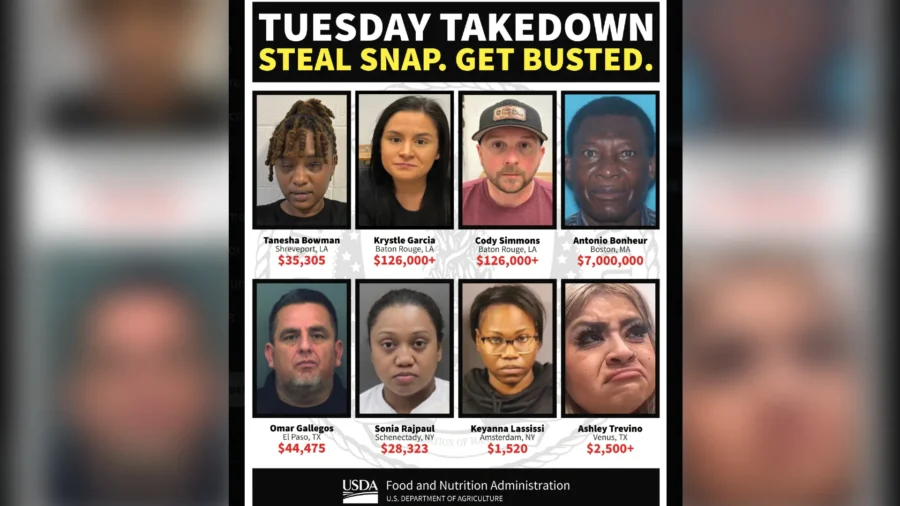
The U.S. Department of Agriculture (USDA) highlighted eight Supplemental Nutrition Assistance Program (SNAP) fraud cases, with alleged losses spanning from $1,520 to $7 million, as the Trump administration continues to ramp up efforts to crack down on fraud in the federal food assistance program.
“Steal SNAP. Get Busted,” Rollins wrote. “These 8 fraudsters thought they could steal food assistance money and get away with it. From $1,520 all the way up to $7 MILLION — the USDA Food and Nutrition Administration is coming for everyone. Justice served.”
The USDA titled the photos as “Tuesday Takedown,” along with the individuals' names, city and states, and how much they are reported to have stolen.
The announcement comes as USDA officials say that fraud within the program is more widespread than previously reported.
According to Rollins, data from 29 states showed nearly 200,000 individuals allegedly used Social Security numbers belonging to deceased people, and almost 500,000 individuals allegedly received benefits in multiple states.
“What we uncovered was staggering,” Rollins wrote, adding that the findings represented “just the tip of the iceberg.”
"We need to protect these programs for the Americans they were designed to help," she said.
She said the USDA identified at least $3 billion annually in alleged fraud from data supplied by participating states, estimating the total could exceed $10 billion nationwide.
Starting in Fall 2026, participating stores must stock at least seven varieties of foods in each of four staple categories: fruits and vegetables, dairy products, grains, and protein foods.
The USDA said the changes are intended to improve access to nutritious foods and reduce opportunities for abuse and trafficking of benefits. The agency also reported taking enforcement action against nearly 3,200 retailers during the past 14 months for alleged violations of existing SNAP requirements.
At the same time, several states are implementing new USDA-approved waivers restricting the purchase of certain products, such as soda, candy, and some sweetened beverages, with SNAP benefits.