


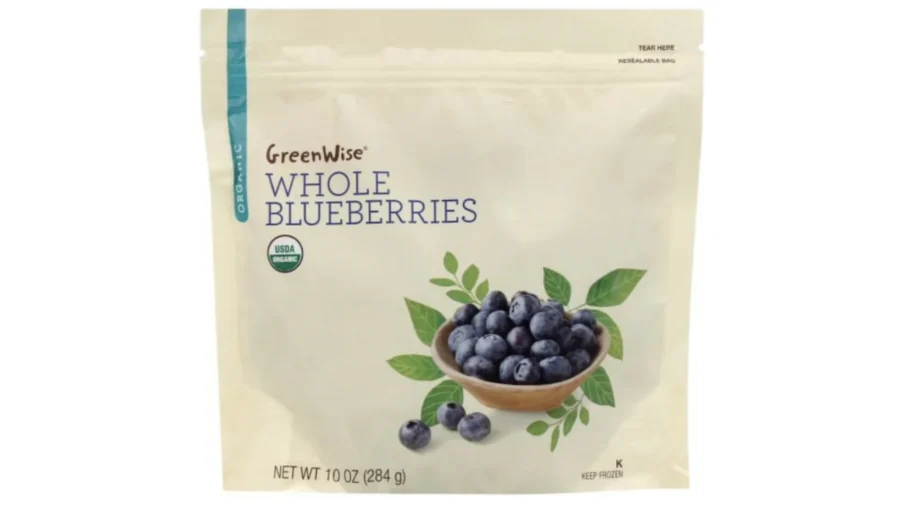
A Chilean food company is pulling a popular brand of frozen organic blueberries from store shelves across eight states after learning the product may be contaminated with a dangerous strain of bacteria.
The blueberries—sold exclusively at Publix supermarkets—reached stores in Alabama, Florida, Georgia, Kentucky, North Carolina, South Carolina, Tennessee, and Virginia. Only packages bearing lot code 60401 and a best-by date of Feb. 9, 2028, are subject to the recall. No other lot codes or dates are included.
According to the company, 12 consumers reported becoming sick with E. coli O145:H28 infections between May 11 and June 5, 2026. The recall was initiated after the company received reports that consumers who had fallen ill had eaten the GreenWise frozen blueberries.
E. coli O145 belongs to a group of bacteria known as Shiga toxin-producing E. coli, or STEC. The strain can produce severe stomach cramps, sometimes with bloody diarrhea and vomiting. Most otherwise healthy adults typically recover within a week, but the infection can escalate into a life-threatening kidney condition called hemolytic uremic syndrome, or HUS, especially in young children, older adults, and people with compromised immune systems.
The Mayo Clinic also notes that E. coli bacteria found in the intestines of people and animals can reach produce through agricultural runoff from cattle farms contaminating fields where fruits and vegetables grow. Leafy greens and other fresh produce are among the items most at risk of carrying the bacteria.
For those who still have the product at home, the FDA says the blueberries should be thrown away or brought back to the point of purchase for a full refund.
Frutas y Hortalizas del Sur S.A. said it is cooperating with regulatory authorities and has directed all customers who received the affected lot to immediately quarantine the product, halt its distribution, and alert any other parties further down the supply chain who may have received it. The company said it is investigating the source of the contamination and will release additional findings as they become available.
Consumers with questions can contact the company by email at [email protected] or by phone at 336-899-5612, Monday through Friday, 8 a.m. to 6 p.m. EST.