


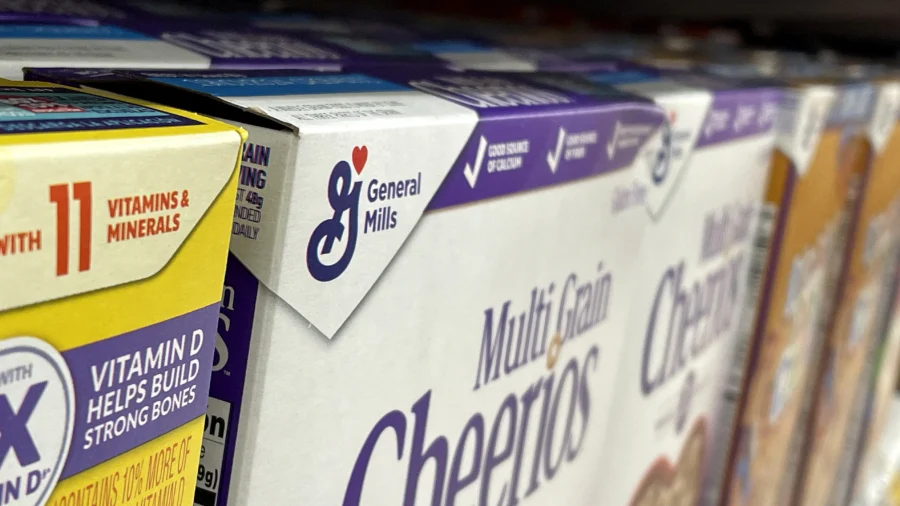
General Mills said all of its cereals sold in the United States are now made without certified artificial colors, completing a goal the food giant set for this summer.
The Minneapolis-based company announced on Wednesday that it has removed petroleum-based certified colors from its entire U.S. cereal portfolio.
The milestone follows the company’s removal of the colors from all foods it serves in K–12 schools in March.
The change covers brands including Lucky Charms, Trix, Cheerios, Cinnamon Toast Crunch, Cocoa Puffs, Chex, Wheaties, Reese’s Puffs, Kix, and the seasonal Monster Cereals.
For brightly colored cereals such as Trix and Lucky Charms, General Mills has turned to colors derived from fruits, vegetables, and spices—such as turmeric and paprika—to reproduce their familiar appearance.
“This achievement reflects how we are evolving with consumer needs while continuing to offer food that tastes great, delivers quality and provides value,” Bethany Quam, president of Big G Cereal at General Mills, said in a statement.
A Second Try
This is not General Mills’ first attempt to move some of its most colorful cereals away from synthetic dyes.
It reformulated Trix in early 2016, only to reverse course after customers complained that the cereals looked dull and asked for the original version to return.
In 2017, the company brought back “Classic Trix,” made with artificial colors, alongside the naturally colored version.
A decade later, General Mills is trying the overhaul again but on a much larger scale.
The company said 90 percent of its U.S. retail portfolio is now made without certified artificial colors.
It plans to eliminate them from the remainder of its U.S. retail products, including fruit snacks and baking products, by the end of 2027.
“This effort involves reformulating products while maintaining taste, quality and consistency,” the company said.
An Industry Shift
General Mills’ changes come as the food industry shifts away from petroleum-based food dyes, which have faced growing scrutiny from both federal regulators and health advocates.
In April 2025, the Department of Health and Human Services and the Food and Drug Administration announced a national initiative to phase out those ingredients from the food supply, citing concerns about their potential effects on children’s health and development.
The FDA has since worked with food companies and retailers on voluntary commitments to remove them.
Earlier in August, WK Kellogg Co., the maker of Froot Loops and Apple Jacks, said it would eliminate artificial colors from all of its cereals by the end of 2026, accelerating its original timeline by about a year.
The Battle Creek, Michigan-based company said production of the new formulas will begin later this year, with the cereals expected to reach retailers before the end of 2026.
Replacing synthetic colors can be challenging for manufacturers.
Unlike their artificial counterparts, natural food colors break down easily and often require refrigeration to stay fresh and potent.
This required a “significant investment” in manufacturing facilities to support the transition, WK Kellogg said.
Retailers are also forcing food makers to act.
Target said in February that by the end of May, all cereals sold in its stores and online would be made without certified synthetic colors.
The FDA now lists that transition as complete.
Walmart, meanwhile, has pledged to remove synthetic dyes and more than 30 other ingredients from all of its U.S. private-brand foods.
The retailer expects the remaining reformulations to be completed by January 2027.