


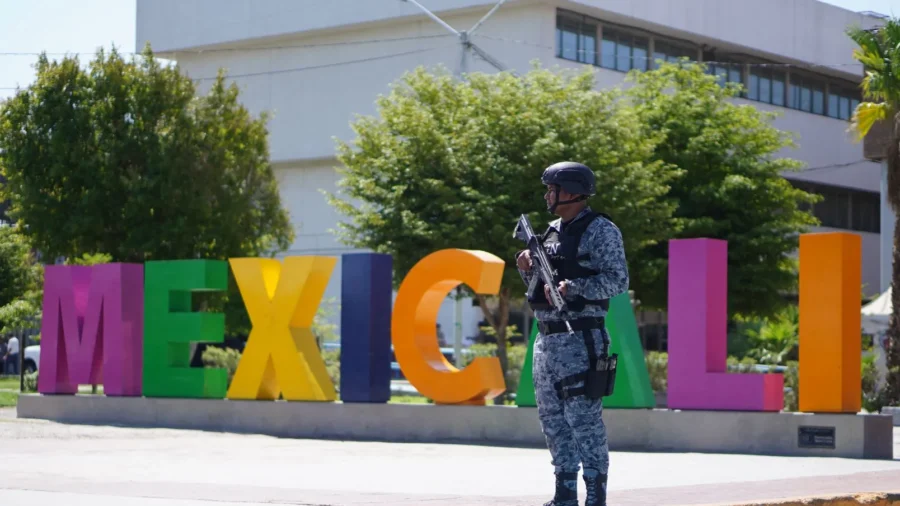
U.S. officials have suspended government operations and travel in Mexicali, citing intelligence about a possible threat to the Baja California border city just south of Southern California.
The statement did not detail the nature of the threat but framed the move as a precaution to keep American citizens and government personnel informed and safe.
A spokesperson for the U.S. Embassy and Consulates in Mexico did not respond to a request for comment from NTD News before publication.
The notice urged U.S. citizens currently in or planning to visit the northern Mexican city to steer clear of government buildings during the suspension period.
Officials also advised travelers to take shelter immediately if an incident occurs, notify family or friends of their safety status afterward, and comply with any directions issued by Mexican law enforcement.
The mission also recommended that citizens follow local news for updates and stay alert to their surroundings while in the city.
State Department Warns
The Mexicali alert arrives against the backdrop of a standing Level 2 travel advisory for Mexico as a whole, issued May 29 by the U.S. Department of State, which tells travelers to "exercise increased caution" nationwide because of terrorism, crime, and kidnapping risks.The advisory states that "many violent crimes take place in Mexico," including homicide, kidnapping, carjacking, sexual assault, and robbery.
Baja California, the state that includes Mexicali, is rated higher than the national baseline—Level 3—meaning the State Department advises travelers to "reconsider travel" there. Six other states carry the most severe Level 4 "do not travel" rating: Colima, Guerrero, Michoacan, Sinaloa, Tamaulipas and Zacatecas.
The advisory notes that "the U.S. government has limited ability to help in many parts of Mexico," since conditions vary widely even within a single state, and government employees are barred from visiting certain high-risk zones regardless of the region's overall rating.
Because of these risks, the department says U.S. citizens "should follow the same restrictions as U.S. government employees while traveling," which include a ban on traveling between cities after dark, a requirement to use only dispatched taxis or app-based rides rather than hailing cabs on the street, and a prohibition on driving between border cities and Mexico's interior with limited exceptions.
The State Department also warns that emergency services can be limited or unavailable in remote or rural areas, and instructs travelers who encounter a road checkpoint to comply, warning that "fleeing or ignoring instructions can lead to you being hurt or killed.”
Travelers heading to Mexico are encouraged to enroll in the Smart Traveler Enrollment Program to receive direct alerts from U.S. diplomatic posts.