


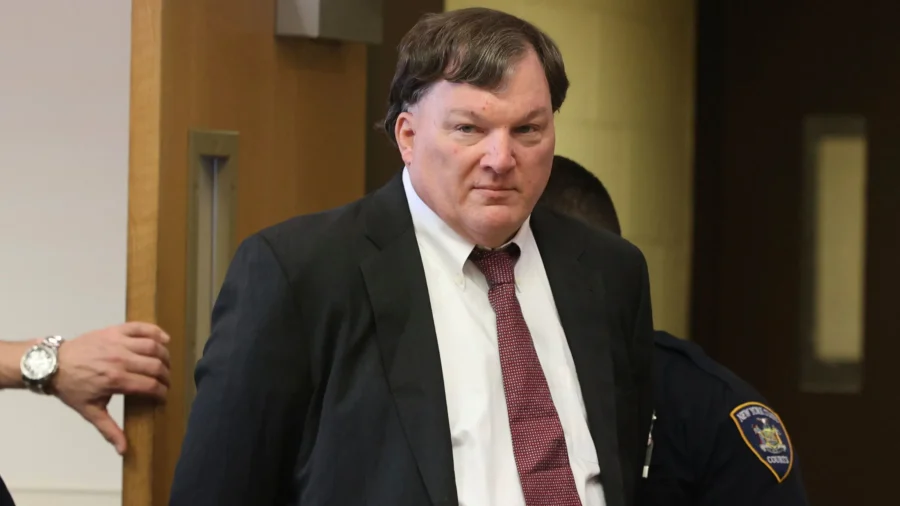
Rex Heuermann was sentenced Wednesday to life in prison without parole for a string of killings tied to the Gilgo Beach case, bringing a measure of closure to families who waited years for answers.
In court, relatives of the victims delivered emotional statements, condemning Heuermann for the pain he caused. “A million years isn’t enough,” said Jasmine Robinson, cousin of Jessica Taylor. “Nothing will ever make this right.”
Heuermann, 62, acknowledged his crimes, stating, “I am responsible,” but added, “The words I would say would have no meaning.”
Judge Timothy Mazzei called him “a despicable man” and “a coward.”
Prosecutors said Heuermann killed at least seven women and admitted to an eighth, targeting many sex workers. The case, long unsolved, was ultimately cracked through DNA and digital evidence.
The sentencing follows one of New York’s most notorious serial killing investigations, which stretched over more than a decade and drew national attention. The victims disappeared over several years, and their remains were later discovered along Ocean Parkway near Gilgo Beach and in surrounding areas, transforming a series of missing persons cases into a complex homicide investigation.
During Wednesday’s hearing, family members addressed Heuermann directly, describing years of grief and unanswered questions. Amanda Funderburg, sister of victim Melissa Barthelemy, recalled receiving a taunting phone call from Heuermann shortly after her sister vanished. “I hope you suffer,” she told him in court. JoAnn Mack, whose daughter Valerie Mack was also among the victims, said, “Justice has been done, but it can’t replace what has been taken.”
Heuermann showed little reaction as relatives spoke, sitting with his hands on the defense table and occasionally glancing toward those addressing him. At one point, when asked by the judge if he felt remorse, Heuermann nodded and appeared to mouth “yes.”
Breakthroughs came more than a decade later. Investigators connected Heuermann to a pickup truck seen near one victim’s disappearance and later used DNA evidence obtained from a discarded pizza crust to link him to the killings. Authorities said genetic material recovered from the pizza matched hair found on burlap used to bind one of the victims.
Detectives also gathered cellphone records and internet data that allegedly placed Heuermann in contact with several victims shortly before they disappeared. Prosecutors said his online activity included searches related to violent content and the Gilgo Beach investigation itself.
Following his arrest in 2023, investigators executed extensive searches of his property, uncovering a large collection of weapons and documents described as “blueprints” outlining steps for committing and concealing the killings. A judge later allowed advanced DNA evidence to be used in court after defense efforts to exclude it were rejected.
Heuermann pleaded guilty in April to murdering seven women and admitted responsibility for an eighth killing, though he was not formally charged in that case. Authorities said he strangled the victims and, in some cases, dismembered their bodies before disposing of them in separate locations.
The investigation also intersected with other unresolved cases in the region. The remains of a woman and her young child, discovered near the same parkway years earlier, were identified in 2025 through advanced DNA techniques, though officials have not definitively linked those deaths to Heuermann.
Suffolk County District Attorney Ray Tierney described the defendant as a “monster” and said no statement could lessen the severity of his crimes. As part of his plea agreement, Heuermann agreed to assist federal authorities in behavioral analysis efforts aimed at identifying other serial offenders.
Family members said the sentencing brought some measure of justice but could not erase years of pain. Several victims’ children spoke about growing up without their mothers and the lasting impact of their loss.