


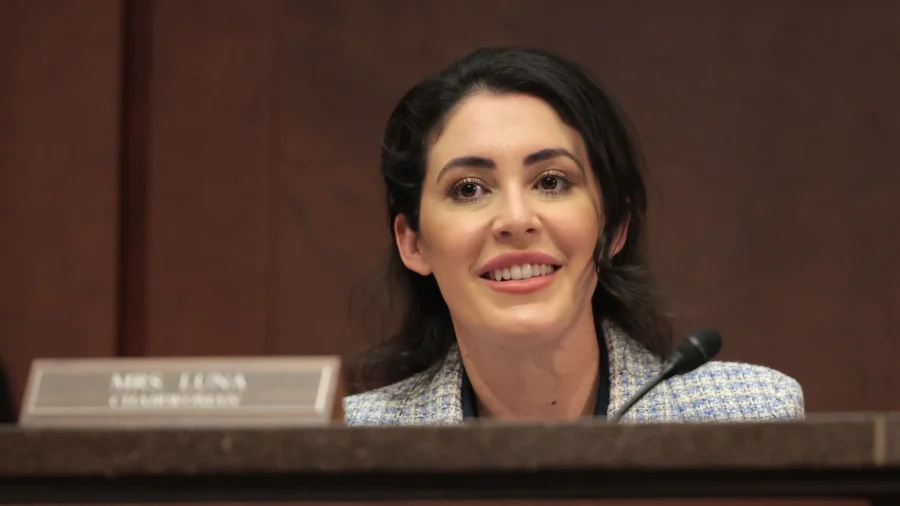
Florida Republican Representative Anna Paulina Luna is urging the State Department to immediately review and revoke all active student visas for Chinese nationals.
She pointed to "recently declassified intelligence detailing the Chinese Communist Party's efforts to interfere in American elections" as the primary justification for taking action against Chinese students currently enrolled across the United States.
These activities include: stealing voters' names, addresses, phone numbers, political party preferences, and other registration information.
He described the incident as the largest compromise of election data in history, exposing sensitive voter details and highlighting critical vulnerabilities in American election infrastructure and voting machines.
“These revelations demand a serious and immediate response from every agency with the authority to act, including the Department of State,” Luna said.
She believes that American universities are among the easiest targets for foreign intelligence agencies to infiltrate.
“Given the scale of the interference described in the declassified files, we cannot in good conscience continue to allow the current visa pipeline to serve as a potential vector for CCP influence operations targeting our democratic institutions,” she said.
She suggested that the State Department should “halt the issuance of new visas to Chinese nationals” until it thoroughly determines the extent of this infiltration and conducts a comprehensive review of the vetting procedures at U.S. higher education institutions.
The Trump administration has already taken some measures to limit F (student) and J (exchange visitor) visa holders.
On July 16, the United States eliminated the "duration of status" provision, ending an arrangement that allowed foreign students, exchange visitors, and media representatives to stay in the United States indefinitely without routine government oversight.
Under the new Department of Homeland Security (DHS) rule, F (student) and J (exchange visitor) visa holders will be limited to the exact length of their specific program, capped at a maximum of four years.