


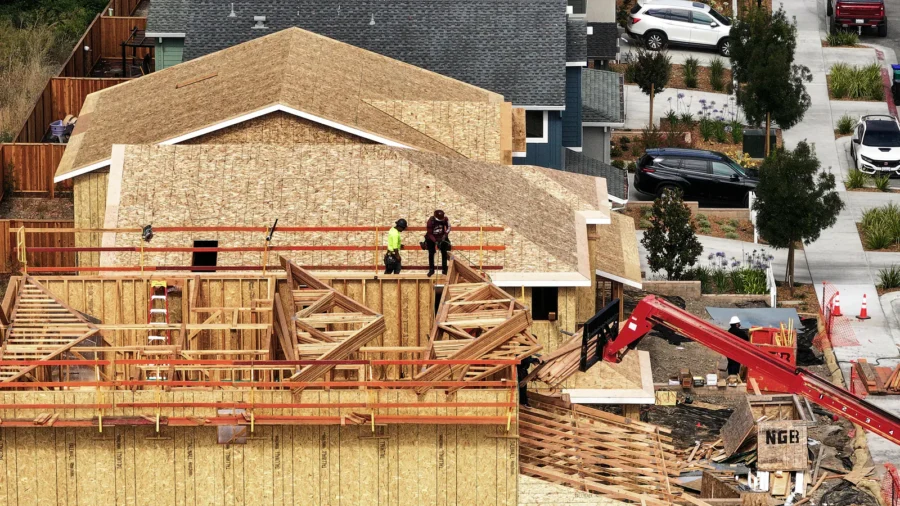
Government regulations add more than $130,000 to the cost of a newly built single-family home in the United States, according to a new study published this week by the National Association of Home Builders (NAHB).
Regulatory costs at the federal, state, and local levels now account for 26.4 percent of the average sales price of a new home, which is ultimately passed on to buyers and further squeezes affordability, the study found.
With a newly built home averaging $499,500 in January, that share translates to roughly $131,734 in regulatory costs.
“This study illustrates how excessive regulation is deepening the nation’s housing affordability crisis and making it harder for builders to deliver the affordable, attainable housing that our nation sorely needs,” Owens said in a statement.
For the study, NAHB estimated regulatory costs incurred during lot development using its March 2026 Land Developer Survey. It also estimated regulatory costs during the construction phase based largely on questions included in the March 2026 survey for the NAHB/Wells Fargo Housing Market Index.
The researchers combined data from those two surveys with information on average construction times, interest rates, profit margins, and other factors to estimate regulatory costs as a share of either the price of a lot purchased by a builder or the builder’s narrowly defined construction costs. Those percentages were then converted into dollar amounts using the U.S. Census Bureau’s average new home price for January 2026.
Of the $131,734 total, about $46,795 stems from a higher finished-lot price attributable to regulations imposed during lot development, according to the study.
The remaining $84,939 reflects regulatory costs imposed during the construction phase after the builder buys the finished lot. Those costs range from less than $2,000 per home for delays during construction to more than $40,000 for building code changes adopted over the past decade.
The cost burden has grown sharply over time. NAHB said the current estimate of $131,734 is more than 40 percent higher than the $93,871 figure in its 2021 study and more than double its initial estimate of $65,224 in 2011.
The surveys also shed light on the different ways regulations drive up costs. For example, about 88 percent of developers surveyed said they must comply with design standards imposed by local communities that go beyond basic zoning rules. On average, those requirements account for 8.8 percent of the price of a lot and 2.1 percent of the final price of a home.
The time required to meet regulatory requirements is another major cost driver. NAHB said 94 percent of developers reported experiencing delays because of regulation, which can raise interest costs on development loans and ultimately push up home prices. On average, those delays lasted roughly seven months.
Beyond traditional building codes, many jurisdictions have increasingly imposed detailed architectural design standards. These can govern matters such as the direction a garage faces, the materials used for fences or window shutters, the amount of window space, and even the dimensions of certain features down to a quarter-inch. More than half of single-family builders surveyed—60.5 percent—told NAHB they were subject to these kinds of design standards that forced them to spend more than they otherwise would on particular home features.
“Policymakers should remove unnecessary and costly regulations that are pricing buyers out of the market and slowing construction of new homes and apartments,” Owens said.
Housing economists broadly agree that the United States does not have enough homes to meet demand, although estimates of the shortfall vary depending on the methodology used. A 2025 study by McKinsey estimated that the country was short 8.2 million housing units in 2023 and warned that the gap could widen to 9.6 million by 2035 without decisive action.
Freddie Mac’s most recent estimate put the shortage at 3.7 million units as of the third quarter of 2024. NAHB, in a study published in February, offered a more conservative estimate, saying the country needs about 1.2 million additional housing units to close the gap and restore vacancy rates to historical norms.