

The health care legislation that Republicans unveiled six months ago passed the House in December 2025.
The initiative, the Lower Health Care Premiums for All Americans Act, was intended to drive down health care costs for working families.
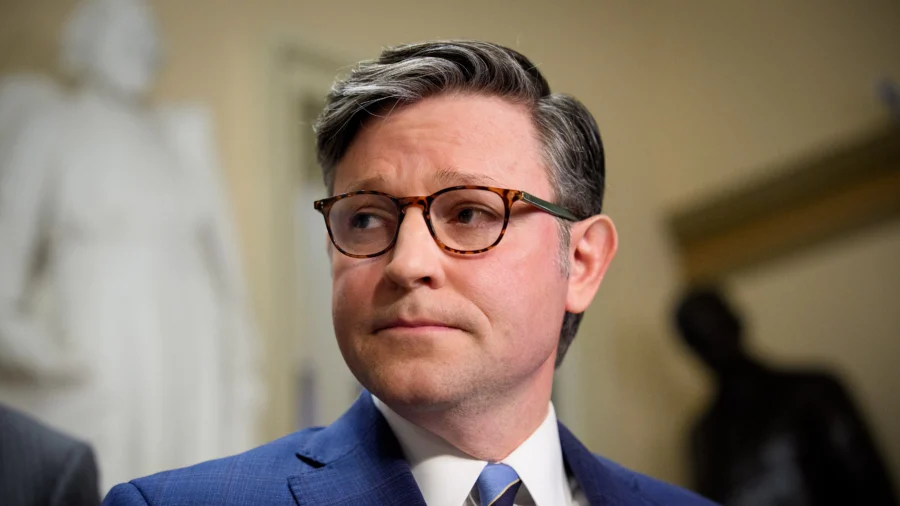
“There's a lot of ideas that can bring down the cost of health care, increase quality, increase access to care, and you'll be seeing that rolled out the next couple of weeks,” House Speaker Mike Johnson (R-La.) said in November 2025.
Johnson gave the remarks to Shannon Bream on Fox News Sunday on Nov. 16, 2025.
At the time, he touted the Working Families Tax Cut in the Big Beautiful Bill.
The Working Families Tax Cut, enacted as part of the broader One Big Beautiful Bill Act, permanently expanded and doubled the Child Tax Credit, allows car buyers to deduct up to $10,000 for interest paid on car loans for U.S.-assembled vehicles, exempts federal on tips, eliminates federal taxation on Social Security income for retirees, and on overtime hours for workers.
“The President signed into law some real innovations,” Johnson said. “We saved the American taxpayers $185 billion according to CBO, by some of the changes there, we brought premiums down.”
The CBO is the Congressional Budget Office, a nonpartisan federal agency that analyzes the budgetary and economic impact of legislation.
Republican lawmakers had attempted to include an additional provision in the House version to slash insurance premiums by an average of 12.7 percent nationwide, according to Johnson, who noted that the specific extra reduction did not make it into the final signed law.
“Senate Democrats fought to take that out of the bill, so it didn't make it to the President's desk,” he said.
Despite resistance by political opponents, Republican appropriators have restored regular order to the appropriations process.
They passed 11 of the 12 annual appropriations bills through the regular order process.
According to Congress.gov, the appropriations process is the annual legislative protocol, which Congress employs to allocate funding to federal agencies and programs, including discretionary spending.
Discretionary spending ranges from national defense to national parks and is carried out through 12 separate appropriations.
“With the exception of the House and Senate passing the reconciliation bill this week to fund ICE and CBP, the Fiscal Year 2026 appropriations process has been completed and Congress has begun the process for Fiscal Year 2027,” House Speaker Johnson’s Press Secretary Griffin Neal told NTD on May 19.