


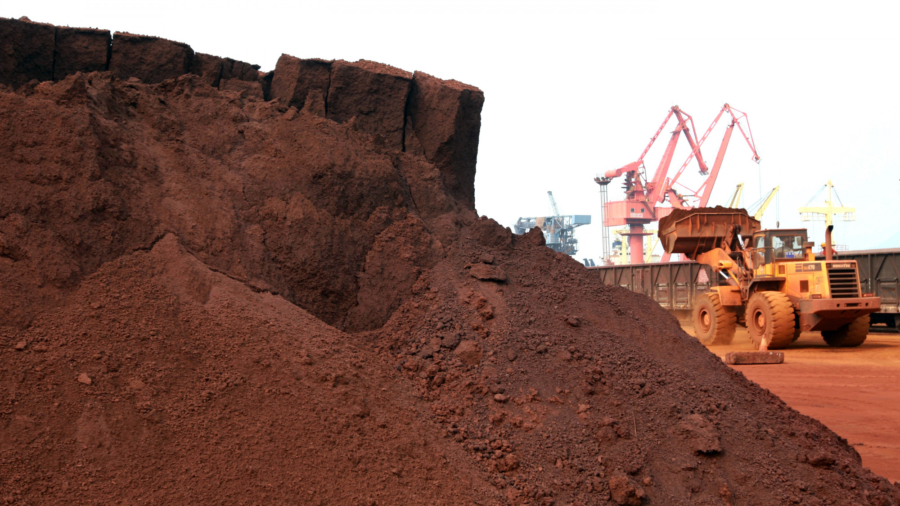
Welcome to the first edition of our Deep Dives series—a weekly newsletter from China in Focus that offers an in-depth look at one or two key global developments shaping U.S.–China relations.
Why Should Americans Care About Rare Earths?
After months of stalled shipments, rare earth magnets from China are finally moving again—easing fears of a shutdown in the global auto industry. But manufacturers warn: this relief may be temporary.So why does this matter to you?
"The main way it trickles down to the average American is in the form of higher prices for ... technologies that use these rare minerals in the magnets they’re made from—in pretty much any gadget we use in our daily lives, from your iPhone to your television, the computer where we're communicating on here ... any kind of digital electronics use some form of these minerals," said energy policy analyst David Blackmon.
The April tariff war sent prices soaring and rattled global supply chains. And while tensions are easing after U.S.–China trade talks, the threat of future disruption is very real.
US Military Readiness at Risk
The ripple effects go far beyond the checkout line. A new report from data analytics firm Govini reveals how deeply China is embedded in America’s defense supply chain:- More than 80,000 U.S. weapon components depend on rare earths.
- Nearly 80 percent of U.S. military systems are affected by China’s dominance of rare earths.
- 9.3 percent of top-tier U.S. defense programs involve Chinese suppliers.
- Washington is now working to expand domestic capacity and fortify key supply chains to reduce this dangerous dependence.
China’s Grip on Rare Earths Is Loosening—For Some
The Good news? China’s export approvals have jumped—from 25 percent to 60 percent—in recent weeks. But U.S. orders are still lagging far behind.But for the United States, progress has been slower—with American orders still facing significant delays, reportedly due to low-priority classifications.
On June 13, Ford’s CEO confirmed the company was forced to shut down multiple factories—all because of a shortage of Chinese rare earth magnets. And they’re not alone. Since April, China has been deliberately limiting exports to the United States in response to escalating tariff tensions. As a result, shipments of rare earth magnets to America have dropped by roughly 75 percent, triggering production halts not just in the United States, but across Asia and Europe as well.
But there may be a turning point ahead.
On June 26, the White House announced a deal with Beijing aimed at expediting rare earth approvals. U.S. Treasury Secretary Scott Bessent says he’s confident the agreement will help restore the flow of critical minerals, and ease the disruptions rippling through the economy.
“This de-escalation is a meaningful step,” Bessent said. “We expect stronger and more reliable import channels in the coming weeks.”
Still, this series of events has reinforced one thing for U.S. officials and industry leaders alike: Relying on China for rare earths is a high-risk bet.
A New Frontline: US Partners With the Congo and Rwanda
on June 27, Washington took a major step toward rare earth independence by signing a landmark deal with the Democratic Republic of Congo and Rwanda.The agreement is two-fold:
It brings billions of dollars in U.S. investment to a region long plagued by conflict.
In return, the United States gains access to some of the world’s richest mineral deposits—critical for clean energy, defense, and tech manufacturing. At the heart of this deal lies coltan and cobalt, two minerals essential for rechargeable batteries used in everything from smart phones to electric vehicles.
Backed by the Trump administration, this new initiative marks the beginning of a long-term U.S. effort to stabilize the region, reshape global supply lines, and loosen China's grip on essential resources.
QUAD Nations Unite on Rare Earths
On July 1, the United States, Japan, India, and Australia launched the QUAD Critical Minerals Initiative, a global push to break free from China’s rare earth monopoly.“It’s not just about accessing raw materials ... it’s about making sure we have the ability to process and refine them—because that’s where real dependency lies,” said Secretary of State Marco Rubio.
Right now, China dominates both ends of the supply chain, accounting for 62 percent of global rare earth production and an overwhelming 92 percent of processing capacity, according to the International Energy Agency. That dominance gives Beijing enormous leverage over industries ranging from EVs and wind energy to semiconductors and military equipment.
- The United States brings capital, political influence, and research power,
- Japan has deep experience in rare earth reserves and tech,
- India offers untapped mineral resources and a growing manufacturing base,
- Australia is already one of the world’s largest producers of rare earths—and a key supplier to allies.
Stockpiling for the Future
As China insists its rare earth policies are purely economic, many global leaders are calling it what they believe it truly is: leverage.The European Union is among the most vocal. Officials there are warning that Beijing is weaponizing its mineral dominance—using it as a form of “economic blackmail.” In response, the EU is fast-tracking its Critical Raw Materials Act, which sets an ambitious goal to cut reliance on Chinese rare earths to below 60 percent by 2030.
One EU commissioner made the stakes clear:
“If Europe maintains oil and gas reserves, then it must treat rare earths with the same level of urgency.”
Other nations aren’t waiting either:
Japan has already learned the hard way—back in 2010, China cut off exports during a diplomatic standoff. Since then, Tokyo has built and maintained strategic reserves to shield itself from future shocks.
South Korea has stockpiled enough rare earth materials to cover 100 days of demand in the event of a supply crisis—a buffer it continues to grow.
Australia, meanwhile, is taking a production-first approach. It’s investing heavily in building out a domestic rare earth supply chain, positioning itself as a reliable partner to allies across the Indo-Pacific and beyond.
Across the globe, governments are moving from reactive to proactive—recognizing that rare earth access is no longer just a trade concern. It’s a matter of economic security, technological autonomy, and national defense.
And as countries scramble to shore up their reserves and reduce their dependency, one thing is clear:
Rare earths are the new oil. And the race to secure them is just beginning.