


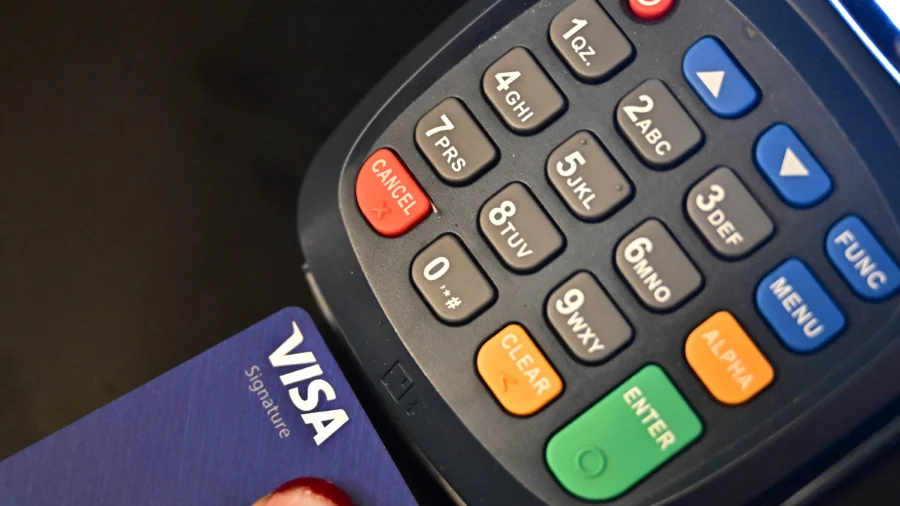
With the average credit card carrying 19 percent in interest, it’s no secret why so many Americans have accumulated huge credit card debt.
That’s a big problem for U.S. credit card holders, as 61 percent of Americans with card debt have been in debt for at least a year, according to Bankrate. That figure is up from 53 percent in late 2024. Even worse, 22 percent of consumers carrying credit card debt say they’ll never be able to pay it off.
“For millions of American households, credit card debt represents their highest-cost debt by a wide margin,” said Ted Rossman, Bankrate senior industry analyst, in a statement.
Yet U.S. credit card holders have trouble talking or even thinking about credit card debt, Rossman noted. “We need to take the stigma out of it,” he advised. “If you have credit card debt, you have plenty of company, and the causes are usually practical. But you can’t hide from it, especially since credit card balances and rates are near record highs.”
Cut Your Plastic Debt With These Action Steps
Financial experts say slashing huge credit card debt is part planning, part discipline, and part creativity. These card-cutting tips align in all three areas.
Create and stick to a budget plan
The first stop on your credit card wind-down is with a household budget.
“To pay off debt, you need to make sure your spending is intentional,” Ashley Morgan, an attorney at Ashley Morgan Law, PC, told NTD News. “Many people aren’t sure where their money goes each month. Knowing where you are spending money will help a lot. “
Similarly, make sure you are budgeting for sinking funds. “You need to budget in those regular expenses that are not necessarily weekly or monthly,” Morgan noted. “Oil changes, doctor's visits, among others, are expenses that happen regularly, but not every month. If you prorate these expenses into your monthly budget, it can help you stay ahead of your spending.”
Stop using your credit card and keep it that way
Continuing to use credit cards while paying them off will only prolong the debt problem.
“Credit card interest accumulates on a daily basis,” Morgan said. “Consequently, using the credit cards while trying to pay them off will result in higher interest each month. You’re better off using a debit card or using another credit card that you pay off in full.”
Make it a habit to focus on card payments
Dana Yao, a travel writer who recently paid down $15,000 in credit card debt, advises treating debt like a giant cake: tackle it one piece at a time.
Yao’s best strategy is to move all credit card debt from a high-interest credit card to a 0 percent introductory card. “Use this as an advantage as the 0% will not charge interest as you gradually pay off all that debt,” Yao told NTD News.
When making regular payments on card debt, also aim to pay off the statement balances and not just the minimum monthly amount. “The minimum will incur interest; you’ll be surprised how fast and how large it will get,” she noted.
Don’t Procrastinate
According to Bankrate, 64 percent of credit card holders say they’ve either delayed or avoided major financial decisions due to plastic debt. Key financial moves, like building an emergency fund or investing in the financial markets, have gone by the wayside due to high credit card bills.
Rossman said missing out on these wealth-building opportunities can set consumers back, big time. “This is why it’s so important to pay off your credit card debt as quickly and cost-effectively as possible,” he said.
The views and opinions expressed are those of the interviewees. They are meant for general informational purposes only and should not be construed or interpreted as a recommendation or solicitation. NTD does not provide investment, tax, legal, financial planning, estate planning, or any other personal finance advice. NTD holds no liability for the accuracy or timeliness of the information provided.