


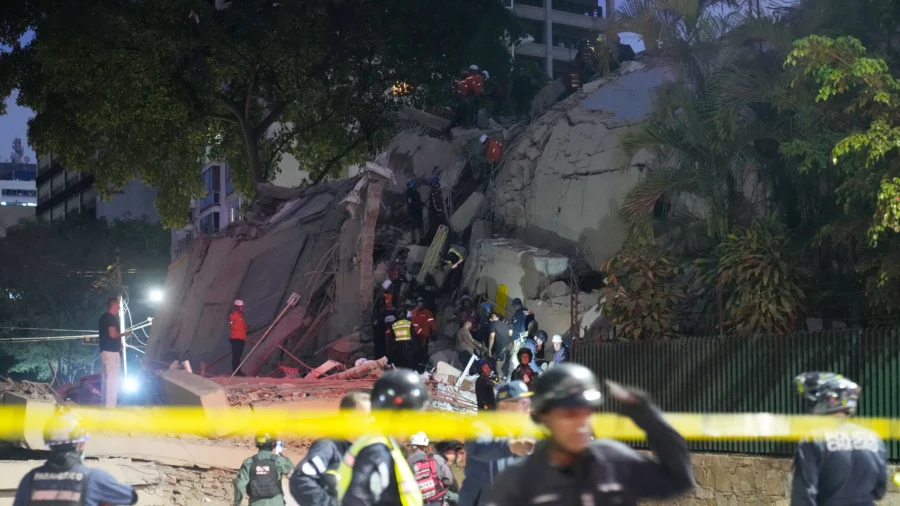
Powerful back-to-back earthquakes struck Venezuela on Wednesday evening, killing at least 188 people and injuring some 1,500.
Acting President Delcy Rodríguez warned that the death toll was expected to rise as rescuers search collapsed buildings and emergency crews work to reach devastated areas following the 7.2- and 7.5-magnitude earthquakes that struck shortly after 6 p.m.
The first earthquake struck near Venezuela's coast.
The quake sent shock waves through the capital, Caracas, collapsing walls and prompting tsunami advisories for Puerto Rico and the U.S. Virgin Islands.
The earthquake struck at 6:05 p.m. Atlantic Standard Time on June 24, according to the National Weather Service's Pacific Tsunami Warning Center. Its epicenter was near the community of Morón along Venezuela's Caribbean coast, approximately 104 miles west of Caracas, according to the U.S. Geological Survey. The USGS estimated the quake's depth at about 6 miles below the surface.
A second, even stronger, 7.5-magnitude earthquake struck just one minute later. It was centered about 10 miles southwest of Morón at a depth of roughly 6 miles. Together, the back-to-back earthquakes rank among the most powerful to hit Venezuela in more than a century.
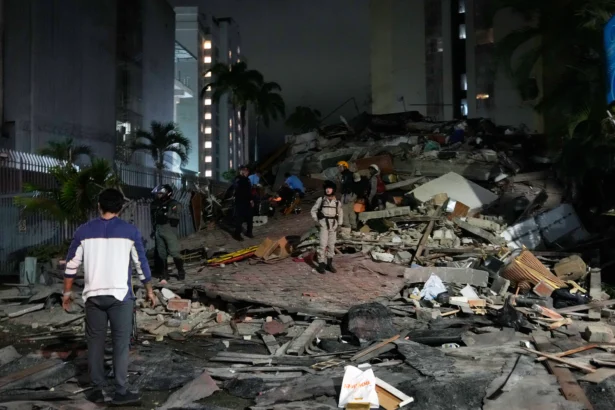
In Caracas, the destruction was immediate and evident. Entire building walls crumbled, leaving furniture exposed to the open air and dust columns rising above two separate neighborhoods. Restaurants and businesses that would normally be bustling on a Wednesday evening were abandoned as terrified residents fled into the streets.
"The building really shook from side to side. Unreal. The force was incredibly strong," Caracas resident Roberto Damas said. "We were walking and it was tossing us around. Everything in the apartment fell. Well, thank God we were able to get out."
Venezuelan Interior Minister Diosdado Cabello, speaking on state television, confirmed the quake was felt across several states and described "alarming situations" in Caracas' Altamira neighborhood, where homes and buildings had collapsed. He urged motorists to yield to emergency vehicles and called on residents to remain outside, as aftershocks could pose further danger to already-damaged structures.
"We understand that some people may be desperate, but we are acting according to protocols to activate aid and rescue efforts to help those who need it most," Cabello said.
Tsunami Alert Issued
Across the Caribbean, authorities moved quickly to warn coastal communities. The NWS Pacific Tsunami Warning Center issued tsunami advisories for Puerto Rico and the U.S. Virgin Islands, as well as the British Virgin Islands (BVI). The earliest estimated arrival of hazardous sea level fluctuations and strong ocean currents was 7:19 p.m. AST at Peñuelas, Puerto Rico.Forecasts called for sea level fluctuations of less than one foot above normal tide levels at all monitored coastal locations—including San Juan, Ponce, Charlotte Amalie in the USVI, and Roadtown in the BVI—with hazardous conditions expected to persist for up to six hours.
Officials urged anyone near the water to immediately move away from beaches, harbors, marinas, bays, and inlets, and warned that even relatively minor wave activity could generate dangerous currents capable of drowning or injuring people in the water. Boaters already at sea were advised to steer clear of shallow waters and to move to a depth of at least 450 feet where time and conditions permitted.
As of Wednesday evening, no tsunami waves had been confirmed, and Puerto Rico lifted its alert.
International Assistance Offered
Offers of help were made by various governments including the United States, Argentina, Bolivia, Brazil, Chile, Ecuador, El Salvador, Mexico, Panama and Uruguay.Jeremy P. Lewin, the U.S. undersecretary of state for foreign assistance, said the State Department had mobilized a disaster assistance team and task force to coordinate aid including search-and-rescue teams, medical and humanitarian supplies and other resources in coordination with the interim Venezuelan government.
El Salvador President Nayib Bukele, once diametrically opposed to Venezuela’s government, said in a post on X Wednesday night that he had offered aid.
“We send you all our solidarity and our prayers. Stay strong, Venezuela,” Bukele wrote.
Ecuadorian President Daniel Noboa said he had ordered the immediate delivery of humanitarian aid to help respond to the emergency.
“Ecuador will respond with the speed and commitment this moment demands because, despite our enormous differences, humanity must always guide the actions of a leader,” Noboa wrote.
Bolivian President Rodrigo Paz, who less than a week ago declared a state of emergency in his country following weeks of anti-government protests, said his country stood ready to provide any needed assistance.
The administration of Brazil President Luiz Inácio da Silva expressed solidarity and said no Brazilians reported being injured