


Human remains entrusted to a memorial spaceflight service were lost at sea after a capsule carrying the ashes and DNA of 166 people crashed into the Pacific Ocean, following a parachute failure during reentry.
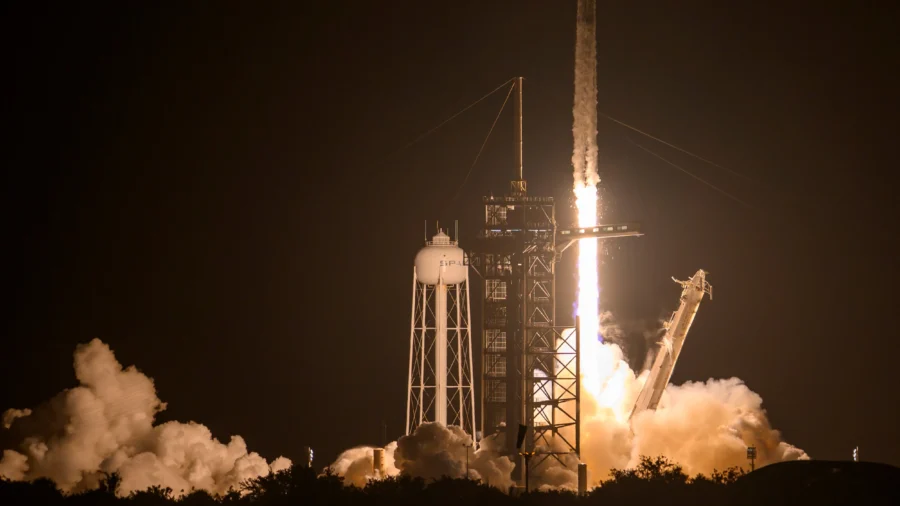
The rocket that propelled the mission was a SpaceX Falcon 9 rocket.
The mission was designed to fulfill both an Earth orbit and Earth rise memorial service, with the intention of returning the flight capsules to families after a brief journey into space.
The spacecraft completed two orbits around Earth before initiating its planned return trajectory. The mission achieved several milestones, including launch, orbit, and controlled reentry, but ultimately failed at the final phase due to the parachute malfunction.
This was the first Celestis mission designed to return from orbit.
“Though we currently believe that we cannot return the flight capsules, we hope families will find some peace in knowing their loved ones were part of a historic journey, launched into space, orbited Earth, and are now resting in the vastness of the Pacific, akin to a traditional and honored sea scattering,” said Charles M. Chafer, co-founder and CEO of Celestis.
In the coming days, Celestis said its team will reach out to each family individually to offer support and discuss possible next steps.
'Partial Success, Partial Failure'
The Exploration Company, which developed and operated the Nyx capsule, described the mission as a “partial success (partial failure).” The company confirmed the capsule was launched successfully, operated nominally in orbit, and stabilized after separating from the launcher. It re-entered and re-established communication after a blackout, but communication was lost a few minutes before splashdown, according to a post on LinkedIn from the company.“We apologize to all our clients who entrusted us with their payloads,” The Exploration Company said in a June 24 update.
“We thank our teams for their hard work and their dedication to success. We have been pushing boundaries in record time and cost. This partial success reflects both ambition and the inherent risks of innovation," they said.
"Leveraging the technical milestones achieved yesterday and the lessons we will extract from our ongoing investigation, we will then prepare to re-fly as soon as possible”.
Mission Possible
Mission Possible was a key demonstration in The Exploration Company’s Nyx roadmap, which aims to validate systems for controlled reentry and orbital services. The mission was structured around several phases, including separation from the launcher, stabilization, atmospheric reentry, parachute deployment, splashdown, and recovery.The company said that the parachute system, sourced from flight-proven hardware previously used on SpaceX’s Dragon capsules, was intended to ensure a safe ocean landing and facilitate recovery of the capsule. Redundant beacons and onboard telemetry were designed to aid recovery teams, who were prepared to retrieve the capsule up to three days after splashdown.
The company said that each mission, even with setbacks, provides critical insights that reduce risk for future flights. “Managing development is the art of compromise. You adjust the level of verification to your acceptance of risk,” said Philippe Watillon, senior technical advisor at The Exploration Company.