

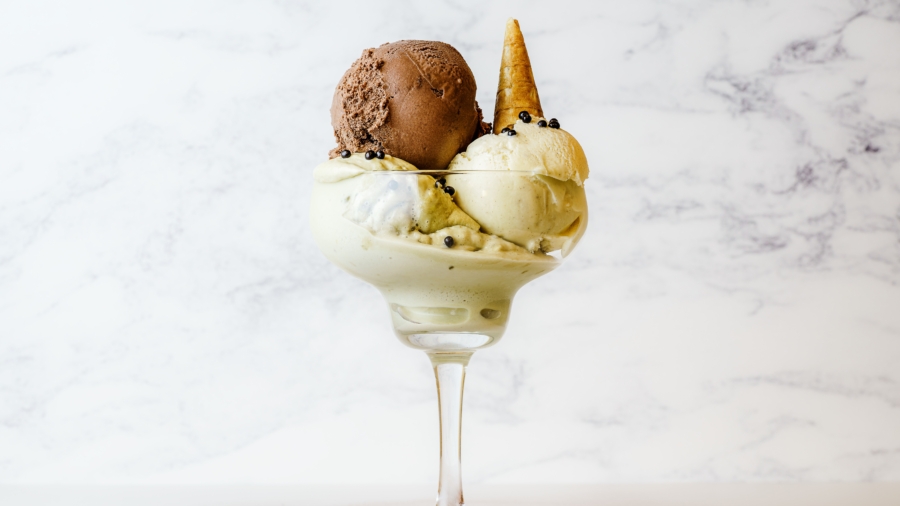
A recall involving 10 popular ice cream flavors intensified when the U.S. Food and Drug Administration (FDA) issued an enforcement report.
Listeria monocytogenes is a disease-causing bacterium that can be found in many places, including soil, water, sewage, rotting vegetation, and animals, according to the FDA website.
The dessert was recalled on June 27 and the FDA subsequently slapped a Class 2 risk level threat on the ice cream on July 17.
“The gap reflects the time needed for the FDA to review company data, assess risk, and assign a classification,” Northeastern University professor, food safety expert, and Alliance for Recall Ready Communities adviser Darin Detwiler told NTD.
A total of 110,292 cases each of Chocolate Crunch Cake Bar, Strawberry Shortcake Bar, Rich Bar, Crumbled Cookie Bar, Orange Cream Bar, Fudge Frenzy Bar, Cotton Candy Twirl Bar, Savagely Sour Blue Raspberry Bar, Savagely Sour Cherry Bar, and Cool Watermelon Bar are under recall.
"Usually, a food manufacturer will do a huge recall that encompasses a contaminated batch and any other batch before or after it—to ensure that everything contaminated has been included," food and water safety attorney Jory Lange told NTD.
The ice cream was distributed in 3 fluid ounce packages in California, Pennsylvania, Ohio, Georgia, New York, New Jersey, Florida, Texas, Virginia, Arizona, Alabama, Illinois, Missouri, Massachusetts, Tennessee, Iowa, South Carolina, Oregon, Oklahoma, Nevada, Louisiana, Wisconsin, Nebraska, and internationally in Nassau, Bahamas.
Company leaders did not respond to requests for comment by press time.
The FDA advisory shows that lot numbers of the recalled product ranged from 24351 to 25156.
Detwiler added that a Class 3 recall involves products that violate regulations but are unlikely to cause health problems, such as minor labeling errors.
"Listeria can be found in many places, especially soil," Lange added. "Listeria is a very hardy bacterium and can survive in the coldest places, including freezers, and refrigerators, and can live without oxygen."