


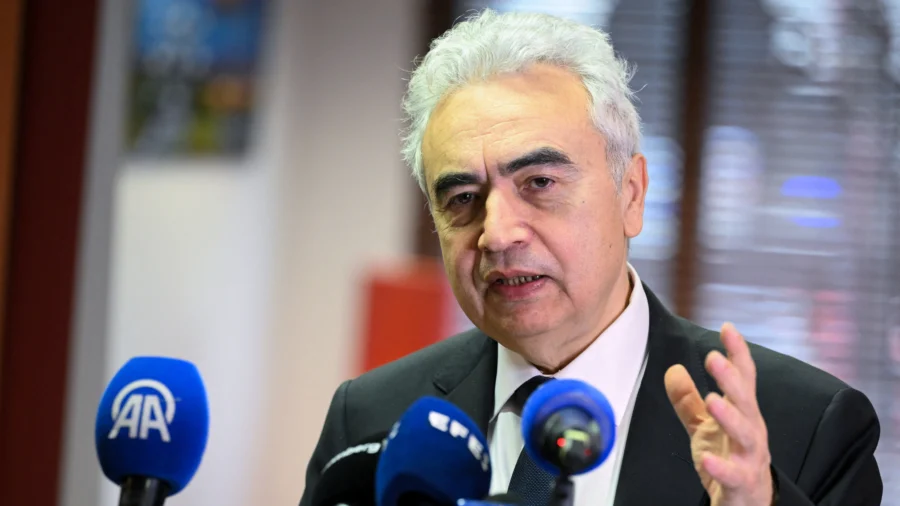
The head of the International Energy Agency (IEA) proposed building a new oil pipeline linking Iraq’s Basra oil fields and Turkey's Mediterranean oil terminal in Ceyhan to bypass the currently blockaded Strait of Hormuz, in comments published on April 19.
IEA Executive Director Fatih Birol said he believed a "Basra-Ceyhan pipeline could be extremely attractive and a very important project for both Iraq and Turkey, as well as for regional supply security, especially from Europe’s perspective,” in an interview with Turkish newspaper Hurriyet.
“I also believe the financing issue can be overcome. Now is exactly the right time,” he said, according to a translation.
“The vase has been broken once, and it is very difficult to fix,” he added, referring to the Strait of Hormuz.
Birol, who is Turkish by birth, described such an oil pipeline as “a necessity for Iraq and an opportunity for Turkey," as well as "a major opportunity for Europe in terms of supply security."
"I think this should be considered a strategic project,” he said.
Exports via the 596-mile pipeline, which once handled about 0.5 percent of global supply, were halted in 2014 after repeated attacks by ISIS.
Iraq said last month that it was seeking to rehabilitate the pipeline to overcome export problems, with Iraqi Oil Minister Hayyan Abdul Ghani announcing on March 16 that Baghdad would complete an inspection of a 62-mile section of the pipeline within a week to enable direct exports from the Kirkuk region of Iraq.
The oil ministry said exports via that pipeline could initially reach around 250,000 barrels per day, rising to about 450,000, if crude from fields in the Kurdistan region is included.
The IEA has recently issued warnings about the impact of the closure of the Strait of Hormuz on the global energy market.
Attacks on energy infrastructure in the Middle East and the effective closure of the Strait of Hormuz have led to the largest oil supply disruption in history, the IEA said, with global oil supply plummeting by 10.1 million bpd in March.
Iranian Plans to Hit Pipelines
Birol's comments came a day before Israel revealed its intelligence services had foiled a plot by an Iranian network to attack a pipeline carrying crude oil from Azerbaijan to the Mediterranean as well as Israeli and Jewish targets in Azerbaijan.In a joint statement on April 20, Mossad and Shin Bet said a plan by Iran's Islamic Revolutionary Guard Corps (IRGC) to attack the Baku-Tbilisi-Ceyhan pipeline through Georgia to Turkey several weeks ago had been thwarted.
"Members of the operational cell were arrested by Azerbaijani authorities while in possession of explosive drones and fragmentation charges that had been smuggled into the country," the statement reads.
"To realize their intentions, the cell worked to gather intelligence on targets using various methods, including physical surveillance and photography, all under direct orders from their handlers in Iran."
Iran has so far issued no comment relating to the statement from Israeli intelligence.
The Epoch Times contacted the Iranian Ministry of Foreign Affairs for comment, but did not receive a response by publication time.