


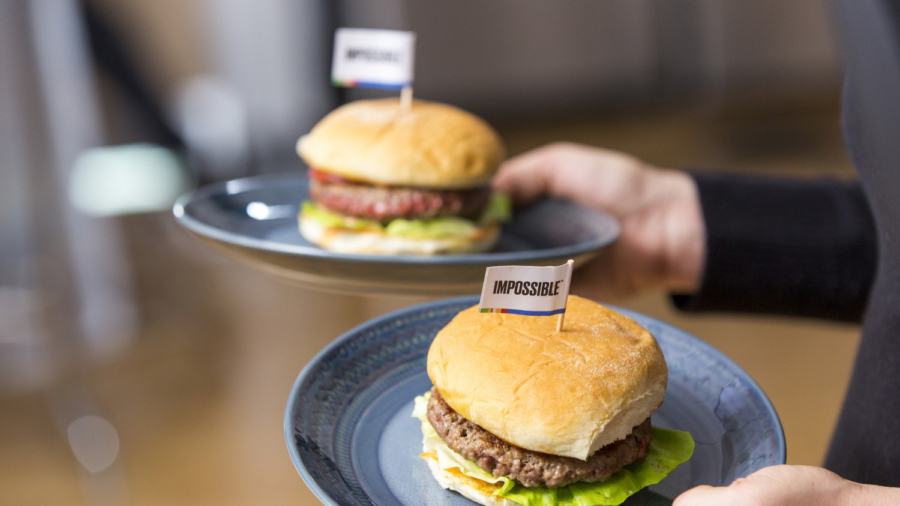
There are all kinds of veggie burgers these days, and many do not taste anywhere close to meat. That's why Impossible Foods became famous after launching its "Impossible Burger," creating a patty that comes the closest to the real thing.
It is supposed to resemble a normal burger even more than before—but how is it different from its first creation?
Impossible Burger 2.0 is advertised as an upgrade with an all-new recipe. The Kosher and Halal-certified burger contains no gluten, animal hormones, or antibiotics, and contains less total fat and calories per quarter pound than the original burger.
The new recipe is also more versatile in that it can be used almost the same way as ground beef. It can be grilled, simmered, steamed, and used in sauces, meatballs, and dumplings.
Impossible Foods was founded by Patrick O. Brown in 2011. Momofuku Nishi in New York was the first restaurant to serve the company's original meatless patty in 2016.
The key ingredient is heme, a molecule containing iron that is present in blood. Large quantities of heme are found in animal muscle tissue.
"The craving for meat is really a craving for heme and the iron and protein that it represents in the diet," said CEO Patrick O. Brown.
"When you cook meat with all the different flavors and aromas that you get, that is catalyzed by heme as well," said principal scientist Rachel Fraser.
Why replace real meat with a fake? Part of the company's mission states that raising animals for human consumption is damaging to our ecosystem, so they came up with a tasty plant-based beef product to sustain people in the long run.
So how does it work? The company takes the DNA from soy leghemoglobin from the root of soy plants and insert it into their fermented yeasts. Red coloring is mixed in to give it the appearance of flesh.
Despite the controversy, many people still do consume substitute meats, especially vegetarians.
The Impossible Burger is already sold in over 5,000 stores across the United States and over 100 in Asia. The new recipe is expected to be sold in grocery stores this year.