


ISLAMABAD/NEW DELHI—India and Pakistan agreed to a cease-fire on Saturday after U.S. pressure and four days of fighting, but within hours explosions rang out in border cities and towns and India accused Pakistan of violating the pact.
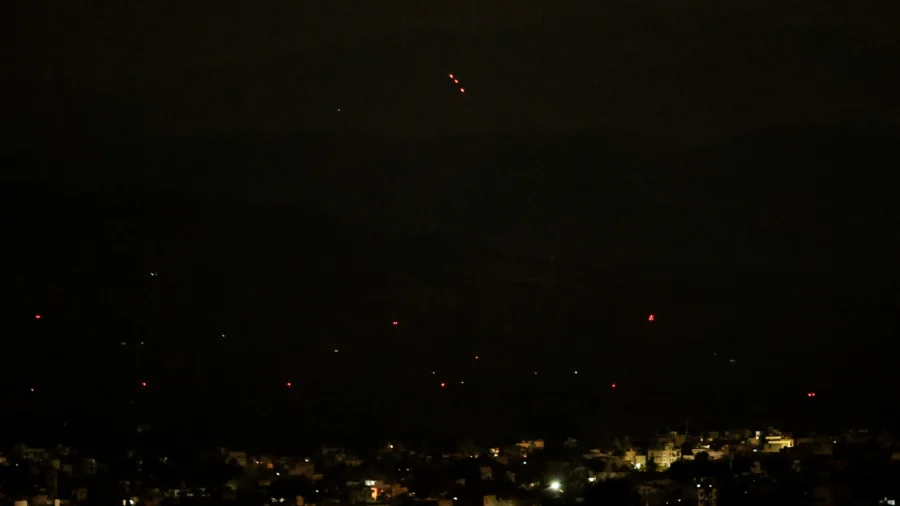
Artillery fire and attack drones were witnessed in Jammu and Kashmir, the center of much of the fighting, while blasts from air-defense systems boomed in cities under blackout, similar to the previous evening, according to authorities, residents, and witnesses.
Indian Foreign Secretary Vikram Misri told reporters that Pakistan had violated the understanding arrived at by the two countries earlier in the day, and that the Indian armed forces had been instructed to "deal strongly" with any repetition.
"We call upon Pakistan to take appropriate steps to address these violations and deal with the situation with seriousness and responsibility," Misri told a media briefing.
In response, the foreign ministry of Pakistan said the country was committed to the cease-fire and blamed India for the violations. "Our forces are handling the situation with responsibility and restraint," it said.
The ministry also called on troops on the ground to exercise restraint and said that any issues in the implementation of the ceasefire should be addressed through communication at appropriate levels.
Pakistan's military spokesperson did not immediately respond to requests for comment.
The fighting has been the worst between the old South Asian enemies in nearly three decades and threatened to erupt into a full-scale war in one of the world's most volatile and densely populated regions.
There were briefly fears that nuclear arsenals might come into play as Pakistan's military said a top body overseeing its nuclear weapons would meet.
But the defense minister said no such meeting was scheduled, hours after a night of heavy fighting in which the two countries targeted each other’s military bases and the combined civilian death toll rose to 66.
"Pakistan and India have agreed to a cease-fire with immediate effect," Foreign Minister Ishaq Dar posted on X. "Pakistan has always strived for peace and security in the region, without compromising on its sovereignty and territorial integrity!"
Misri had earlier said the chiefs of the two countries' military operations had spoken to each other and agreed that all fighting would stop at 5 p.m. Indian time (1130 GMT).
Hotlines and Diplomacy
Dar told the broadcaster Geo News that military channels and hotlines between India and Pakistan had been activated, and three dozen countries had helped to facilitate the agreement.On Wednesday, India had attacked what it said was "terrorist infrastructure" in Pakistani Kashmir and Pakistan, two weeks after 26 people were killed in an attack on Hindu tourists in Indian Kashmir.
Pakistan denied India's accusations that it was involved in the attack. Days of cross-border fire, shelling and drone and missile attacks followed.
The Indian foreign ministry did not respond to a request for comment.
Talks to Follow at Neutral Venue
In a post on X, Rubio commended Modi and Sharif on the agreement, which he said included not only an immediate ceasefire but also the start of talks on "a broad set of issues at a neutral site.”News of the ceasefire was greeted with relief on both sides of the border and Pakistan's airport authority said its airspace had been fully reopened.
But the subsequent violations sparked alarm in India.
"What the hell just happened to the cease-fire? Explosions heard across Srinagar!!!", Omar Abdullah, chief minister of Indian Kashmir, posted on X. "This is no cease-fire. The air defense units in the middle of Srinagar just opened up."
India and Pakistan have been locked in a dispute over Kashmir ever since they were born at the end of British colonial rule in 1947. India and Pakistan both rule part of Kashmir but claim it in full.
They have gone to war three times, including twice over Kashmir, alongside numerous smaller outbreaks of fighting.
India blames Pakistan for an insurgency in its part of Kashmir that began in 1989 and has killed tens of thousands. It also blames Pakistani Islamist terrorist groups for attacks elsewhere in India.
Pakistan rejects both charges. It says it provides only moral, political and diplomatic support to Kashmiri separatists.