


Iranian officials on Sunday sent a message to the United States via Pakistan for a two-month-long ceasefire amid negotiations to end the war, according to state-run media.
The Iranian officials stressed that issues between Tehran and Washington must be resolved within 30 days, according to Iran's semi-official Tasnim News, with a focus on extending the ceasefire.
Later on Sunday, Iranian state media reported that the Trump administration conveyed its response to the Iranian regime and that Tehran is evaluating it.
"At this stage, we do not have nuclear negotiations," Iran's Foreign Ministry spokesperson Esmaeil Baghaei told state-run media.
President Donald Trump in early April said Iran is doing a "poor job" of managing the strait and said that the country cannot charge fees.
There was no mention in state-run media reports, however, of Iran’s nuclear program and its enriched uranium, long the central issue in tensions with the United States. Trump has often said that Tehran cannot be able to obtain a nuclear weapon and indicated that U.S. and Israeli military strikes were initiated in late February to prevent the country from doing so.
Meanwhile, a U.S. naval blockade since April 13 is depriving Tehran of oil revenue it needs to shore up its ailing economy. U.S. Central Command on Saturday said 48 commercial ships have been told to turn back.
“We think that they’ve gotten less than $1.3 million in tolls, which is a pittance on their previous daily oil revenues,” U.S. Treasury Secretary Scott Bessent told Fox News on Sunday. He said Iran’s oil storage is rapidly filling up and “they’re going to have to start shutting in wells, which we think could happen in the next week.”
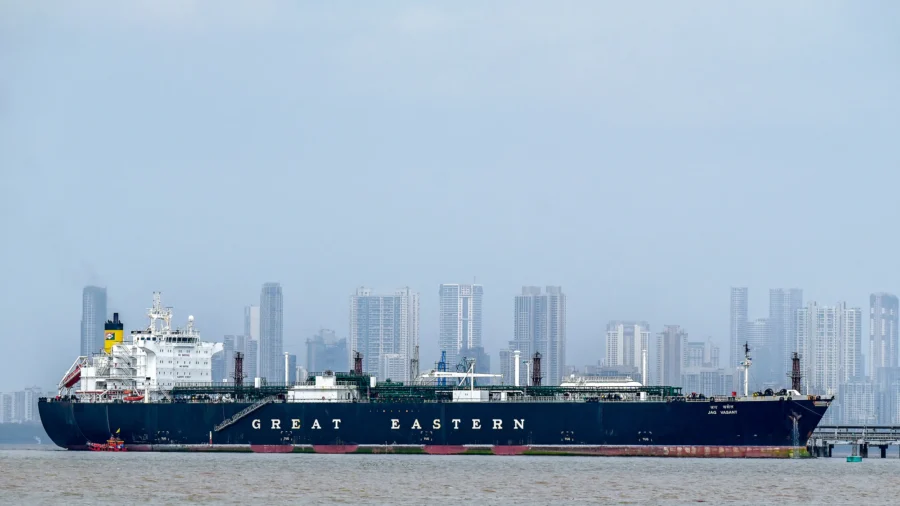
Also on Sunday, a cargo ship near the Strait of Hormuz has reported being attacked by multiple small craft, the British military’s United Kingdom Maritime Trade Operations center said in a notice Sunday.
All crew on the unidentified northbound carrier were safe after the attack off Sirik, Iran, east of the strait, the monitor said. There was no immediate statement from Iran on whether the country was responsible.