


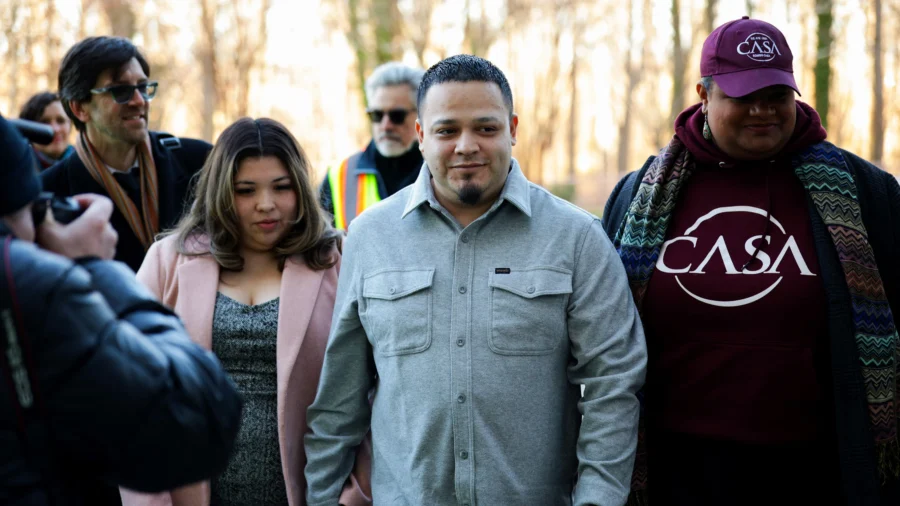
A newly unsealed order from Tennessee offered additional details surrounding the Department of Justice's decision to prosecute Kilmar Abrego Garcia, a Salvadoran national alleging that the Trump administration vindictively pursued a case following its high-profile deportation battle with him.
The Justice Department has denied the allegation and rejected it as a basis for dismissing the department's criminal indictment against Abrego Garcia, which accuses him of human smuggling.
Among other things, Crenshaw pointed to documents showing that Aakash Singh, who serves in the deputy attorney general's office, told the U.S. Attorney's office to "close hold" the draft indictment until it "got clearance" to file it.
Another email from April 30 showed Singh stating that the prosecution was a "top priority" for the deputy attorney general's office.
One of the attorneys, Jacob Warren, also emailed Singh and said that if Deputy Attorney General Todd Blanche "does not want to move forward with the indictment on Wednesday, we think it would be prudent to loop in the press office ASAP."
In a statement provided to The Epoch Times, the U.S. attorney's office said the emails didn't show any impropriety in the prosecution.
“The emails cited in Judge Crenshaw’s order, specifically Mr. McGuire’s email on May 15, 2025, confirm that the ultimate decision on whether to prosecute was made by career prosecutors based on the facts, evidence, and established DOJ practice," the statement read.
"Communications with the deputy attorney general's office about a high-profile case are both required and routine.”
The dispute centers on the timing of Abrego Garcia's indictment and why acting U.S. Attorney Robert McGuire brought the indictment in May.
Abrego Garcia, who entered the United States illegally as a teenager, appeared before an immigration judge in 2019. The judge issued a withholding of removal after Abrego Garcia said he feared persecution in returning to El Salvador.
Crenshaw said that no action was taken on the traffic stop until March 12, 2025, just before he was deported to El Salvador that month. The administration has defended the deportation, accusing Abrego Garcia of being a member of MS-13. His attorneys have denied that he belonged to the criminal gang.
A federal judge in Maryland required the administration to facilitate his return. After the Supreme Court affirmed that decision in April, McGuire brought the indictment on May 21, 2025.
McGuire submitted an affidavit in October stating that he acted independently when bringing the indictment.
"I received no direction from anyone at the White House, the Department of Homeland Security, the Department of Justice, or any other source on the question of whether to seek or not to seek an indictment in this case," he said.
Crenshaw has scrutinized the department's conduct, stating in the unsealed order that "the government's documents may contradict its prior representations that the decision to prosecute was made locally and that there were no outside influences."
The documents, he said, "suggest not only that McGuire was not a solitary decision-maker, but he in fact reported to others in DOJ and the decision to prosecute Abrego may have been a joint decision, with others who may or may not have acted with an improper motivation."
Crenshaw refused to immediately quash Abrego Garcia's motion to dismiss and has instead approved further litigation while stating that there was a "realistic likelihood of vindictiveness."
On Dec. 23, Crenshaw said he would reserve ruling on Abrego Garcia's attempt to subpoena Blanche and other top attorneys pending that Jan. 28 hearing.