


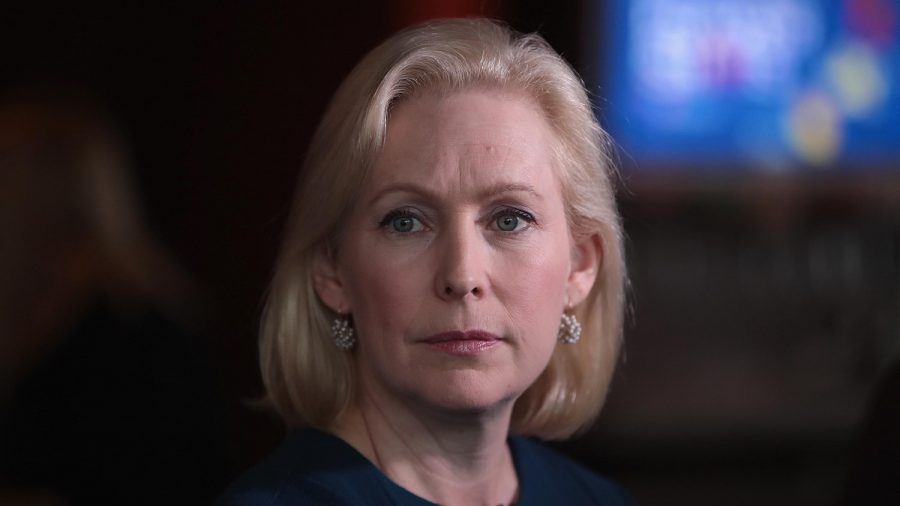
Sen. Gillibrand (D-N.Y.) appeared at a town hall hosted by Fox that began airing at 7 p.m. EDT June 2.
In contrast, three town halls on CNN on the same night all got ratings less than half of Gillibrand's.
Rep. Seth Moulton (D-Mass.) appeared at 6 p.m. EDT, getting an average of 368,000 viewers and 92,000 in the key demo; Rep. Tim Ryan (D-Pa.) appeared at 7 p.m. EDT and got an average of 374,000 and 84,000 in the demo; and Rep Eric Swalwell (D-Calif.) appeared at 8 p.m. EDT and received an average of 401,000 viewers, with 85,000 in the demographic.
The ratings win indicates why Democratic presidential contenders are choosing to appear on Fox despite a rancorous relationship with the network, which has historically been openly conservative but has been trending towards the center as of late.
The network has been defensive about ratings. After its low town hall ratings began being made public, the network stated: "CNN does not host presidential town halls for ratings. We host them because substantive conversations with presidential candidates inform and empower voters to make the best possible choices for their families and communities."
The network also highlights when candidates who appear on Fox use some of their town hall time to criticize the network, an option few seize when appearing on CNN due to political alignment.
Julian Castro, Housing and Urban Development secretary during the Obama administration, is slated to be the next Democratic candidate to appear on Fox. He will appear on June 13.
New York City Mayor Bill de Blasio, who has criticized Fox in the past, is now trying to appear in one of its town halls.
Gillibrand decided to appear because boycotting the network wouldn't make a difference, a spokeswoman said.
“Whether or not you participate in these town halls doesn’t stop Fox News from existing,” said Gillibrand’s communications director, Meredith Kelly. “It is a decision about whether the people who watch those shows hear only one side of the debate or hear from the other side.”