

While the traditional retirement age of 65 is a social construct born from the 1935 Social Security Act, the IRS withdrawal age of 59½ is a cold, legal reality. As such, the primary challenge facing today’s pioneers who wish to retire early or take a midlife “mini-retirement” is not just accruing wealth. It’s more about accessing it without incurring early withdrawal penalties of 10 percent or more.
Essentially, if you lock your net worth in a Traditional 401(k) or IRA, you are staring at your future through reinforced glass. Despite being able to see your money, you’re not allowed to touch it for decades.
The Fundamental Problem: The 10 Percent Penalty
If you withdraw money from a Traditional IRA or 401(k) before you are 59½, the IRS views it as an “unqualified distribution.” In turn, they will charge you two distinct fees:- Income tax. You are taxed at your current marginal rate on the amount added to your taxable income.
- The penalty. If you withdraw early, you will be charged an additional 10 percent excise tax.
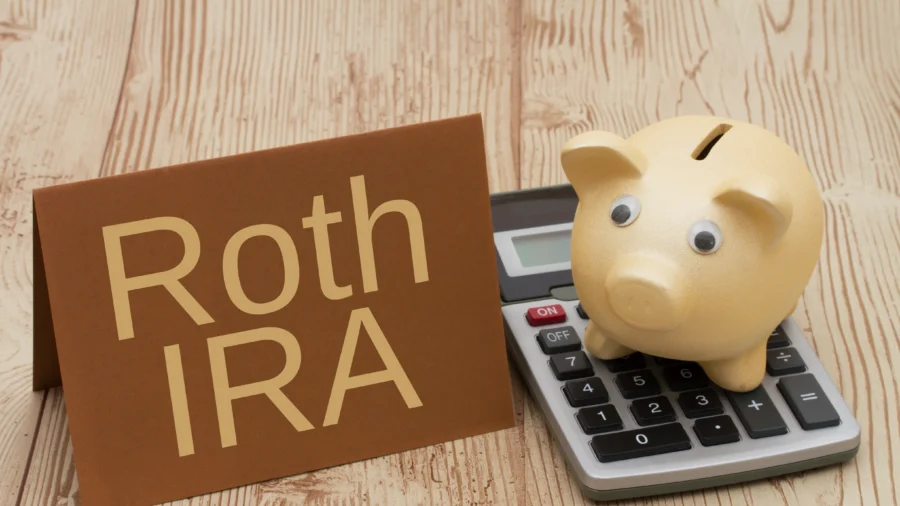
What Is a Roth Conversion Ladder?
A Roth conversion ladder involves transferring money from a tax-deferred retirement account to a Roth IRA over time, such as an IRA or 401(k).Why It’s Appealing:
- No limits. In contrast to direct Roth IRA contributions, which are capped annually and subject to income limits, conversions are unlimited.
- Tax-free growth. If you place money into a Roth IRA, it grows tax-free for the rest of your life.
- Early access. By using it, you can access “locked” funds before you reach the age of 59½.
How the Ladder Works: The 5-Year Rule
There is one particular quirk in Roth IRA regulations that makes this strategy effective: after a five-year waiting period, you can withdraw Roth IRA conversions penalty-free.Convert in Rungs
To begin, consider how much capital you want to move and how to break it down into yearly conversions. Since converted money is taxable income, you have to be careful. It’s possible, for example, to push yourself from a 12 percent tax bracket into a 22 percent or 24 percent bracket by converting too much.Keep Track of the Time
Before you can withdraw any Roth IRA conversion without incurring a penalty, you must keep it in the Roth IRA for five years. As a result of this waiting period, you should start your ladder at least five years before you actually need it.Repeat Annually
As you get older, you convert another “rung.” By 55, most people can stop making conversions, because they will be 60 in five years, and they will be able to access their retirement accounts through the IRS.Withdraw Tax-Free
That specific block of money becomes available five years after your first conversion. In Year 6, you can withdraw $50,000 without paying the IRS a dime if you converted $50,000 in Year 1.Example of a Roth Conversion Ladder
Based on a $50,000 per year retirement income, the following table illustrates how a retiree would structure their ladder over time.
A Comprehensive Five-Year Timeline for Early Retirement
The key to getting $50,000 a year out of retirement is strategic planning. Therefore, here is the practice year-by-year:Year 0 (Pre-Retirement): Establishing the Foundation
Don’t stop working until your financial setup is optimal.- Maximize contributions. When you still have a high W-2 income, fully fund your Roth IRA.
- Establish a “bridge” account. While the ladder matures, you’ll need a taxable brokerage account or high-yield savings account to fund your first five years.
- Solidify the budget. Confirm your $50,000 annual budget.
- Health insurance plan. For the years before Medicare, research the Marketplace options (ACA).
Year 1: The Transition
- Implement a withdrawal strategy. Using your “bridge” account, begin to pay your living expenses.
- Manage health insurance. You may be able to qualify for ACA subsidies if your taxable income is low.
Year 2: Sustaining
- Continue using bridge funding. Invest in taxable assets so that you can live off them.
- Spousal Roth IRA. Consider making spousal contributions to keep the Roth growing if your spouse is still working.
Year 3: The Ladder Begins
- Initiate the first conversion. To convert your Traditional IRA into a Roth IRA, you will need $50,000 plus tax coverage.
- Pay conversion taxes. This is extremely important. To avoid penalties, use the funds from your bridge account to pay these taxes.
Year 4: Preparing the Next Stage
- Second conversion. Another $50,000 conversion should be performed.
- Assess progress. Make sure you have enough cash in your bridge account to get you through Year 5.
Year 5: Accessing the First Rung
- First conversion accessible. Penalty-free access is now available to funds converted in Year 1, or Year 3 in this specific sequence.
- Shift funding source. Now that your Roth conversions have matured, you can stop draining your bridge account.
Key Rules and Restrictions
If you want to avoid a knock on the door from the IRS, follow these technical requirements on a strict basis:The Order of Operations
In a Roth IRA, money generally leaves in a certain order. As such, to pull from a bucket, you must follow this sequence:- Contributions. There are no taxes or penalties associated with these.
- Conversions. The penalty is waived after five years.
- Earnings. There is no tax or penalty after age 59½.
Taxes Must Be Paid From Outside Cash
If you convert $50,000, but only $40,000 goes into your Roth as a result of sending $10,000 to the IRS for taxes, the IRS considers this $10,000 as an early distribution. On that $10,000, you’ll be hit with a 10 percent penalty.Conclusion: Is the Ladder Right for You?
Those seeking to retire early can use the Roth Conversion Ladder as their ultimate tool. When you plan five years in advance, your Traditional 401(k) becomes a flexible piggy bank.When you move your wealth from a pre-tax environment to a Roth environment during your “low-income” years, you’re not only avoiding penalties but also shielding your wealth from future tax hikes. Whether you want to retire at 40, 45, or 50, this ladder will help you control your own capital.
The views and opinions expressed are those of the authors. They are meant for general informational purposes only and should not be construed or interpreted as a recommendation or solicitation. NTD does not provide investment, tax, legal, financial planning, estate planning, or any other personal finance advice. NTD holds no liability for the accuracy or timeliness of the information provided.