


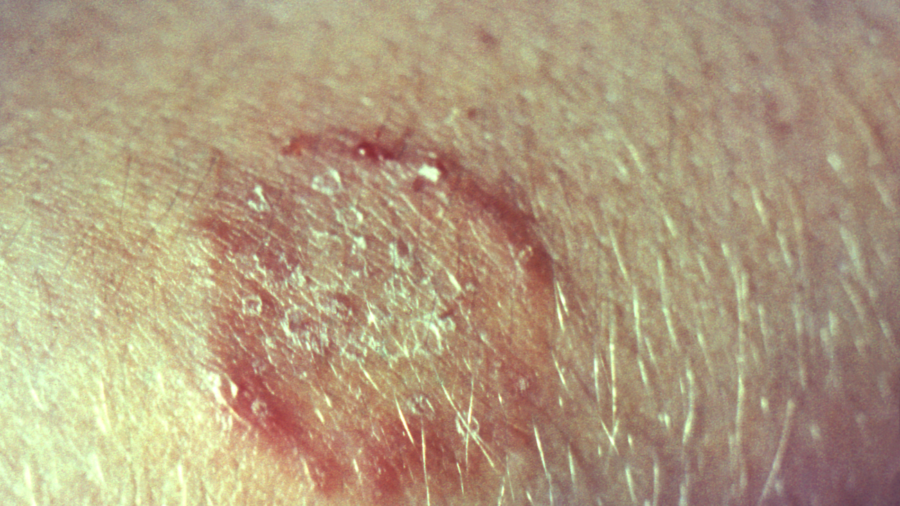
Minnesota health officials are warning about the nation’s “largest known outbreak” of a sexually transmitted ringworm fungus, after more than 30 confirmed or suspected cases were identified in the Twin Cities metro area since last summer.
The outbreak involves Trichophyton mentagrophytes genotype VII, or TMVII, a newly emerged dermatophyte that causes a severe form of genital ringworm linked to sexual contact.
TMVII was first detected in Minnesota in July 2025 in a patient who was treated for a genital rash. Since then, the state has recorded more than 30 confirmed or suspected infections centered in the metro area, which health officials say constitutes the largest known TMVII outbreak in the United States.
The rash associated with TMVII can appear ring-shaped with a slightly raised or darker edge, may look red, pink, or purple, can be darker or otherwise discolored compared with nearby skin, and may be itchy, painful, blistered, or scaly. TMVII is a type of ringworm that is transmitted by touching the rash directly or by sharing personal items such as towels or sex toys, according to the clinic.
MDH is asking clinicians to consider TMVII in patients who show up with dermatophyte infections believed to be linked to sexual activity or rashes that are primarily affecting regions associated with the infection.
If TMVII is suspected, MDH instructs providers to collect skin scrapings or a biopsy from the rash for fungal culture and to submit fungal isolates to the MDH Public Health Laboratory for confirmatory testing. All suspected TMVII cases should be reported to the Minnesota Department of Health through an online reporting form or by phone.
MDH advises clinicians to start treatment right away and not wait for confirmatory testing, recommending empirical therapy with oral terbinafine at 250 milligrams daily. Topical antifungal medications alone may not entirely penetrate hair follicles and are not suggested as standalone treatments. They may be considered as adjunctive therapy for small, localized lesions at the provider’s discretion. The agency said topical corticosteroids should be avoided because they can worsen TMVII infection.