


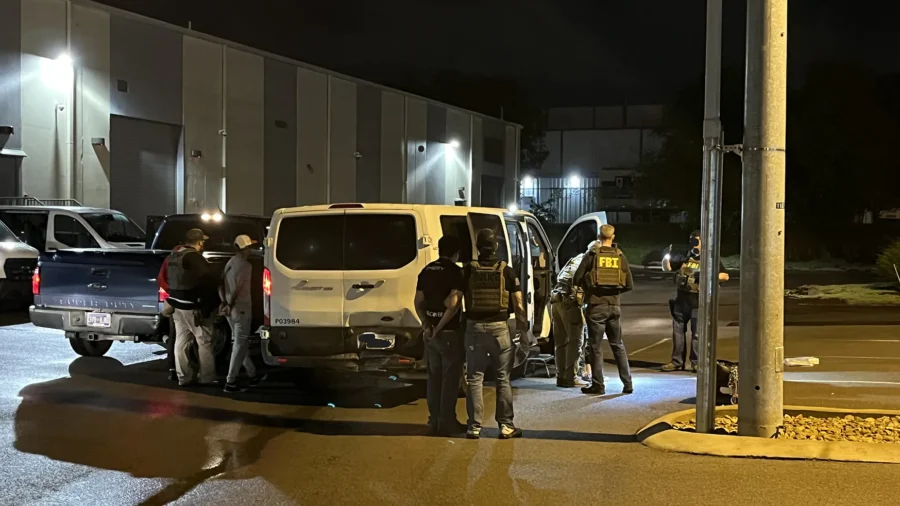
A joint operation involving U.S. Immigration and Customs Enforcement (ICE) and the Tennessee Highway Patrol in Nashville resulted in the arrest of 196 individuals, officials said.
According to DHS, of the 196 individuals arrested, 95 had prior criminal convictions or pending criminal charges. Additionally, 31 had previously been removed from the United States and reentered illegally—a felony offense under federal law.
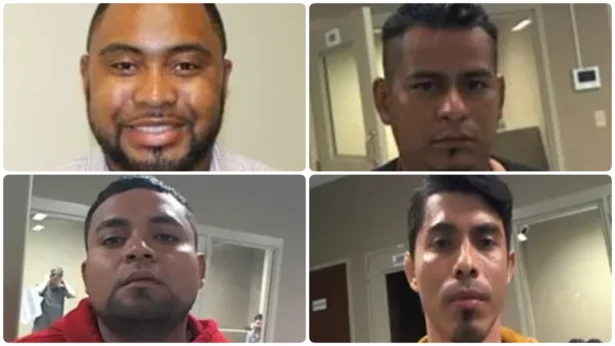
DHS released several names and criminal histories of those apprehended.
Among them was Jassim Jafaf Al-Raash, a 60-year-old from Iraq, whose criminal history included convictions for rape, resulting in a 10-year sentence, as well as larceny and false imprisonment. Al-Raash also had an arrest for failure to register as a sex offender and a final order of removal from 2021.
Franklin Oswaldo Velasquez, a 33-year-old from El Salvador, was arrested and identified as allegedly affiliated with the MS-13 gang. He is wanted in El Salvador for aggravated murder. In the United States, his record includes convictions for possession of methamphetamine, possession of drug paraphernalia, failure to appear, and criminal impersonation.
Other individuals named include:
Inmar Antonio Penado-Membreno, 34, of El Salvador. He has convictions for possession with intent to manufacture, deliver, or sell cocaine (eight-year prison sentence), and aggravated assault (four-year sentence).
Richard St. Baptiste, 36, of Haiti, has convictions for possession of methamphetamine with intent to distribute (eight years probation) and marijuana possession (30 days in jail).
Carlos Reinaldo Alvarado-Rodriguez, 39, from Guatemala, has a conviction for aggravated assault, resulting in a four-year sentence.
The operation followed a series of mass traffic stop raids in early May conducted by ICE and the Tennessee Highway Patrol in Latino neighborhoods across the city. The operation included more than 600 traffic stops, according to data released on Friday.
The fund aims to provide emergency financial assistance to immigrants through nonprofit organizations. Covered needs may include housing instability, child care, transportation, or food insecurity. It is not intended to fund legal services.
The mayor also signed an executive order requiring all communication between federal immigration authorities and Metro departments to go through his office. However, local governments do not have authority over federal immigration enforcement.