


New York officials are working on a reopening plan with five other states, including New Jersey, Connecticut, and Pennsylvania.
The governors of those four states have already made lockdown announcements, and New York Gov. Andrew Cuomo is hoping to draw them into a plan for reopening the economy as the hardest hit state in the nation starts to see declining hospitalizations and new cases.
Additionally, Rhode Island Gov. Gina Raimondo and Delaware Gov. John Carney will be on a call with Cuomo later Monday, along with New Jersey Gov. Phil Murphy, Connecticut Gov. Ned Lamont, and Pennsylvania Gov. Tom Wolf.
"We'll be having an announcement this afternoon about reopening," Cuomo told reporters in Albany.
The plan will start with easing the isolation imposed through harsh measures that have largely restricted people across all six states at home unless they're designated an essential worker. The next phase will be increasing economic activity, in part by adding new groups to the list of essential workers.

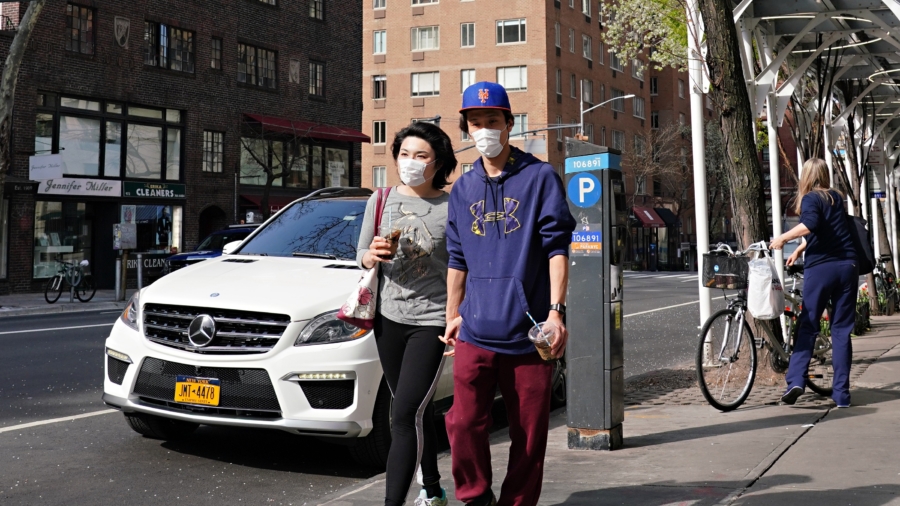
Requiring or advising the wearing of masks and gloves, and taking temperatures will be key to reopening, as will federal support and coordination among different sectors, including economic, transportation, and schools.
The reopening plan will be designed by public health and economic experts, not politicians, according to Cuomo.
While the six states won't be able to be fully in sync, "to the extent we can coordinate, we should and we will," he said. "The wider the geographic area for that plan, the better. Because this virus doesn't recognize governmental boundaries. The virus follows its own boundaries and its own guidelines."
New York has by far the highest number of cases, hospitalizations, and deaths in the nation, with the bulk of the patients in New York City and its environs. The once-soaring metrics stoked fear in officials, who at one point relied on projections that included predictions of as many as 140,000 hospital beds in the state, as well as 40,000 ventilators.

The peak of the pandemic in the state instead proved far lower, indicating concerns about the projections were correct.
The state saw a slight increase in total hospitalizations overnight. The net change in total hospitalizations, or discharges versus admissions, remained under 120 for the third straight day after a drop from over 1,000 to the hundreds took place on April 4.
The three-day average in total hospitalizations dropped to 85, the lowest in about a month, and hospitals discharged 42 more intensive care patients than those admitted.
New York saw about 6,600 new confirmed cases along with 671 new deaths. The death toll from COVID-19 in New York breached 10,000 but the daily toll was a drop of 100 or more from recent days. More than half of the deaths have taken place in New York City.
Cases, hospitalizations, and deaths have all started dropping in the city, according to figures from its Department of Health.

Earlier Monday, city officials said the number of patients in ICUs dropped 22 to 835 and hospital admissions dropped by 80 to 383. The percentage of people tested who were positive for COVID-19, the disease the virus causes, dropped slightly to 58.1 percent.
Once all three metrics are declining for a prolonged period of time, officials can think about loosing social distancing measures, New York City Mayor Bill de Blasio told reporters.
Officials at the moment hope to begin moving out of the lockdown phase in June in the city, he said. "All the indicators are moving in the right direction," he said.
Inside the city, the group with the most positive cases is those between the ages of 18 and 44. The most hospitalizations and deaths have been among those 75 and over.
The CCP virus primarily causes severe illness and death in the elderly and people with underlying health conditions, according to health officials, though it can cause severe illness in rare cases in the young and healthy.