Thailand has
intensified health screening at major international airports over the past week following reports of Nipah virus infections in India, the Ministry of Public Health’s Department of Disease Control announced.
On Jan. 25, the director-general of Thailand’s Department of Disease Control added Nipah virus screening procedures at Suvarnabhumi Airport’s international disease control checkpoint and Don Mueang Airport screening travelers arriving from West Bengal, according to the department’s social media page.
That same day, Phuket International Airport implemented screening for travelers from affected areas in India after reports of a Nipah virus cluster in West Bengal. The measures are intended “to monitor and screen travelers at international communicable disease control checkpoints,”
according to the department’s social media.
Thailand’s Department of Disease Control said the virus “can cause neurological symptoms and has a relatively high death rate,” and monitoring of travelers can help with early detection.
Thai authorities
issued a Health Beware Card sign to travelers arriving from Nipah virus risk areas in India. The card instructs anyone who develops symptoms such as fever, headache, muscle pain, sore throat, cough, difficulty breathing, drowsiness, confusion, or seizures—and had contact with bats, sick animals, or infected people within 21 days to seek immediate medical attention. It’s also advised that they report their travel and exposure history and contact Thai health officials.
In India, the Ministry of Health and Family Welfare
urged the public to take precautions and follow health advisories, as guidance
published on its official X account on Jan. 22 stated. Similar announcements have been issued throughout the past month.
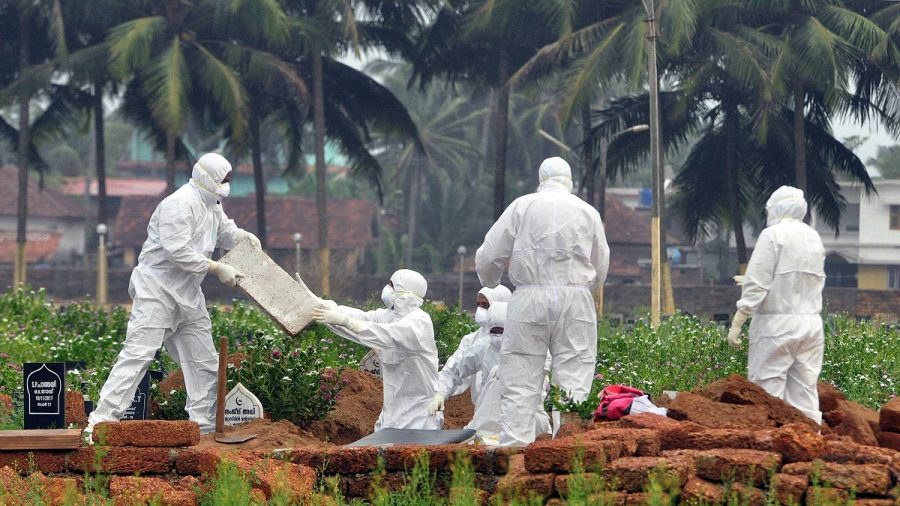
According to India’s National Centre for Disease Control, the current Nipah virus situation is “not a major outbreak” and is limited to the districts of Kozhikode and Malappuram in Kerala.
India’s public broadcaster News on AIR and health authorities also
confirmed a Nipah virus cluster in a West Bengal hospital, leading to the quarantine of close contacts, expanded testing, and the deployment of a National Joint Outbreak Response Team.
Nipah virus is a zoonotic disease mainly carried by fruit bats and transmitted to humans through direct contact with infected animals, consumption of contaminated food, or close contact with infected individuals. There is no vaccine or specific antiviral treatment, so care relies on managing symptoms and infection control.
To date, the Nipah virus has not been reported among humans in the United States. Outbreaks of Nipah virus have historically occurred in South and Southeast Asia, with human infections documented in Malaysia, Bangladesh, India, the Philippines, and Singapore, where the pathogen has caused severe respiratory illness and encephalitis (also known as inflammation of the brain) with high fatality rates,
according to the World Health Organization (WHO).
However, a henipavirus, called Camp Hill virus, was recently detected in northern short-tailed shrews in Alabama, marking the first time a henipavirus has been identified in North America,
according to LiveScience.