


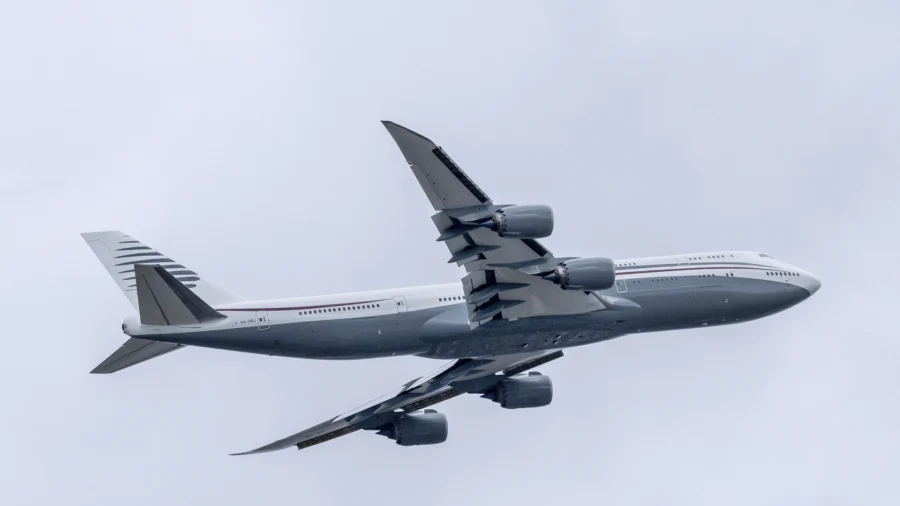
An Air Force official said June 5 that it will likely cost under $400 million to transform a plane gifted to the United States by Qatar into the new Air Force One.
“It’s probably less than $400 million to retrofit that aircraft,” Air Force Secretary Troy Meink told a U.S. House of Representatives panel in Washington.
Meink told the House Armed Services Committee during Thursday’s hearing on the fiscal year 2026 budget that a number around $1 billion has been thrown around for a retrofit, “but a lot of those costs associated with that are costs that we’d have experienced anyway, we will just experience them early.”
That includes buying additional platforms for training, he said.
Meink declined to get into specifics in the open forum and offered to brief lawmakers in the future behind closed doors.
“It’s unfortunate that when we’re hearing about all the challenges the Air Force faces with what I think is going to be a pretty big ticket item that can’t be sort of discussed publicly, because I think people need to know” about the details, Rep. Joe Courtney (D-Conn.) said.
Darlene Costello, the principal deputy assistant secretary of the Air Force for acquisition, technology, and logistics, told lawmakers in May that Boeing has recently estimated it will take until at least 2027 to produce the new Air Force One, and that it will take longer if officials do not waive certain requirements.
Courtney noted that the problems encountered by Boeing should inform how the retrofit of the plane from Qatar will go.
“You’ve got to install encrypted communication technology, you’ve got to harden the defenses, you have to put countermeasures in there,” he said. “It’s a flying situation room.”
Boeing has not returned requests for comment.
The lawmaker said that the evidence indicates the cost will run “well over $1 billion.”
“It’s clear that this is going to be a drain on the Air Force’s budget,” he added.
Congress needs more information to decide how much money to allocate, Courtney said.
Rep. Gil Cisneros (D-Calif.) later asked Meink how the military will make sure the aircraft has not been compromised.
“Part of upgrading it is essentially doing a deep sweep to make sure there are no counterintelligence threats on the platform,” Meink said.