

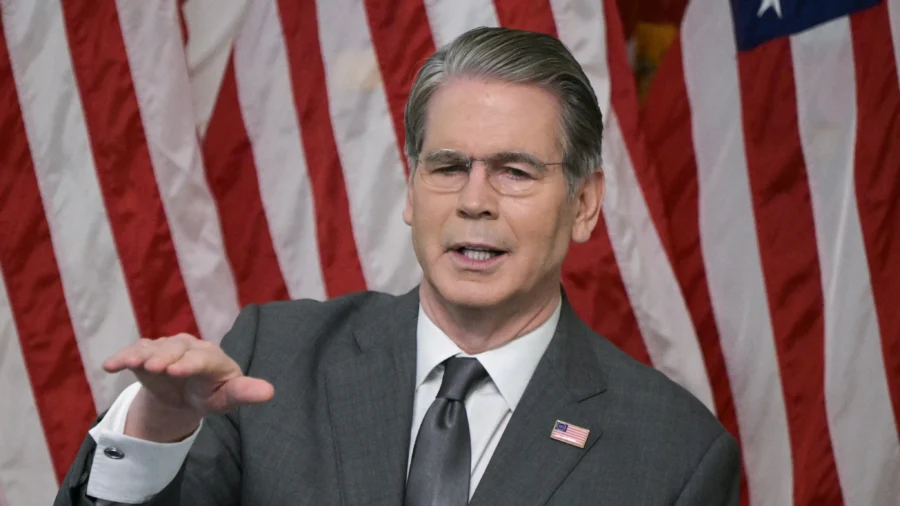
U.S. Treasury Secretary Scott Bessent said on April 15 that the United States plans to target Iran economically with the "financial equivalent" of a bombing campaign.
“Yesterday, we announced Operation Economic Fury. ... And the Iranians should know that this is going to be the financial equivalent of what we saw in the kinetic activities,” Bessent told reporters at a White House briefing on Wednesday, referring to the U.S. and Israeli campaign of airstrikes against Iran.
Bessent said the United States could also impose secondary sanctions on countries that purchase Iranian oil.
“We have told countries that if you are buying Iranian oil, that if Iranian money is sitting in your banks, we are now willing to apply secondary sanctions,” he said.
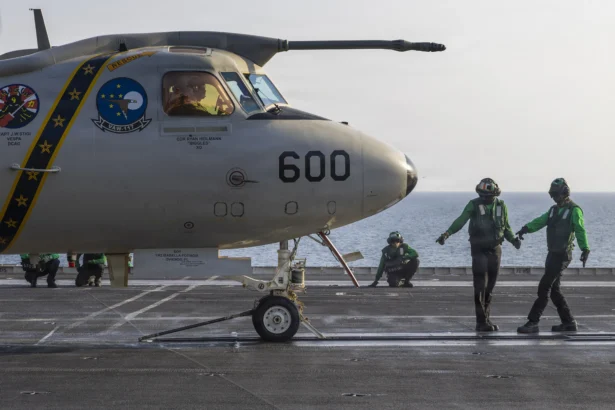
"Let me be clear, this blockade applies to all ships, regardless of nationality, heading into or from Iranian ports," Caine said. "The joint force through operations and activities in other areas of responsibility, like the Pacific Area of Responsibility ... will pursue any Iranian-flagged vessel or any vessel attempting to provide material support to Iran."
Caine added that any ship that would cross the blockade would result in U.S. sailors carrying out tactics designed to "bring the force to that ship, if need be, board the ship and take her over. And that includes a series of escalated force options, which could include warning shots and others."
"Turn around or prepare to be boarded if you do not comply with this blockade—we will use force," Caine said.
In an April 16 update, the UK Maritime Trade Operations (UKMTO) agency stated that, in addition to enforcing the blockade, “all Iranian vessels, vessels with active OFAC sanctions, and vessels suspected of carrying contraband, are subject to belligerent right to visit and search.”
Martin Kelly, a shipping expert and head of advisory at the EOS Risk Group, said in an April 16 post on X that it was a significant change to the blockade.
Treasury 'Will Leverage All Tools'
On April 15, the U.S. Treasury also imposed sanctions on an oil smuggling network connected to shipping magnate Mohammad Hossein Shamkhani, the son of now-deceased senior Iranian security official Ali Shamkhani.“Treasury is moving aggressively with Economic Fury by targeting regime elites like the Shamkhani family that attempt to profit at the expense of the Iranian people,” Bessent said in an April 15 statement.
“Under President Trump’s leadership, Treasury will continue to cut off Iran’s illicit smuggling and terror proxy networks. Financial institutions should be on notice that Treasury will leverage all tools and authorities, including secondary sanctions, against those that continue to support Tehran’s terrorist activities.”
In an April 14 post on X, the Treasury said, "The short-term authorization permitting the sale of Iranian oil already stranded at sea is set to expire in a few days and will not be renewed."
The Treasury has also sanctioned a number of individuals and companies based in Dubai, Mumbai, and the Marshall Islands alleged to be helping Iran by smuggling oil.
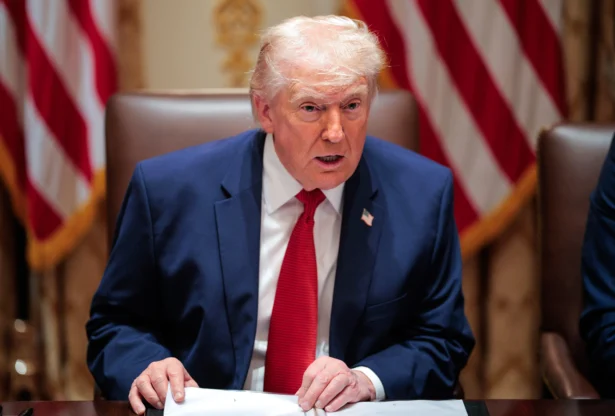
In a subsequent post on Truth Social, Trump said China is “very happy“ that he is ”permanently opening the Strait of Hormuz.”
Bessent said that Iran's Arab neighbors in the Gulf are more likely to freeze Iranian money in their countries after being bombarded by missiles and drones in the weeks since Operation Epic Fury began on Feb. 28.
The Treasury said in an April 15 statement that Bessent had spoken with the United Arab Emirates' financial affairs minister, Mohamed bin Hadi al-Hussaini, and "discussed maintaining maximum pressure against Iran."
Doubts About Strategy
Some members of the Senate Banking Committee have expressed reservations about Bessent's financial strategy succeeding.“I’m not sure if it’s sanctions that’ll do it. I think we’re putting some pretty heavy sanctions on right now,” Sen. Mike Rounds (R-S.D.), who sits on both the Banking Committee and Armed Services Committee, said. “I personally am just not optimistic that we actually can fix this thing without a regime change.”
Sen. Elizabeth Warren (D-Mass.), the top Democrat on the Banking Committee, said that any new economic sanctions would be effectively offset by the financial windfall that Iran was seeing in the aftermath of the war.
"Instead of circumstances where we can keep sanctions on Iran and constrict their economy, the blockade in the Strait of Hormuz, combined with the sharply rising price of oil, has helped Iran’s economy," Warren said. "What Secretary Bessent is trying to do is mop up the mess that Donald Trump has created by initiating this war."
White House press secretary Karoline Leavitt said on April 15 that she was optimistic about the chances of a deal with Iran.
The Epoch Times reached out to the U.S. Department of War and U.S. Naval Command for comment but did not receive a response by publication time