

Potential First Atlantic Cyclone Develops Off Texas Coast

Forecasters were monitoring Tropical Storm Arthur for cyclonic activity as it made landfall June 17.
Published: 6/17/2026, 5:31:38 PM EDT
Potential First Atlantic Cyclone Develops Off Texas Coast
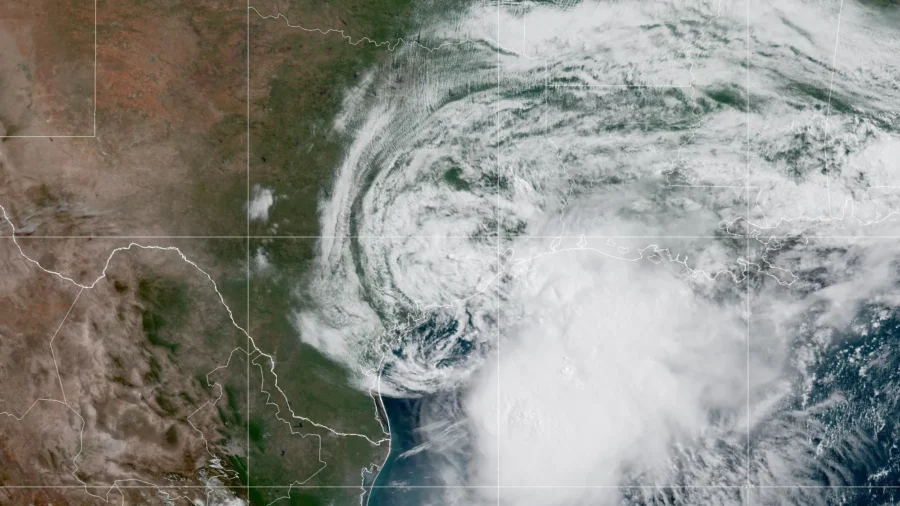
This GOES-19 GeoColor satellite image provided by NOAA shows Tropical Storm Arthur along the Gulf Coast of Texas, on June 17, 2026. (NOAA via AP)

National Hurricane Center forecasters were monitoring Tropical Storm Arthur—designated the first potential Atlantic cyclone of the season—as it made landfall June 17 on the southern coast of Texas.

The Potential Cyclone One public advisory issued by the National Weather Service (NWS) at 11:30 a.m. warned of storm activity from Sargent, Texas, to Morgan City, Louisiana.
Tropical Storm Arthur, the first named tropical storm of the 2026 hurricane season, is expected to deliver dangerous amounts of rain across southern states this week after making landfall near Bryan Beach, Texas, according to AccuWeather.
“The main threat is the prolonged, multi-day, heavy rainfall event that could produce dangerous to life-threatening flash flooding,” National Hurricane Center Director Michael Brennan said in a video update, advising Houston residents to be prepared and stay connected to weather updates.

Earlier in the day, the NWS issued flash flood warnings for parts of Houston.

The hurricane center said the storm was expected to drop five to 10 inches of rain in parts of Texas, southern Louisiana, southern Mississippi, southern Alabama, the Florida Panhandle, and southwestern Georgia.

Isolated areas could see up to 20 inches of rainfall, Brennan said.

Forecasters were closely watching the storm to possibly develop into a cyclone as it travels northeast along the Atlantic Coast and Southeast U.S. coastal region, according to the NWS.

Meteorologists recorded sustained winds with enough intensity to be classified as a tropical cyclone. The storm doesn’t yet have an official center of circulation.

A low-pressure area near the middle Texas coast had produced sustained convection east of its center this morning, the hurricane center reported.

“We found enough wind observations from the Air Force Reserve hurricane hunters who are flying out in the storm, as well as some coastal observations, that suggest maximum sustained winds are up to about 40 miles per hour now,” Brennan said.

Tropical Storm Arthur is moving northeast at about 9 miles per hour today and is expected to speed up, the weather center reported. The system is expected to move northeast along the Texas coast during the day and move inland over southwestern Louisiana by the evening.

Portugal fans share a poncho to protect themselves from the rain as they wait to enter Houston Stadium before a FIFA World Cup match between Portugal and Congo in Houston, Texas, on June 17, 2026. (Jason Fochtman/Houston Chronicle via AP)
Portugal fans share a poncho to protect themselves from the rain as they wait to enter Houston Stadium before a FIFA World Cup match between Portugal and Congo in Houston, Texas, on June 17, 2026. Jason Fochtman/Houston Chronicle via AP

Surface measurements showed maximum sustained winds increased to almost 45 miles per hour with higher gusts. The wind speeds were forecast to weaken when the storm moves inland, the NWS reported.

It said tropical-storm-force winds extended about 175 miles from the center of the storm, reaching Galveston, Texas.

“Potential life-threatening flash floods and urban flooding are likely through Friday across southern Louisiana, southern. Mississippi, southern Alabama, southwestern Georgia, and the Florida Panhandle, with possible flooding near the Upper Texas coast,” the NWS National Hurricane Center reported in Miami.

Ongoing heavy rain would prolong the flooding into the weekend, according to the center.

It said that minor to moderate coastal flooding is also expected along portions of the upper Texas and Louisiana coastlines on June 17.

The moisture comes from Tropical Storm Cristina, a weak Eastern Pacific cyclone that formed earlier this month before dissipating on June 11, according to AccuWeather.
“A significant flood risk exists each day this week, shifting slowly eastward from Texas into Wednesday to Louisiana, Mississippi, Alabama, and Georgia during the second half of the week,” AccuWeather Vice President of Forecast Operations Dan DePodwin said.

As much as 4 to 8 inches of rain is forecast from South Texas to eastern Alabama, with some parts of the region receiving up to 12 inches over several days, AccuWeather predicted.

The Neches, Guadalupe, Brazos, San Antonio, Trinity, Colorado, and Nueces rivers in Texas were expected to be at most risk of flooding, AccuWeather said.

The storm is also forecast to bring storm-force wind gusts up to 60 miles per hour and rough surf with choppy seas for much of the week over the northwestern third of the Gulf.

A storm surge of 1- to 3-feet is anticipated from the upper Texas coast to the Louisiana coast, with some higher amounts possible when the storm moves inward, AccuWeather said.